Maritime knots rope
1344×768 · AVIF · CC BY 4.0
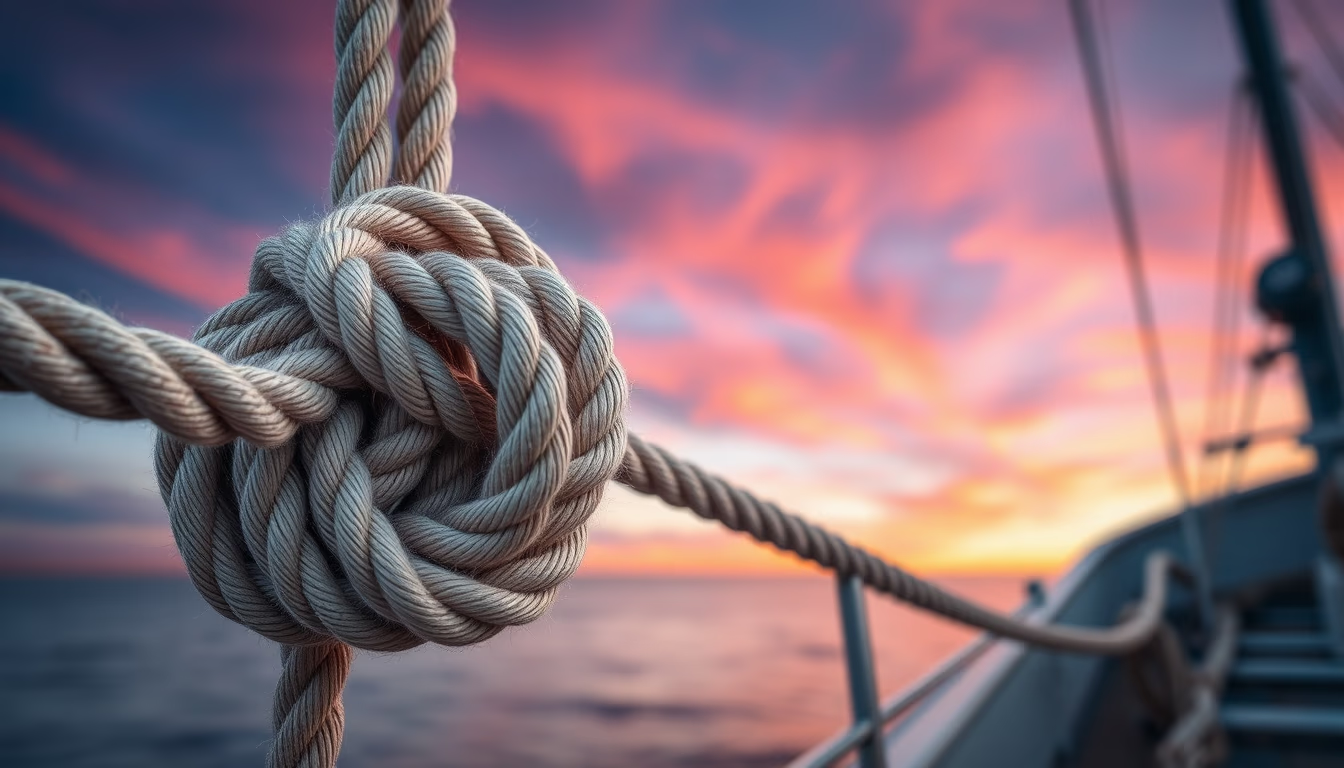
Maritime knots are essential sailing techniques used for centuries to secure vessels, join ropes, and ensure onboard safety.
About this subject
Maritime knots represent a fundamental skill for sailors, fishermen, and marine professionals. Their origins date back to the early days of seafaring, when ropes made from plant fibers such as sisal and cotton were the only means to secure sails, lash cargo, and moor vessels. Each knot was developed for a specific purpose, combining strength, security, and ease of untying even after heavy strain.
Among the most well-known knots are the figure-eight knot, used as a stopper; the reef knot, ideal for joining two ropes of equal diameter; the sheet bend, which connects ropes of different thicknesses; and the bowline, a classic for attaching a rope to a post or a ring. The clove hitch, another example, is used to create a fixed loop. The correct knot choice depends on the load, the rope material, and the need for quick release, as in the case of slipped knots.
With technological advances, natural fibers were gradually replaced by synthetic materials like polypropylene, polyester, and nylon, which offer higher tensile strength, weather resistance, and lower water absorption. However, the art of knot tying continues to be taught in sailing courses and features in competitions such as the International Knot Challenge. In 2020, the world record for the most knots tied in one minute was set at 12, showcasing the required skill.
Beyond the nautical context, knot knowledge is applied in climbing, camping, rescue, and even decorative arts. The figure-eight knot, for instance, is widely used by climbers for its reliability. Knot tying has also influenced popular culture, with expressions like "tie the knot" or "get into a knot." Each knot carries centuries of history and practical engineering, making it an intangible heritage of humanity.
Frequently Asked Questions
Why are maritime knots important in navigation?
Maritime knots are essential for docking, securing sails, joining ropes, and ensuring onboard safety. Each knot has a specific function, such as the sheet bend for joining ropes of different thicknesses or the bowline for attaching to a ring. Without them, sailing would be much more dangerous and inefficient.
What are the main types of knots used on boats?
Common knots include the figure-eight (stopper), reef knot (joining two ropes), sheet bend (joining different thicknesses), bowline (fixed loop), clove hitch (adjustable loop), and running knot. Each is chosen based on load, ease of untying, and rope material.
How to choose the right rope for each type of knot?
Rope choice depends on use: for fixed moorings, polyester or nylon ropes are ideal due to strength and durability. For knots requiring frequent untying, such as the sheet bend, prefer polypropylene ropes, which are softer and easier to handle. Natural fibers like sisal are suitable for temporary uses where grip is crucial.
Direct URL
https://pub-c7d6a6ea828543ac903a74a341ccb2e1.r2.dev/imagens/maritime-knots-rope-long-exposure-p10.avifHow to credit
Include a visible link back to UtilizAí. Copy one of the snippets below:
<a href="https://xn--utiliza-eza.com/en/midia/imagens/maritime-knots-rope-long-exposure-p10">Maritime knots rope</a> by <a href="https://xn--utiliza-eza.com">UtilizAí</a>, licensed under <a href="https://creativecommons.org/licenses/by/4.0/">CC BY 4.0</a>.
[Maritime knots rope](https://xn--utiliza-eza.com/en/midia/imagens/maritime-knots-rope-long-exposure-p10) by [UtilizAí](https://xn--utiliza-eza.com), CC BY 4.0
License: CC-BY-4.0