Lifeboat rescue ocean
1344×768 · AVIF · CC BY 4.0
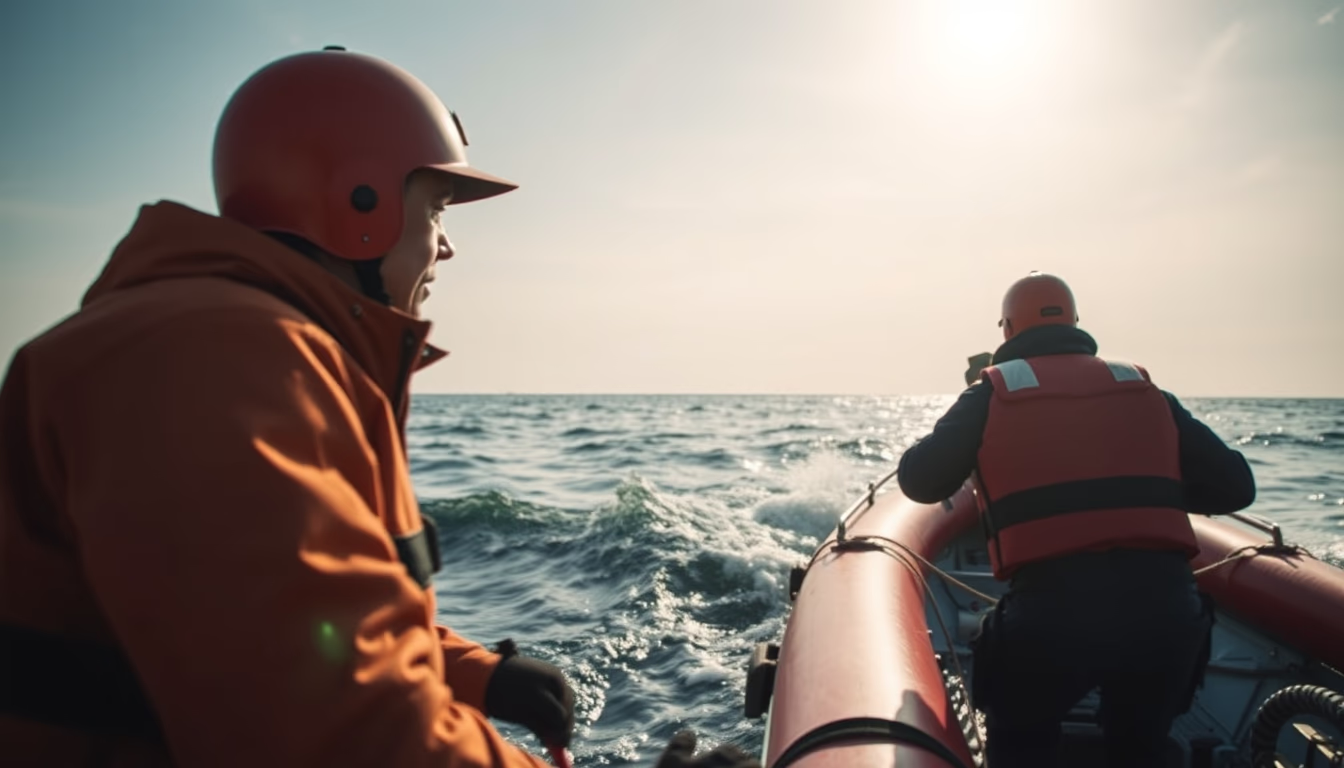
Lifeboat rescues at sea are critical operations that save lives under extreme ocean conditions, supported by organizations like the Brazilian Navy and international services.
About this subject
Lifeboats are specialized vessels designed for emergency rescues at sea, including shipwrecks, storms, or marine accidents. These operations are often managed by dedicated organizations such as the Brazilian Navy's Search and Rescue Service (SALVAMAR) and the Royal National Lifeboat Institution (RNLI) in the UK, founded in 1824. In Brazil, the Navy coordinates Salvamar, which operates along the entire coastline and inland waters, using inflatable and rigid-hulled lifeboats to reach victims in difficult areas.
The effectiveness of a lifeboat rescue depends on crew training, weather conditions, and response time. On average, the RNLI responds to over 8,000 callouts per year, saving hundreds of lives. Lifeboats are equipped with powerful engines, navigation systems, radios, and emergency medical equipment. Many models are self-righting, able to return to an upright position after capsizing, a crucial feature in large waves.
Documentary photography of maritime rescues often captures moments of high tension and heroism, serving as a visual testament to these professionals' work. Historic images, such as those from the Titanic rescue in 1912, show the evolution of equipment and techniques over the 20th century. Today, drones and helmet cameras provide immersive perspectives, but traditional photography still conveys the drama of rough seas and human effort.
Interestingly, Brazil has one of the largest naval lifeguard contingents globally, with bases along its 7,491 km coastline. Salvamar conducts about 2,000 operations per year, including deep-sea rescues and missions in Amazon rivers. Integration with the Fire Department and Civil Defense enhances response capacity, especially during the rainy and storm seasons. These figures underscore the vital importance of lifeboats in global maritime safety.
Frequently Asked Questions
How does a lifeboat rescue work?
A rescue begins when the maritime emergency service is activated (e.g., 199 in Brazil). The trained crew departs from the nearest station, navigates to the location, assesses the situation, and performs the rescue. Lifeboats are designed to operate in adverse conditions, with robust hulls and engines allowing quick maneuvers.
What are the main types of lifeboats?
There are rigid lifeboats (fiberglass or aluminum hulls) and inflatable ones (semi-rigid or fully inflatable). Inflatable boats are lighter and faster to launch, while rigid boats offer more stability in rough seas. Some models are enclosed, protecting the crew from weather.
What makes a documentary photo of a rescue impactful?
A rescue photo becomes impactful by capturing the tension of the moment, the interaction between rescuers and victims, and the extreme sea conditions. The contrast between human fragility and nature's power, combined with composition and natural lighting, creates powerful images that educate and raise awareness about the importance of rescue work.
Direct URL
https://pub-c7d6a6ea828543ac903a74a341ccb2e1.r2.dev/imagens/lifeboat-rescue-ocean-documentary-photography-p0.avifHow to credit
Include a visible link back to UtilizAí. Copy one of the snippets below:
<a href="https://xn--utiliza-eza.com/en/midia/imagens/lifeboat-rescue-ocean-documentary-photography-p0">Lifeboat rescue ocean</a> by <a href="https://xn--utiliza-eza.com">UtilizAí</a>, licensed under <a href="https://creativecommons.org/licenses/by/4.0/">CC BY 4.0</a>.
[Lifeboat rescue ocean](https://xn--utiliza-eza.com/en/midia/imagens/lifeboat-rescue-ocean-documentary-photography-p0) by [UtilizAí](https://xn--utiliza-eza.com), CC BY 4.0
License: CC-BY-4.0