Lifeboat rescue ocean
1344×768 · AVIF · CC BY 4.0
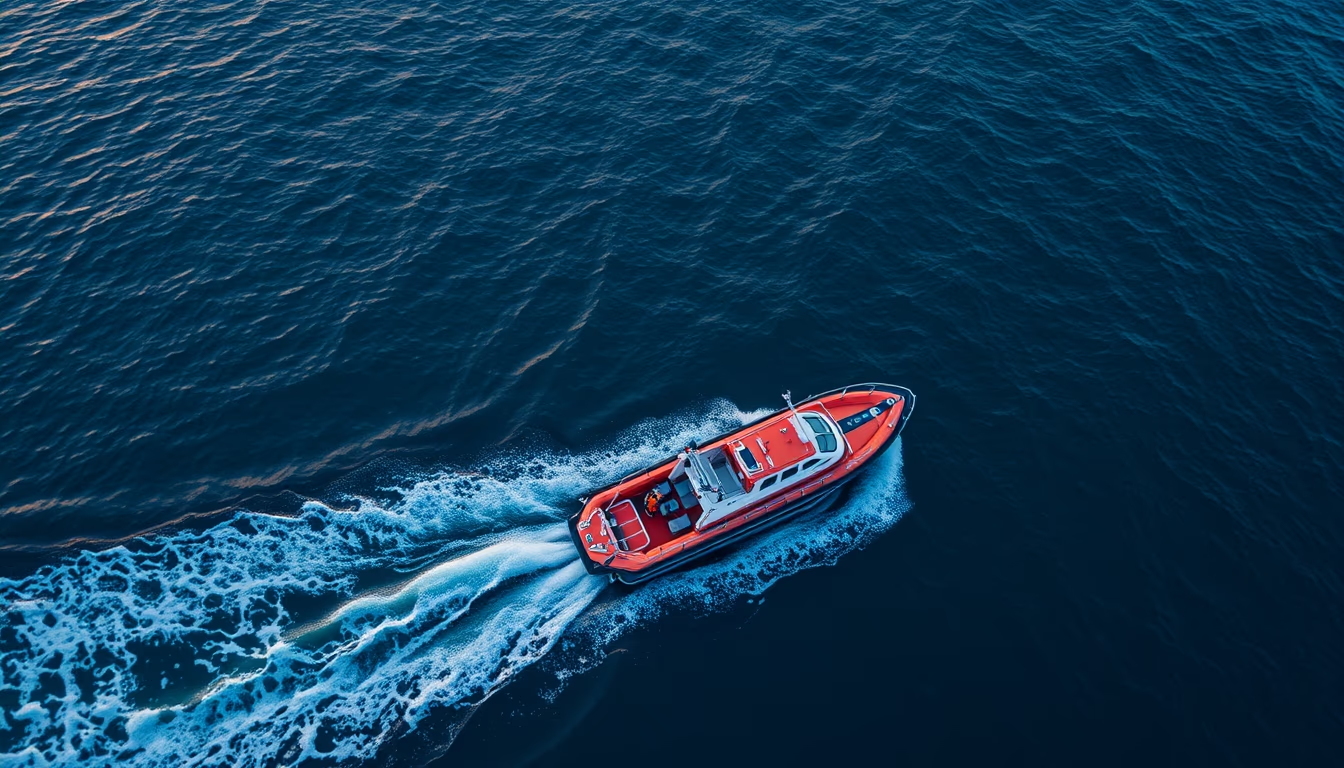
Lifeboats perform ocean rescues in extreme conditions, a crucial operation for global maritime safety.
About this subject
Lifeboats are vessels specifically designed for rescue operations in the open ocean, where high waves, strong winds and currents pose imminent danger. Equipped with powerful engines and reinforced hulls, they can navigate conditions that would paralyze ordinary boats. The International Maritime Organization (IMO) sets strict standards for such equipment, including requirements for stability, passenger capacity and communication systems.
The history of ocean rescues was reshaped after the sinking of the Titanic in 1912, which led to the International Convention for the Safety of Life at Sea (SOLAS) in 1914. Since then, lifeboats have evolved from simple rowboats to self-propelled units with GPS navigation and radio. IMO data indicates around 2,000 deaths annually from maritime accidents, but the rapid response of lifeboats significantly reduces that figure.
Technically, lifeboats can be inflatable or rigid, with capacities ranging from 10 to 150 people. On large ships, launching is done by davits or free-fall systems, ensuring quick release even when the vessel is listing. The use of aerial drones, as in the image that inspired this text, has become common in search operations to locate survivors and guide rescue teams in real time.
Culturally, lifeboats symbolize maritime solidarity. Institutions like the Royal National Lifeboat Institution (RNLI) in the United Kingdom have operated for over 200 years with trained volunteers. Economically, global maritime trade, responsible for 90% of cargo transport, depends on these operations to ensure crew and cargo safety, making lifeboats a key element in international logistics.
Frequently Asked Questions
How is a lifeboat launched into the sea during an emergency?
Launching can be done by davits that lower the boat into the water or by free-fall systems where the boat slides down a ramp and drops. Both methods allow quick release even when the ship is listing.
What is the typical capacity of a lifeboat on cargo ships?
Capacity varies by ship size and SOLAS regulations. On cargo ships, lifeboats usually hold 20 to 30 people, but larger vessels may have boats for 100 or more passengers.
What should you do if you fall into the sea and see a lifeboat approaching?
Stay calm, wave to attract attention, and swim toward the boat only if it is near. Let the crew perform the rescue, as they are trained to maneuver safely. Avoid grabbing the boat haphazardly.
Direct URL
https://pub-c7d6a6ea828543ac903a74a341ccb2e1.r2.dev/imagens/lifeboat-rescue-ocean-aerial-drone-shot-p3.avifHow to credit
Include a visible link back to UtilizAí. Copy one of the snippets below:
<a href="https://xn--utiliza-eza.com/en/midia/imagens/lifeboat-rescue-ocean-aerial-drone-shot-p3">Lifeboat rescue ocean</a> by <a href="https://xn--utiliza-eza.com">UtilizAí</a>, licensed under <a href="https://creativecommons.org/licenses/by/4.0/">CC BY 4.0</a>.
[Lifeboat rescue ocean](https://xn--utiliza-eza.com/en/midia/imagens/lifeboat-rescue-ocean-aerial-drone-shot-p3) by [UtilizAí](https://xn--utiliza-eza.com), CC BY 4.0
License: CC-BY-4.0