Led street light pole
1344×768 · AVIF · CC BY 4.0
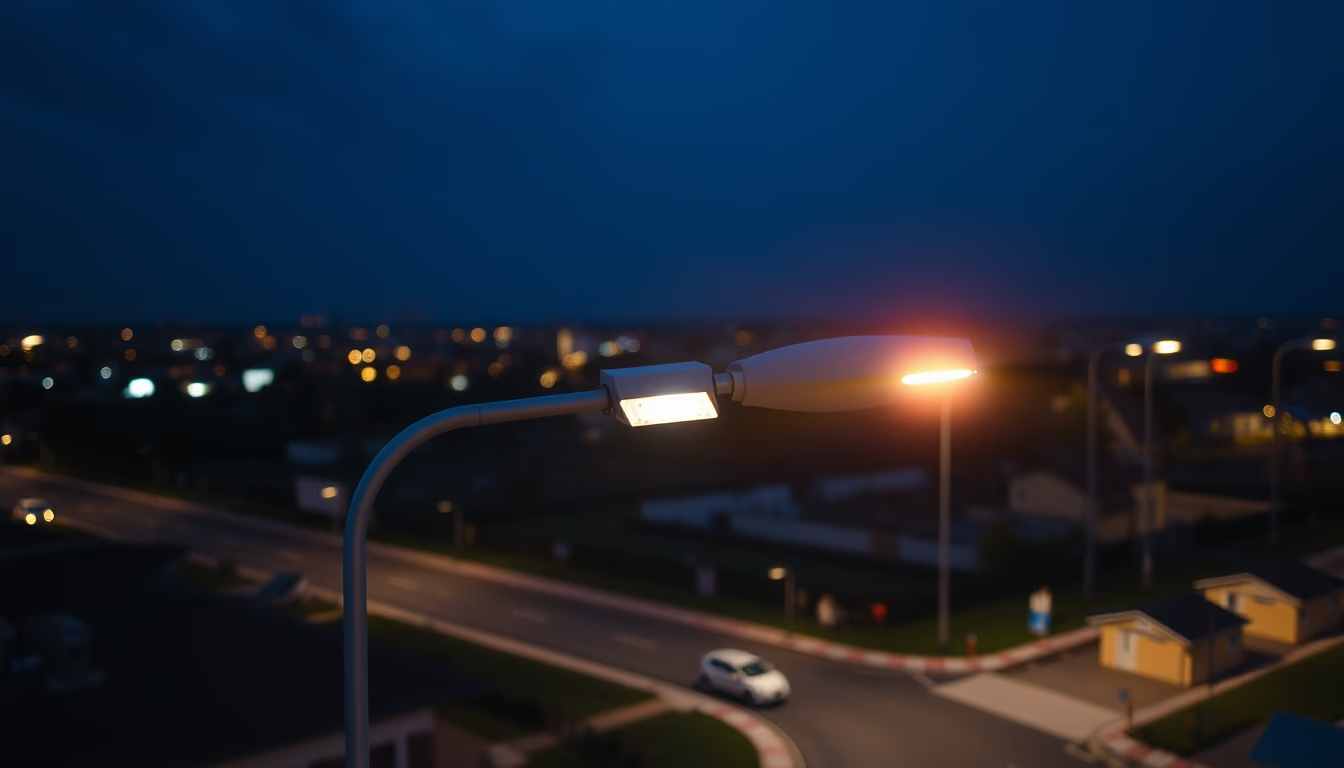
LED street light poles are essential components of smart cities, combining energy efficiency with urban connectivity.
About this subject
LED public lighting has revolutionized urban management by reducing energy consumption by up to 60% compared to traditional sodium vapor or mercury lamps. In Brazil, cities like São Paulo, Rio de Janeiro, and Curitiba have launched large-scale replacement programs, driven by energy efficiency policies and emission reduction targets. LED street poles have an average lifespan of 50,000 hours, versus 24,000 hours for conventional lamps, lowering maintenance and replacement costs.
In the context of smart cities, these poles go beyond lighting: they can integrate air quality sensors, security cameras, Wi-Fi hotspots, and vehicle chargers. The existing pole infrastructure becomes a backbone for urban Internet of Things (IoT), enabling remote monitoring and dynamic dimming based on pedestrian or vehicle traffic. Data from the International Energy Agency indicates that global adoption of LED street lighting could prevent 800 million tons of CO2 emissions by 2030.
LED technology also offers better color rendering and light direction, reducing light pollution and improving nighttime safety. In Brazil, the Brazilian Association of Lighting Industry (Abilux) highlights that modernizing public lighting parks is one of the pillars for municipal energy efficiency. By 2023, over 300 Brazilian municipalities had joined energy efficiency programs for public lighting through concessions or PPPs.
Interestingly, the color temperature of LEDs (typically between 3000K and 4000K) mimics natural light, positively influencing citizens' circadian rhythms. Studies show that proper lighting reduces traffic accidents by up to 30% and feelings of insecurity in public spaces. With projections that 70% of the world's population will live in urban areas by 2050, smart public lighting becomes a strategic investment for sustainability and quality of life.
Frequently Asked Questions
How long do LED street poles last compared to traditional lamps?
LED street poles have an average lifespan of 50,000 hours, more than double that of sodium vapor lamps (24,000 hours), reducing maintenance and replacement costs.
Do LED poles really help reduce light pollution?
Yes, because LEDs allow precise light direction, preventing skyward dispersion. This reduces artificial nighttime glow and improves astronomical observation.
What sensors can be attached to LED poles in smart cities?
Air quality sensors, security cameras, traffic counters, Wi-Fi hotspots, and electric vehicle chargers are common integrated features.
Direct URL
https://pub-c7d6a6ea828543ac903a74a341ccb2e1.r2.dev/imagens/led-street-light-pole-aerial-drone-shot-p5.avifHow to credit
Include a visible link back to UtilizAí. Copy one of the snippets below:
<a href="https://xn--utiliza-eza.com/en/midia/imagens/led-street-light-pole-aerial-drone-shot-p5">Led street light pole</a> by <a href="https://xn--utiliza-eza.com">UtilizAí</a>, licensed under <a href="https://creativecommons.org/licenses/by/4.0/">CC BY 4.0</a>.
[Led street light pole](https://xn--utiliza-eza.com/en/midia/imagens/led-street-light-pole-aerial-drone-shot-p5) by [UtilizAí](https://xn--utiliza-eza.com), CC BY 4.0
License: CC-BY-4.0