Electric bus station
1344×768 · AVIF · CC BY 4.0
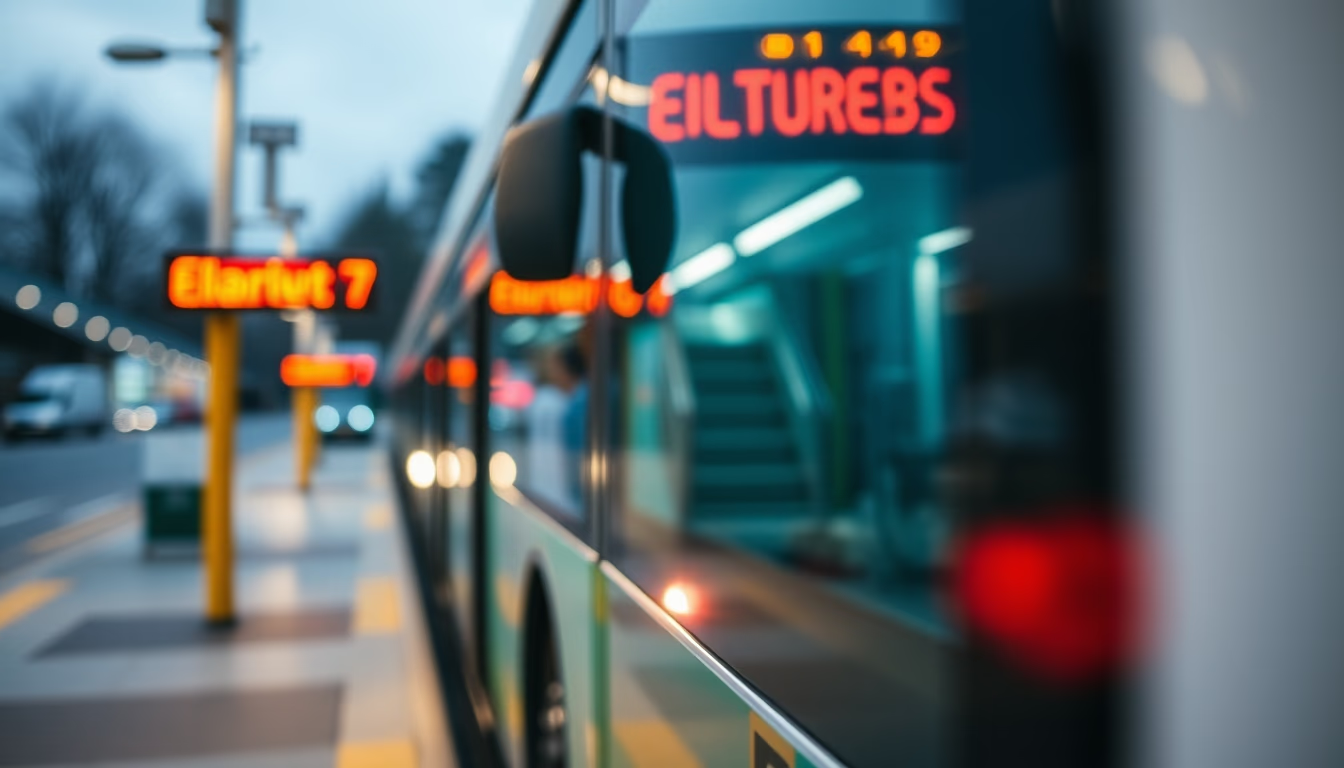
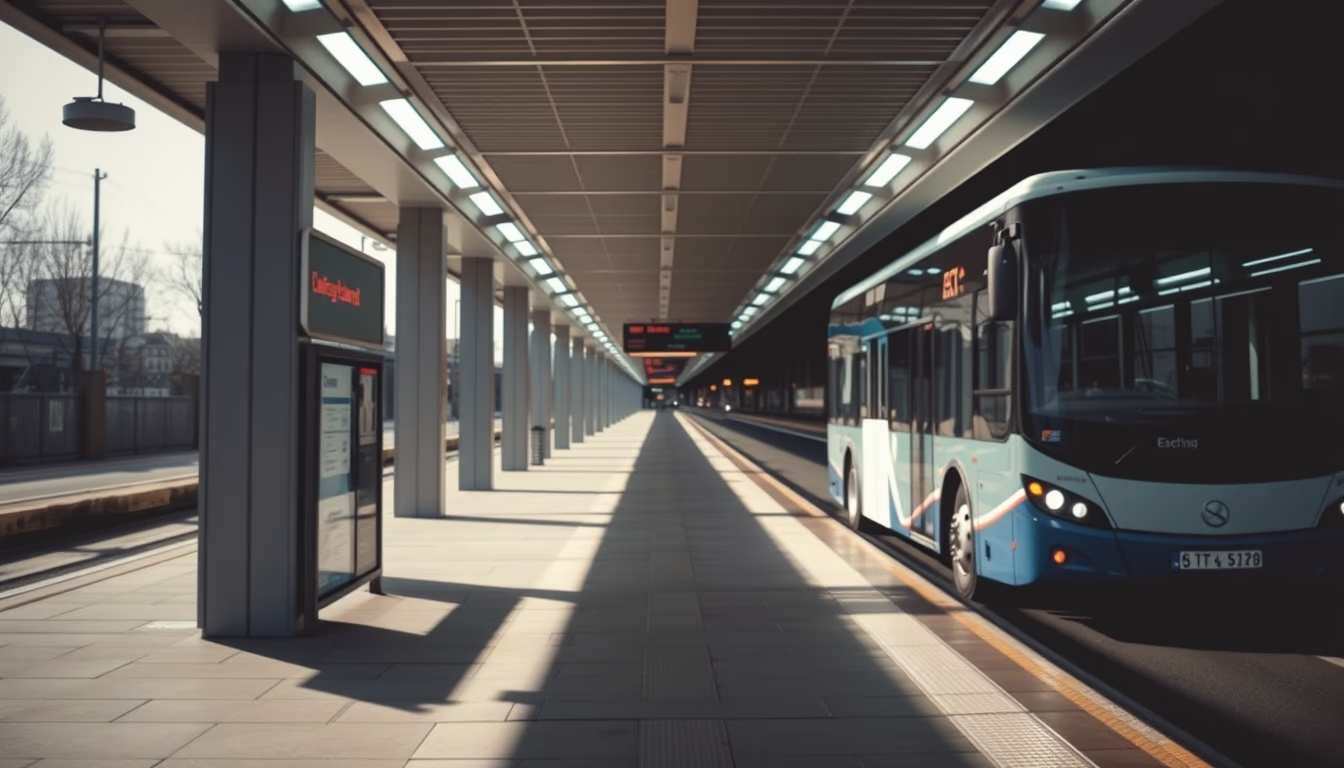
Electric bus charging stations are essential infrastructure for sustainable urban mobility, featuring fast charging and reduced environmental impact.
About this subject
Electric bus charging stations are a critical component in the transition to zero-emission public transport. Unlike home chargers, these stations use high-power technologies such as pantograph charging (overhead, like trolleybuses) or CCS2 connectors, enabling full battery recharge in minutes. In Shenzhen, China, the entire fleet of 16,000 buses is electric, supported by stations that consume power equivalent to a small power plant.
Charging infrastructure requires careful urban planning. Stations are connected to the grid, often with battery storage to smooth demand peaks. In São Paulo, tests on bus line 509J showed an 80% reduction in CO2 emissions per kilometer. In Europe, ultra-fast charging stations (450 kW) can top up buses in 10 to 20 minutes during driver breaks.
A technical curiosity: inductive (wireless) charging is being tested in some cities with plates embedded in the road. The downside is a 10% to 15% efficiency loss compared to direct contact. Bus batteries last 8 to 12 years and are recyclable. The cost of a station ranges from $50,000 to $250,000, depending on power level and the need for dedicated transformers.
The future includes smart stations that adjust power based on grid demand and V2G (vehicle-to-grid) systems, where buses feed energy back during peak hours. The International Energy Agency projects that 1.5 million bus charging stations will be needed worldwide by 2030, signaling a booming market.
Frequently Asked Questions
How long does it take to charge an electric bus at a dedicated station?
It depends on the station's power. Ultra-fast chargers (450 kW) can recharge a bus battery in 10 to 20 minutes, while 150 kW stations take 1 to 2 hours. Overnight slow charging (50 kW) is used at depots.
Are electric bus charging stations compatible with all bus models?
Not fully. Different standards exist: pantograph (mainly Europe and China), CCS2 (Americas and Europe), and GB/T (China). Compatibility depends on the bus manufacturer and the station's connector type.
What is the impact of bus charging stations on the city's electrical grid?
If poorly planned, they can cause demand spikes. Therefore, many stations use stationary batteries to store energy and release it gradually. Additionally, V2G systems allow buses to feed energy back to the grid during peak hours, helping to balance the system.
Direct URL
https://pub-c7d6a6ea828543ac903a74a341ccb2e1.r2.dev/imagens/electric-bus-station-macro-closeup-p4.avifHow to credit
Include a visible link back to UtilizAí. Copy one of the snippets below:
<a href="https://xn--utiliza-eza.com/en/midia/imagens/electric-bus-station-macro-closeup-p4">Electric bus station</a> by <a href="https://xn--utiliza-eza.com">UtilizAí</a>, licensed under <a href="https://creativecommons.org/licenses/by/4.0/">CC BY 4.0</a>.
[Electric bus station](https://xn--utiliza-eza.com/en/midia/imagens/electric-bus-station-macro-closeup-p4) by [UtilizAí](https://xn--utiliza-eza.com), CC BY 4.0
License: CC-BY-4.0