Electric bus station
1344×768 · AVIF · CC BY 4.0
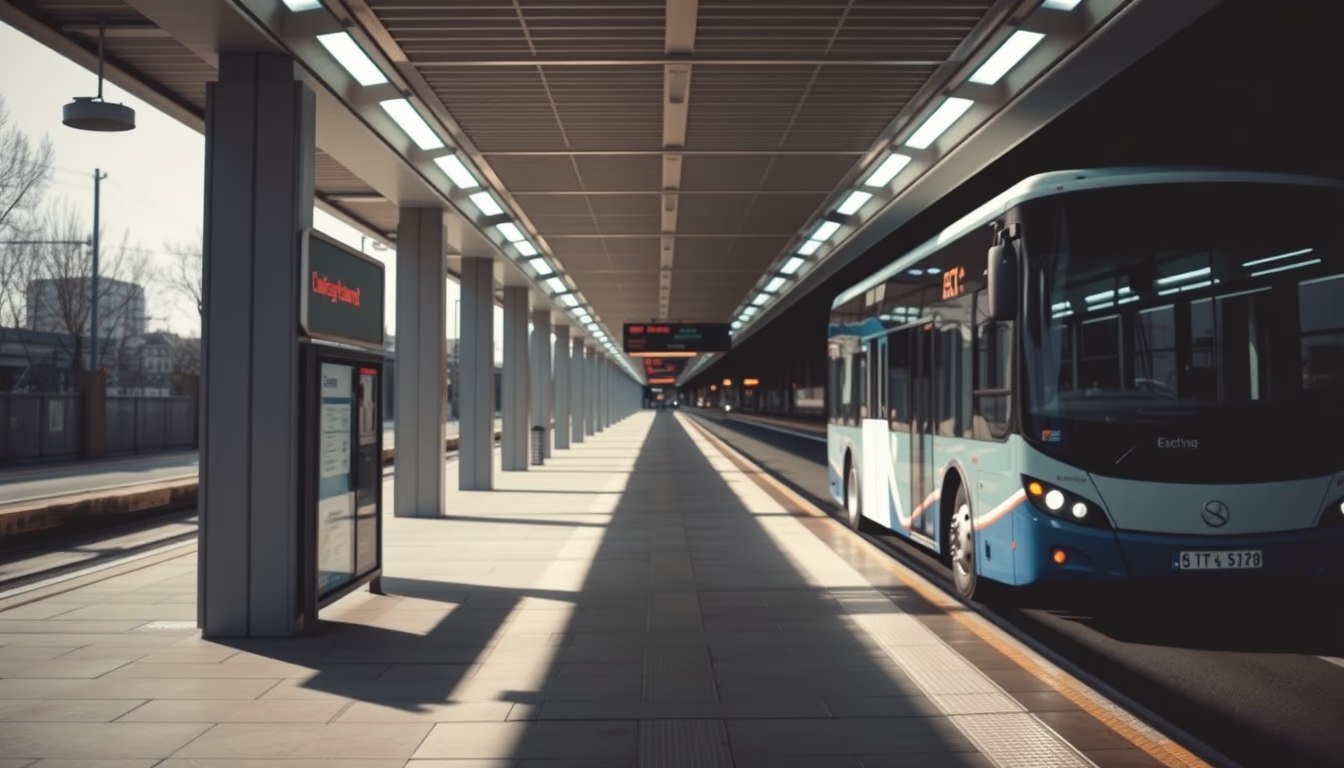
Electric bus stations integrate sustainable mobility and minimalist design in global smart cities.
About this subject
The shift to electric vehicles demands specific infrastructure, and electric bus stations are a critical link. Unlike conventional stops, they include ultra-fast chargers, solar panels, and energy storage systems. In cities like Shenzhen (China), which electrified its entire bus fleet by 2017, these stations operate 24/7 with automated charging via pantographs. The minimalist design of new stations is not merely aesthetic: it reduces maintenance costs and facilitates integration with IoT sensors for real-time demand monitoring.
In Brazil, pilot projects in São Paulo and Curitiba are testing terminals with inductive charging and green roofs. A minimal station can recharge a bus in 15 minutes for a range of up to 80 km, sufficient for typical urban routes. Globally, the electric bus infrastructure market is expected to grow 20% annually until 2030, driven by carbon neutrality goals. A curious fact: Norway already has stations using recycled vehicle batteries as backup, closing the battery lifecycle.
Minimalism also addresses logistical challenges. Compact stations occupy less sidewalk space and can be prefabricated, reducing installation time by up to 60%. LED lighting and low-consumption information panels make the environment safer and more efficient. Architects and urban planners advocate these structures become micro-mobility hubs, integrating shared bicycles and electric scooters.
Interestingly, the world's first electric bus station opened in 1914 in Paris, featuring electric trams. Today, the concept resurfaces adapted to the 21st century, with wireless charging and AI to optimize charging time based on fleet occupancy. This evolution shows that the future of mobility depends not only on vehicles but also on the technology embedded in stopping points.
Frequently Asked Questions
How long does it take to recharge an electric bus at a typical station?
It depends on the technology: with 450 kW ultra-fast chargers, a bus can go from 20% to 80% battery in about 15 to 30 minutes, enough for another 80 to 100 km.
Can electric bus stations run on solar power?
Yes. Many modern stations install rooftop photovoltaic panels to generate part of the required energy, reducing grid demand and operational costs.
What is the difference between an electric bus station and a regular bus stop?
Besides the charger, stations include smart sensors, real-time information panels, efficient lighting, and in some projects, integration with other modes. The design is planned for quick deployment and lower urban impact.
Direct URL
https://pub-c7d6a6ea828543ac903a74a341ccb2e1.r2.dev/imagens/electric-bus-station-minimalist-composition-p5.avifHow to credit
Include a visible link back to UtilizAí. Copy one of the snippets below:
<a href="https://xn--utiliza-eza.com/en/midia/imagens/electric-bus-station-minimalist-composition-p5">Electric bus station</a> by <a href="https://xn--utiliza-eza.com">UtilizAí</a>, licensed under <a href="https://creativecommons.org/licenses/by/4.0/">CC BY 4.0</a>.
[Electric bus station](https://xn--utiliza-eza.com/en/midia/imagens/electric-bus-station-minimalist-composition-p5) by [UtilizAí](https://xn--utiliza-eza.com), CC BY 4.0
License: CC-BY-4.0