Lake baikal frozen
1344×768 · AVIF · CC BY 4.0
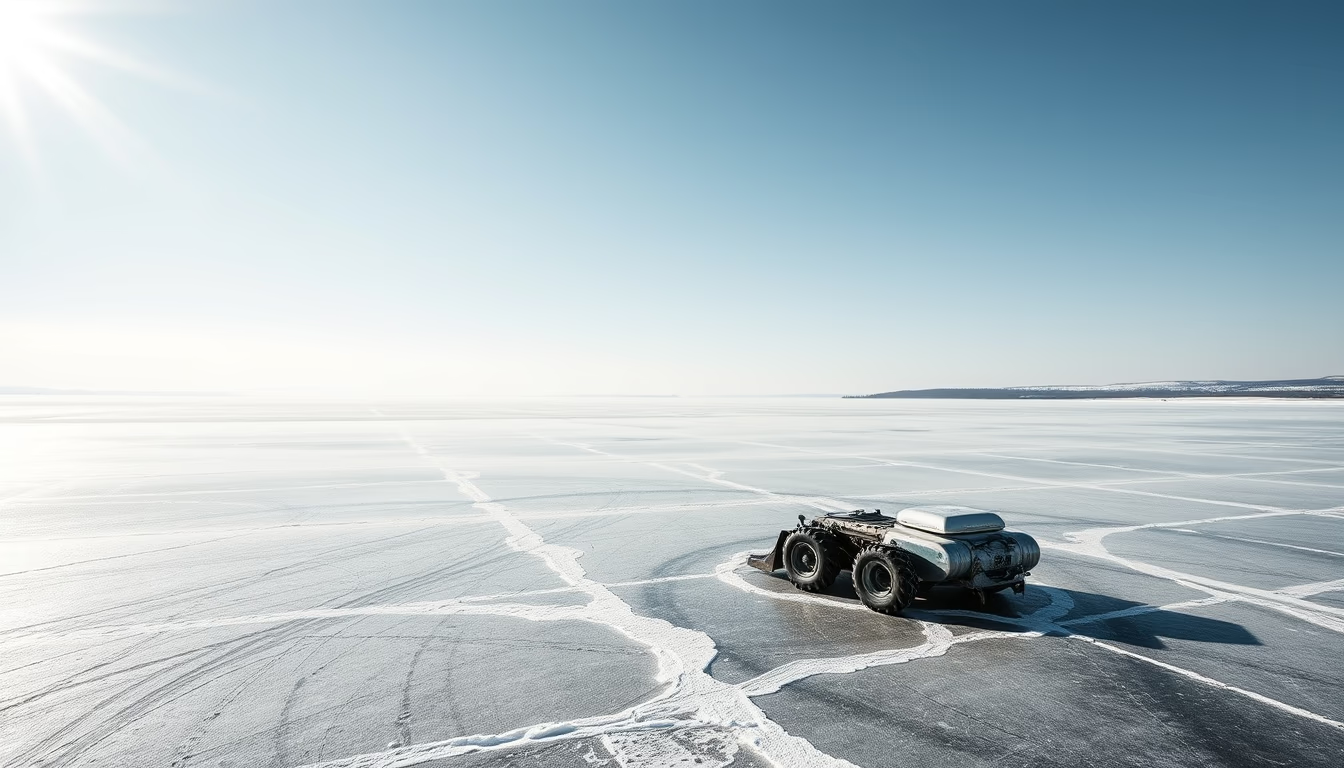
Frozen Lake Baikal: explore the world's largest freshwater lake, featuring crystal-clear ice and methane bubbles on its surface.
About this subject
Lake Baikal, located in Siberia, Russia, is the deepest lake on Earth, reaching a staggering depth of 1,642 meters. During winter, its crystalline waters freeze, forming an ice layer up to 2 meters thick. The phenomenon creates breathtaking landscapes, with ice so transparent that the rocky bottom is visible in some areas.
This unique lake holds about 20% of the world's unfrozen freshwater, surpassing the combined volume of all the North American Great Lakes. Estimated to be 25 million years old, it is one of the oldest lakes on the planet. Its biodiversity is extraordinary, with over 2,500 endemic species, including the Baikal seal, the only freshwater mammal on Earth.
In winter, Baikal's ice displays fascinating patterns: frozen methane bubbles, formed by decomposing organic matter at the lake bottom, create abstract designs beneath the surface. The so-called "ice hummocks" appear when the ice cracks and pushes blocks upward, forming small mountains. The region also boasts clear skies and low light pollution, making it a prime spot for winter astronomical observations.
Designated a UNESCO World Heritage site in 1996, Lake Baikal faces environmental challenges such as global warming, which threatens its freezing regime, and industrial pollution in the surrounding areas. Nevertheless, it remains one of the most impressive destinations for those seeking to witness the power of nature in the Siberian winter.
Frequently Asked Questions
Why is the ice on Lake Baikal so clear?
The ice's clarity is due to the lake's extremely pure water, which has filtered out sediments over millennia, and the slow freezing process that prevents air bubbles from forming.
What is the average winter temperature around Lake Baikal?
In winter, temperatures around the lake range from -20°C to -40°C, with strong winds that can make it feel even colder.
Is it safe to walk on the ice of Lake Baikal?
Yes, during the coldest months (January to March), the ice is thick enough for walking and even vehicle traffic, but it is essential to check local conditions and avoid areas with currents or cracks.
Direct URL
https://pub-c7d6a6ea828543ac903a74a341ccb2e1.r2.dev/imagens/lake-baikal-frozen-minimalist-composition-p3.avifHow to credit
Include a visible link back to UtilizAí. Copy one of the snippets below:
<a href="https://xn--utiliza-eza.com/en/midia/imagens/lake-baikal-frozen-minimalist-composition-p3">Lake baikal frozen</a> by <a href="https://xn--utiliza-eza.com">UtilizAí</a>, licensed under <a href="https://creativecommons.org/licenses/by/4.0/">CC BY 4.0</a>.
[Lake baikal frozen](https://xn--utiliza-eza.com/en/midia/imagens/lake-baikal-frozen-minimalist-composition-p3) by [UtilizAí](https://xn--utiliza-eza.com), CC BY 4.0
License: CC-BY-4.0