Lake baikal frozen
1344×768 · AVIF · CC BY 4.0
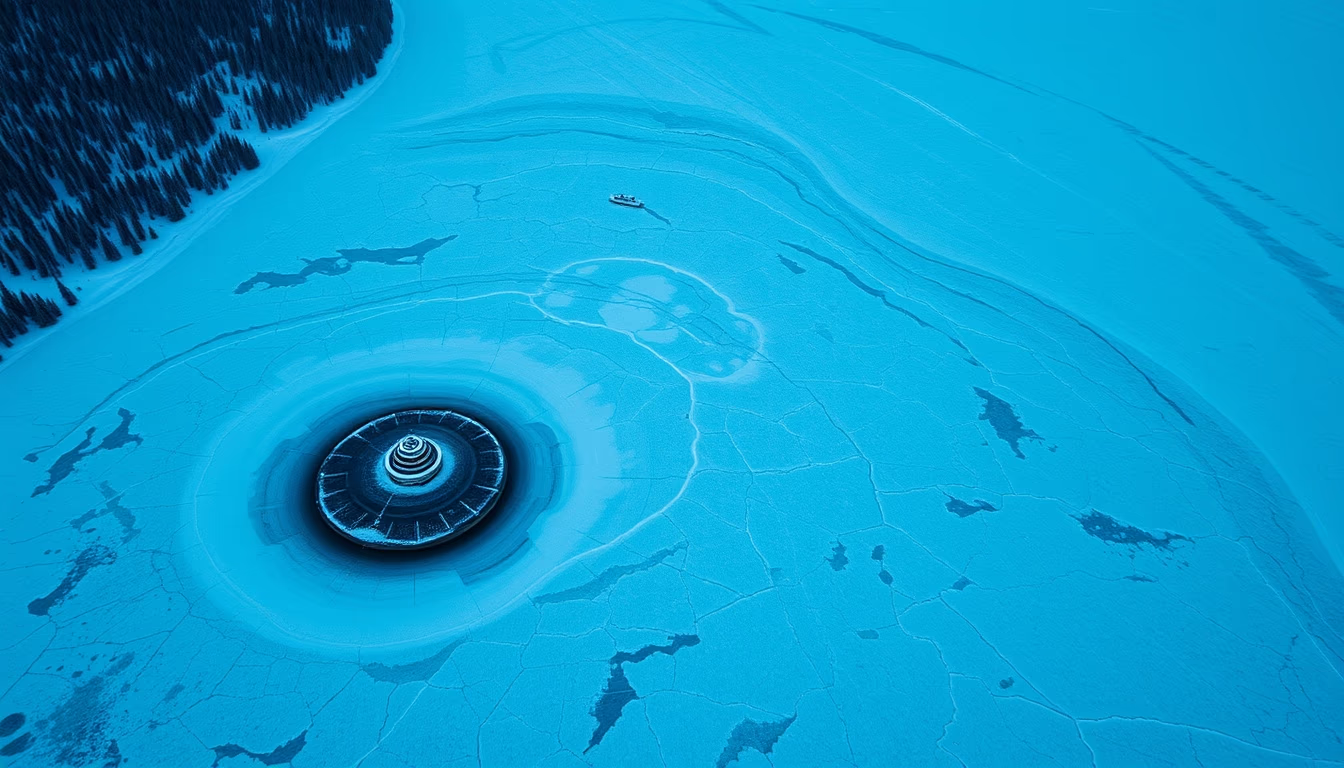
Lake Baikal in Siberia is the world's oldest and deepest freshwater lake, with an ice layer that attracts scientists and adventurers.
About this subject
Lake Baikal is located in southern Siberia, Russia, and is a geological wonder. At about 25 million years old, it is considered the oldest lake on Earth. Its maximum depth exceeds 1,600 meters, making it also the deepest. The lake holds approximately 20% of the world's unfrozen freshwater, a volume larger than all the North American Great Lakes combined.
During winter, Baikal's surface freezes forming an ice layer that can reach up to 2 meters thick. This ice is famous for its transparency and for forming unique patterns such as ice hummocks and cracks that produce characteristic sounds. In some areas, the ice is so clear that you can see the lake bottom dozens of meters below.
Baikal's biodiversity is equally impressive. About 80% of the lake's species are endemic, including the Baikal seal (nerpa), the only exclusively freshwater mammal. The lake also hosts the omul fish, highly valued in local cuisine. The surrounding region has been a UNESCO World Heritage site since 1996, protecting its natural and cultural importance.
Interestingly, Baikal's ice is studied by scientists to understand climate change, as the freezing period has been shortening in recent decades. Every winter, tourists and photographers visit the lake to witness the ice formations and frozen methane bubbles, created by organic decomposition at the lake bottom.
Frequently Asked Questions
What is the maximum depth of Lake Baikal?
The maximum depth of Lake Baikal is approximately 1,642 meters, making it the deepest lake in the world.
Why is the ice on Lake Baikal so transparent?
The transparency is due to the water purity and slow crystallization during winter, forming a crystalline structure that allows light to pass through.
What endemic animals live in Lake Baikal?
The most famous example is the Baikal seal (nerpa), but there are also over 1,000 endemic species, including fish, sponges, and amphipods.
Direct URL
https://pub-c7d6a6ea828543ac903a74a341ccb2e1.r2.dev/imagens/lake-baikal-frozen-aerial-drone-shot-p1.avifHow to credit
Include a visible link back to UtilizAí. Copy one of the snippets below:
<a href="https://xn--utiliza-eza.com/en/midia/imagens/lake-baikal-frozen-aerial-drone-shot-p1">Lake baikal frozen</a> by <a href="https://xn--utiliza-eza.com">UtilizAí</a>, licensed under <a href="https://creativecommons.org/licenses/by/4.0/">CC BY 4.0</a>.
[Lake baikal frozen](https://xn--utiliza-eza.com/en/midia/imagens/lake-baikal-frozen-aerial-drone-shot-p1) by [UtilizAí](https://xn--utiliza-eza.com), CC BY 4.0
License: CC-BY-4.0