Kouros greek
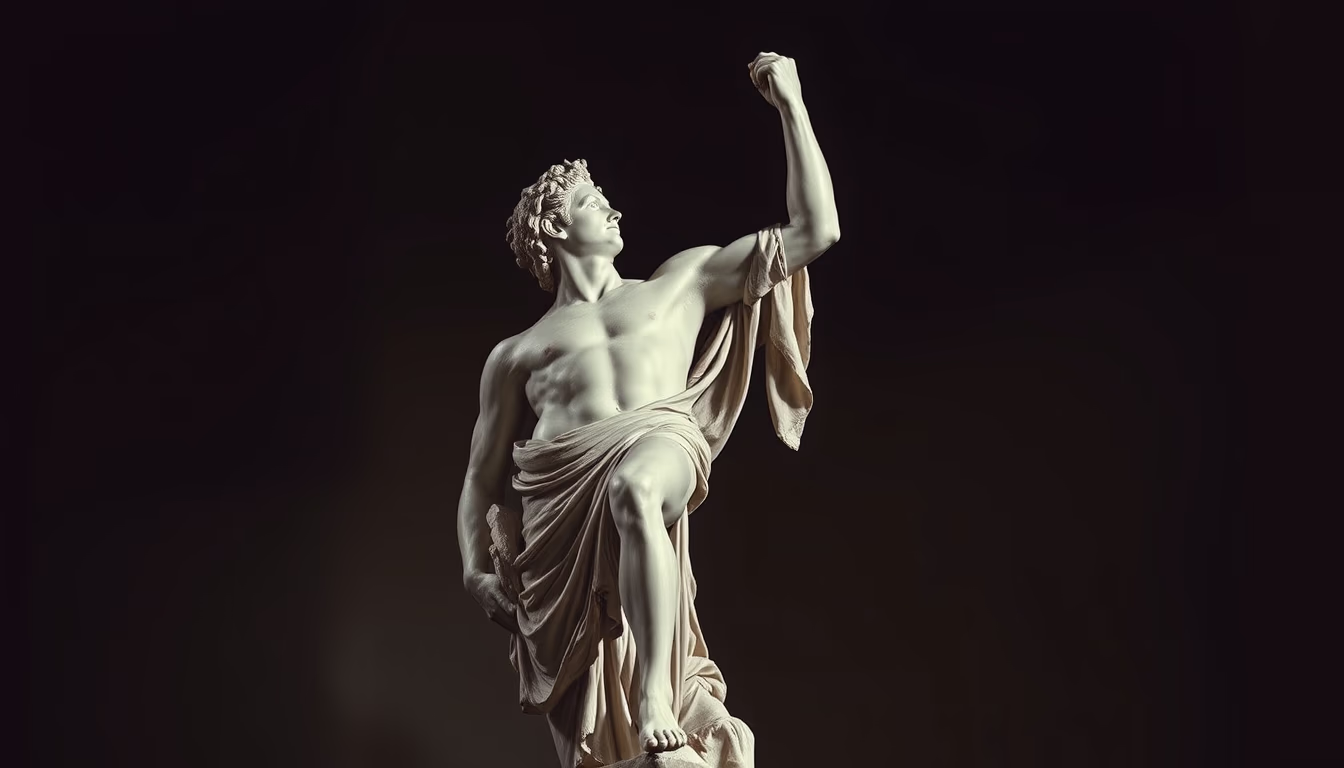
1344×768 · AVIF · CC BY 4.0
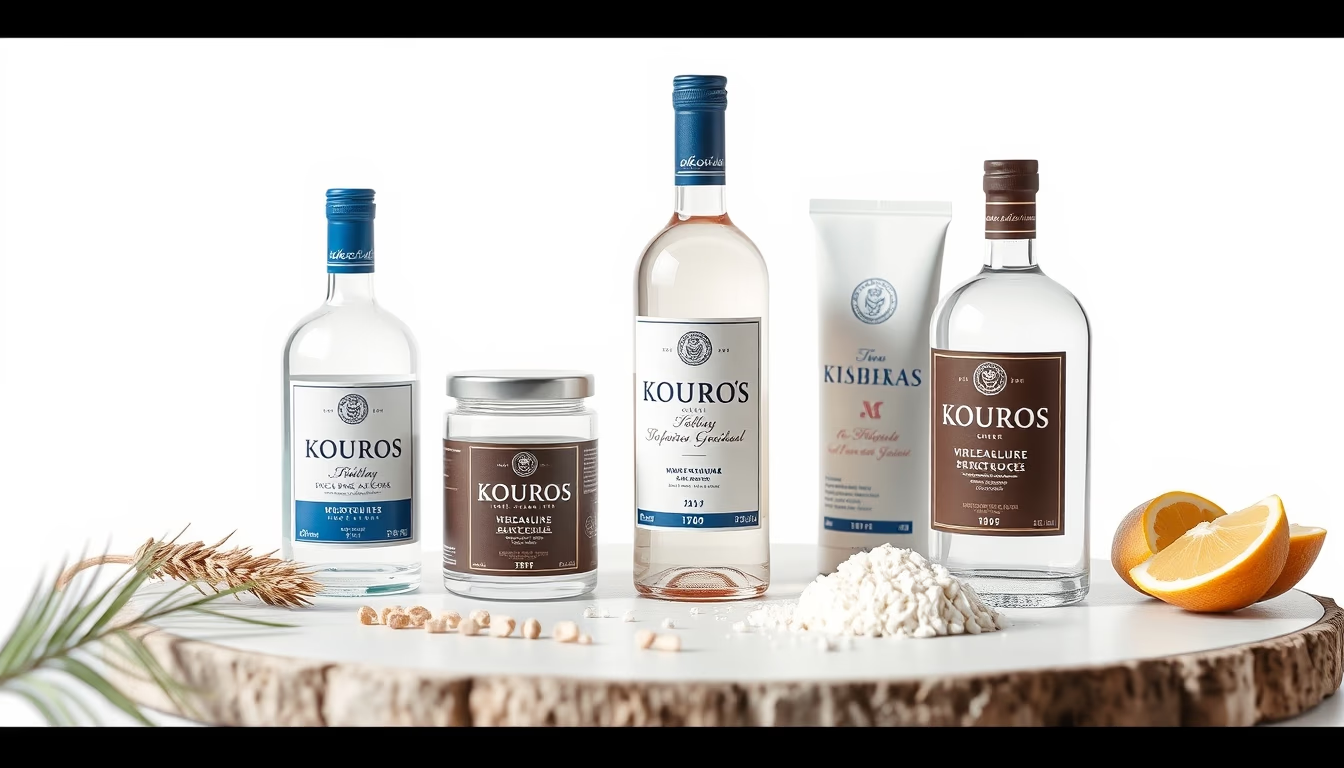
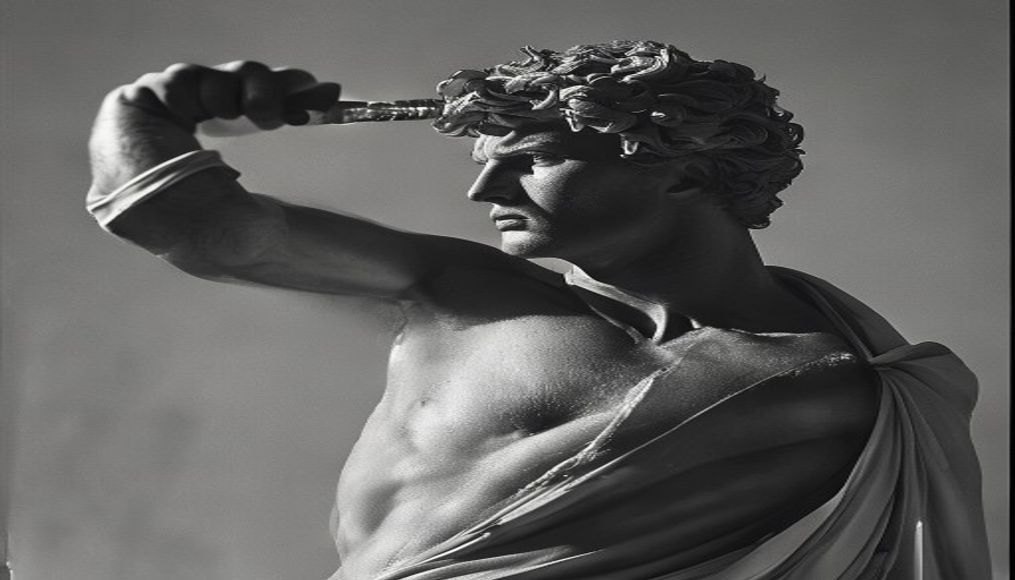
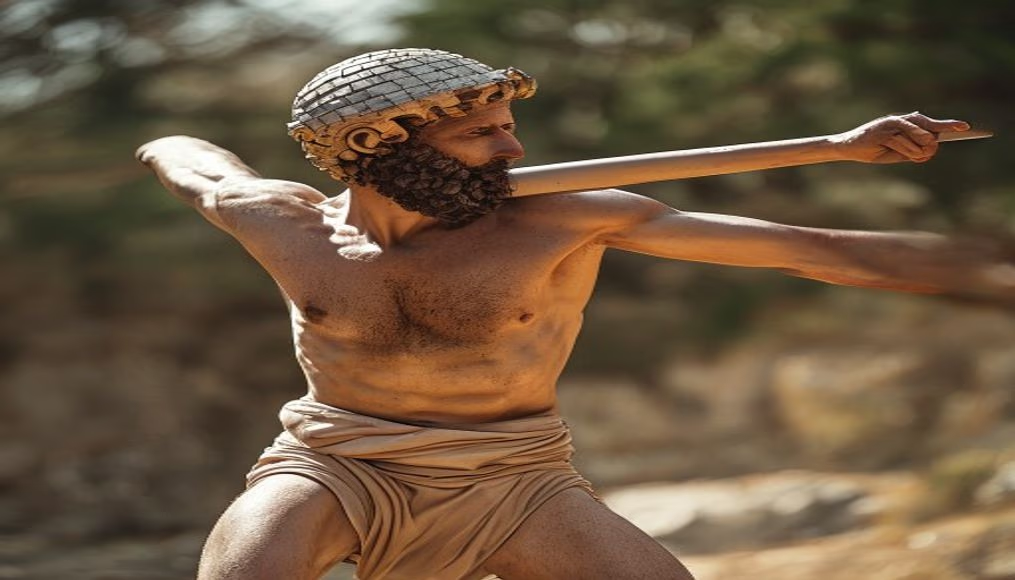
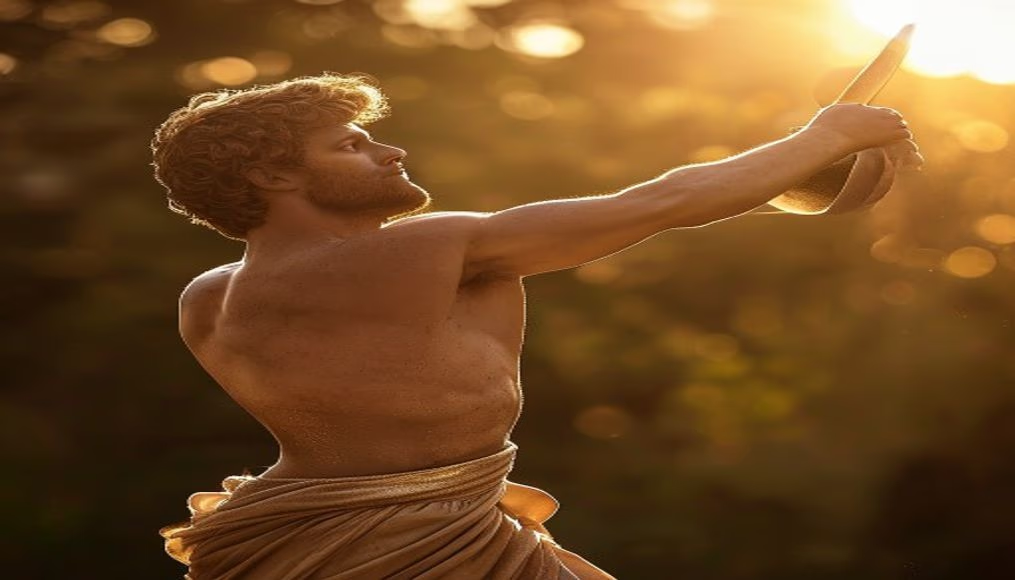
Kouros are archaic Greek statues of nude youths, symbols of idealized beauty and power. Learn about their history, function, and artistic legacy.
About this subject
Kouros (plural; singular: kouros) are statues of nude male youths carved in marble or bronze, which flourished during the Archaic period of ancient Greece (c. 700, 480 BCE). They represent one of the earliest Greek sculptural attempts to capture the human form in motion, albeit in a rigid, frontal manner. Initially inspired by Egyptian models, kouros evolved toward a more naturalistic style over time.
These statues served multiple purposes: they could be votive offerings at sanctuaries, grave markers for aristocrats, or representations of deities such as Apollo. The characteristic pose is upright, with one foot slightly forward, arms attached to the sides, and clenched fists. The archaic smile, present on many examples, does not express emotion but rather a sign of vitality and auspiciousness.
The most famous kouros is the Anavysos Kouros (c. 530 BCE), discovered in Attica, which exhibits more harmonious proportions and refined anatomical details. Other notable examples include the Tenea Kouros and the Piraeus Kouros. These works deeply influenced later Greek sculpture, paving the way for the realism of the Classical period, as seen in Myron's Discobolus. Today, many kouros are housed in museums such as the National Archaeological Museum of Athens and the Louvre.
Frequently Asked Questions
What is the difference between a kouros and a kore?
Kouros is a nude male statue, while kore (plural: korai) is a clothed female statue, usually with elaborate garments and an archaic smile. Both are typical of the Greek Archaic period.
Where were the main kouros statues found?
The most significant kouros were discovered in sites such as Anavysos, Tenea (Corinth), Piraeus, and the sanctuary of Delphi. Many were in funerary or votive contexts.
Why do kouros statues have an archaic smile?
The archaic smile does not indicate emotion but rather an artistic convention to convey vitality, health, and the auspicious nature of the figure. It was a stylistic feature of the period.
Direct URL
https://pub-c7d6a6ea828543ac903a74a341ccb2e1.r2.dev/imagens/kouros-greek-commercial-product-photography-p7.avifHow to credit
Include a visible link back to UtilizAí. Copy one of the snippets below:
<a href="https://xn--utiliza-eza.com/en/midia/imagens/kouros-greek-commercial-product-photography-p7">Kouros greek</a> by <a href="https://xn--utiliza-eza.com">UtilizAí</a>, licensed under <a href="https://creativecommons.org/licenses/by/4.0/">CC BY 4.0</a>.
[Kouros greek](https://xn--utiliza-eza.com/en/midia/imagens/kouros-greek-commercial-product-photography-p7) by [UtilizAí](https://xn--utiliza-eza.com), CC BY 4.0
License: CC-BY-4.0