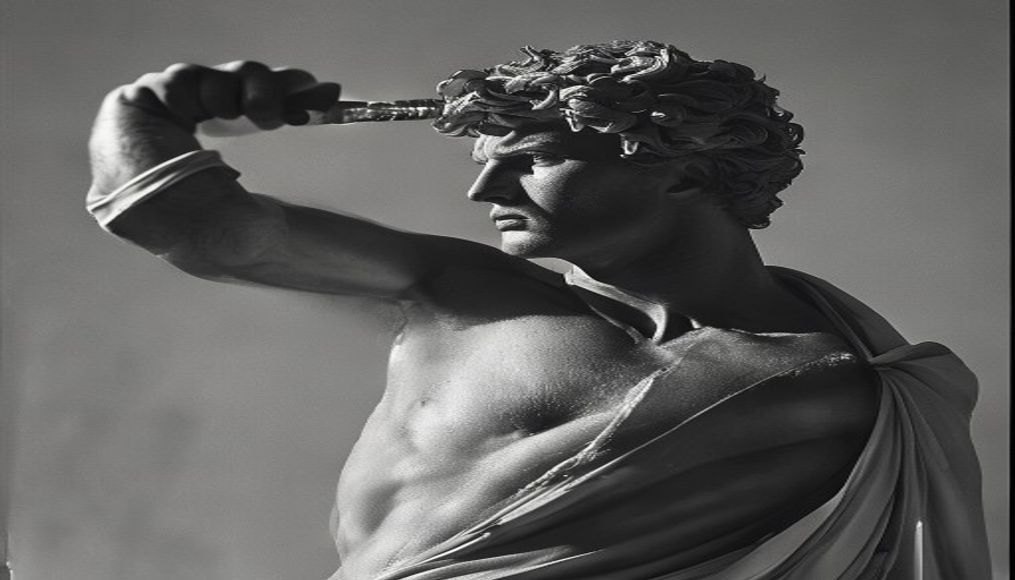
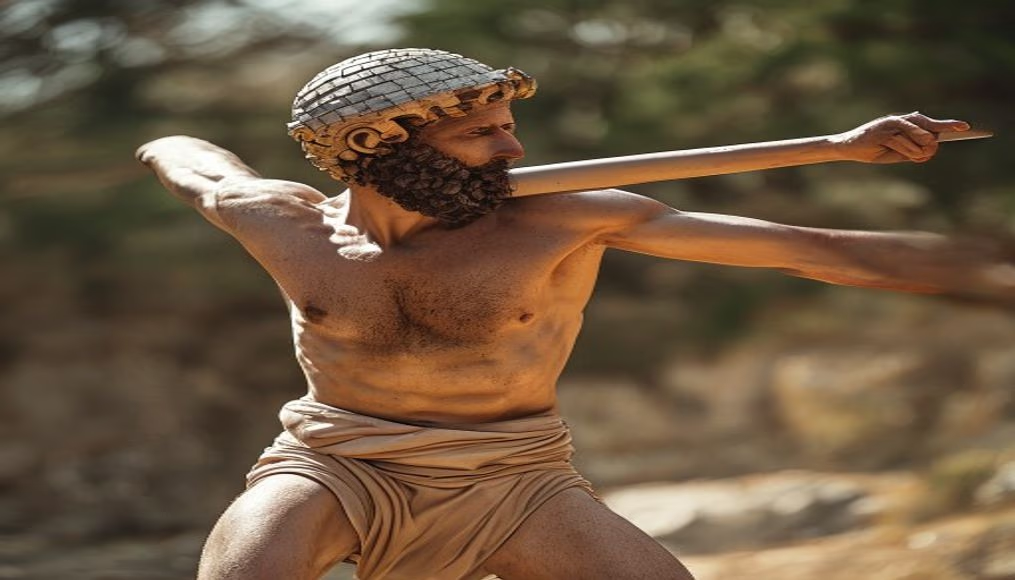
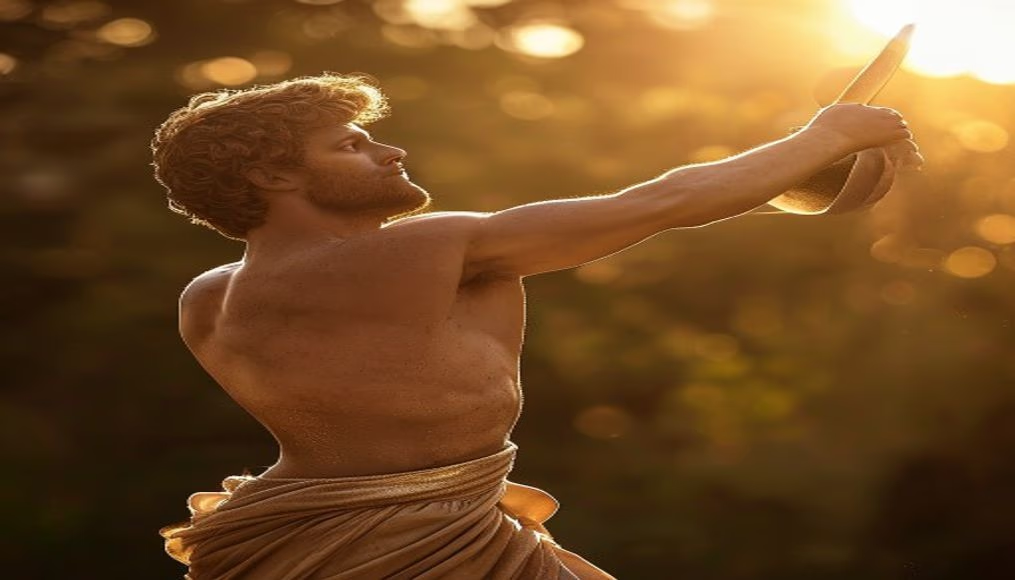
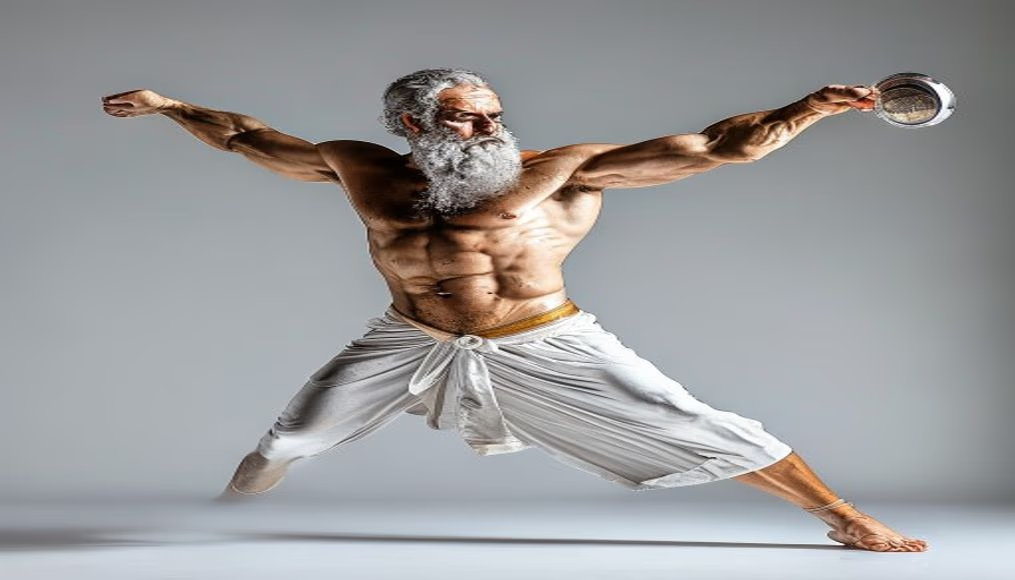
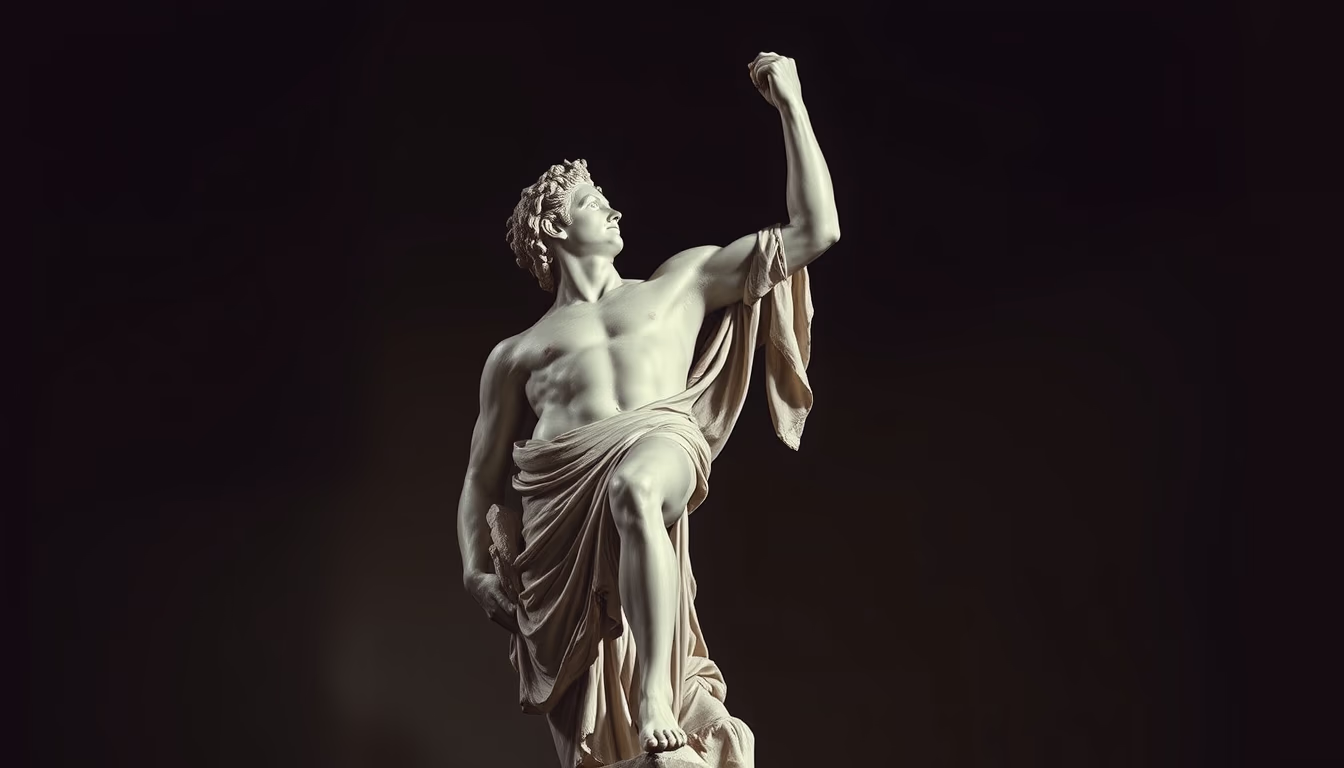
Kouros greek
1344×768 · AVIF · CC BY 4.0
The kouros is an archaic Greek sculpture of a nude young man standing frontally, symbolizing ideal beauty and the cultural transition to the Classical period.
About this subject
The kouros (plural kouroi) represents one of the most iconic sculptural forms of ancient Greece's Archaic period, dating roughly between 650 and 500 BCE. These marble or bronze statues depict young males in a rigidly symmetrical frontal pose, with the left arm slightly bent and the right arm extended along the side. The word "kouros" means "youth" in Greek, and these works were often placed in sanctuaries or tombs as votive offerings or grave markers.
Egyptian influence is evident in the stance and layered hair treatment, but Greek kouroi innovated by rendering musculature with increased naturalism, albeit still stylized. The famous "archaic smile", an artificial facial expression suggesting vitality, is a hallmark. Notable examples include the Anavyssos Kouros (c. 530 BCE) and the Sounion Kouros, which illustrate the evolution toward more realistic proportions.
These statues were not merely art objects but symbols of status and civic virtue. They embodied the ideal of male beauty, youth, and strength, core values in Greek culture. Over time, the kouros style gave way to the Classical period, marked by contrapposto and greater naturalism, as seen in Polykleitos' Doryphoros. Today, kouroi are studied as milestones in art history, offering insights into the religion, society, and aesthetics of Archaic Greece.
Frequently Asked Questions
What is the origin of the word 'kouros'?
Kouros (plural kouroi) is a Greek word meaning 'youth' or 'young man'. The term was adopted by archaeology to designate the specific type of male statue from the Archaic Greek period.
What was the function of kouroi in ancient Greece?
Kouroi were used as votive offerings in religious sanctuaries, as funerary statues at tombs, and as representations of gods or heroes. They also celebrated athletic victories.
Why do kouroi have a characteristic smile?
The so-called 'archaic smile' is an artistic convention aimed at conveying vitality and well-being. Although it does not reproduce a natural facial expression, this feature was used to bring the sculpture to life.
Direct URL
https://pub-c7d6a6ea828543ac903a74a341ccb2e1.r2.dev/imagens/kouros-greek-aerial-drone-shot-p2.avifHow to credit
Include a visible link back to UtilizAí. Copy one of the snippets below:
<a href="https://xn--utiliza-eza.com/en/midia/imagens/kouros-greek-aerial-drone-shot-p2">Kouros greek</a> by <a href="https://xn--utiliza-eza.com">UtilizAí</a>, licensed under <a href="https://creativecommons.org/licenses/by/4.0/">CC BY 4.0</a>.
[Kouros greek](https://xn--utiliza-eza.com/en/midia/imagens/kouros-greek-aerial-drone-shot-p2) by [UtilizAí](https://xn--utiliza-eza.com), CC BY 4.0
License: CC-BY-4.0