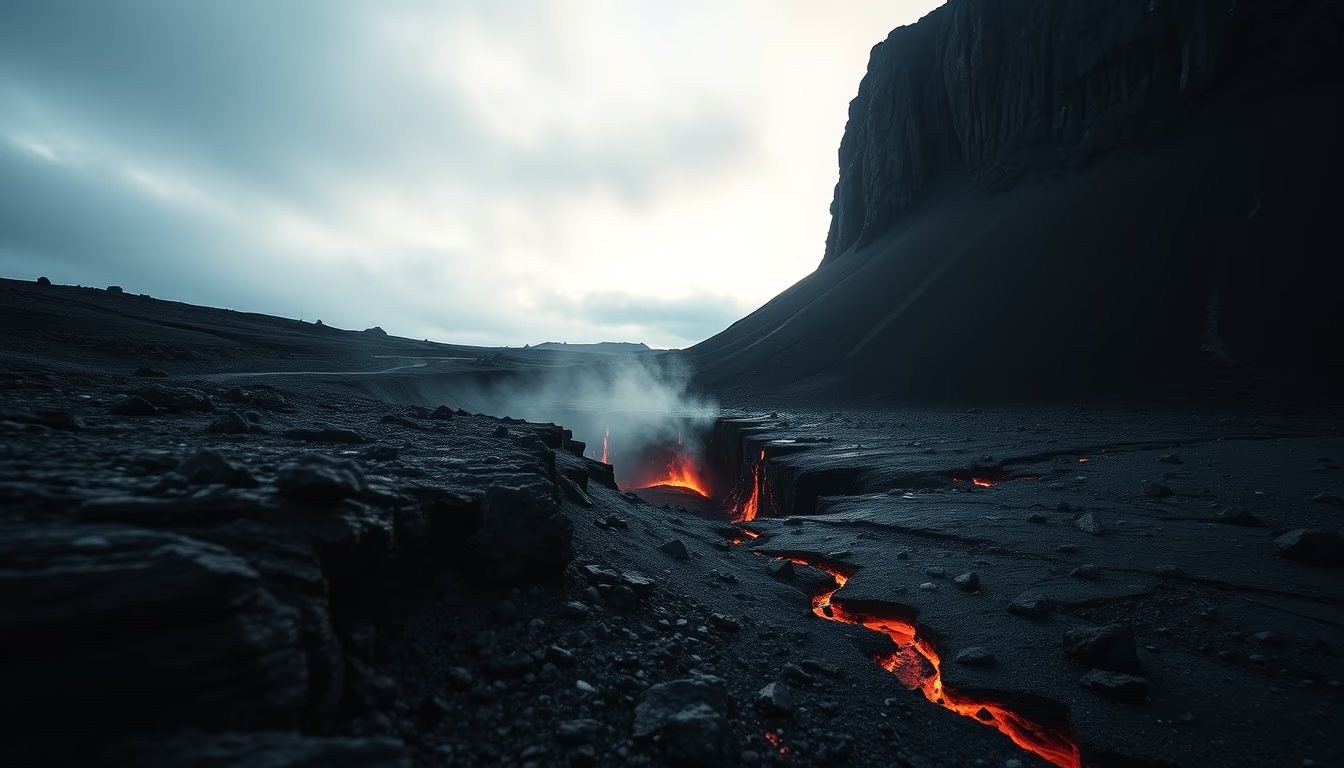
Kilauea hawaii lava flow
1344×768 · AVIF · CC BY 4.0
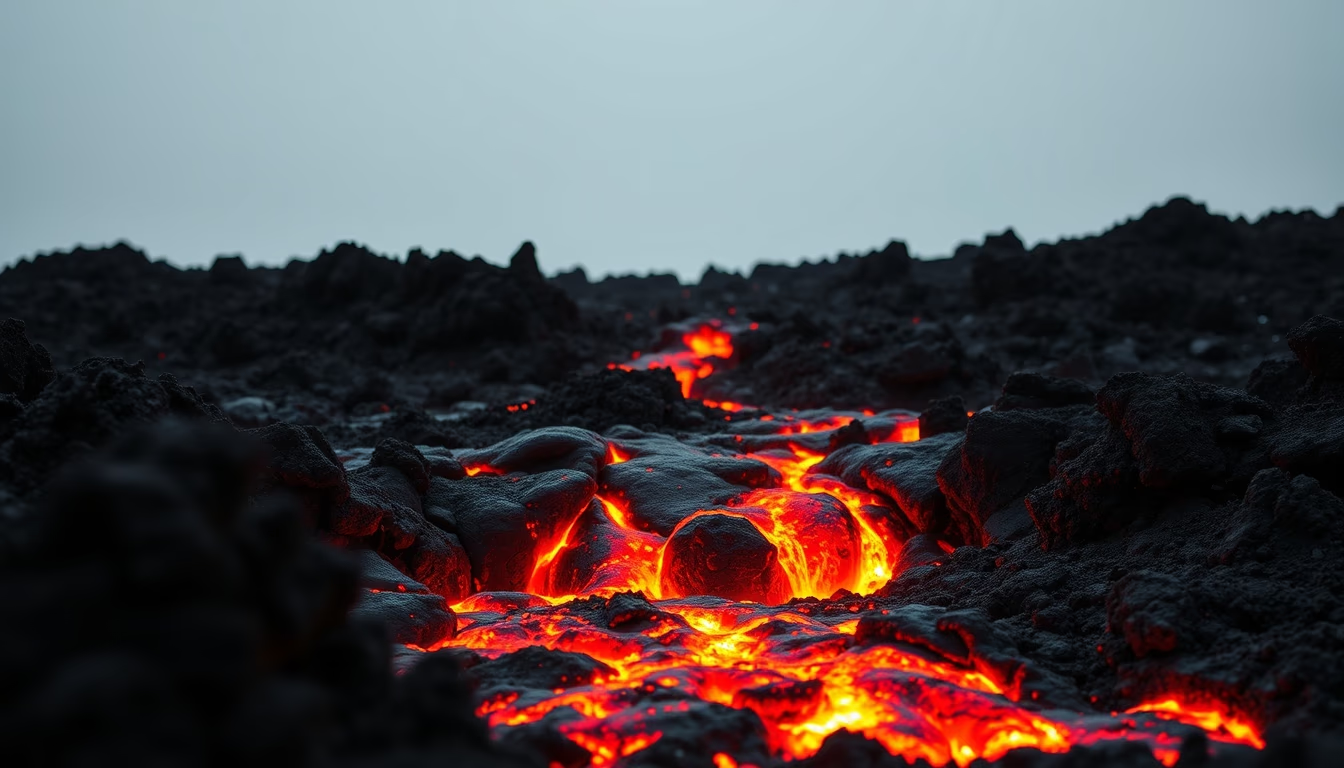
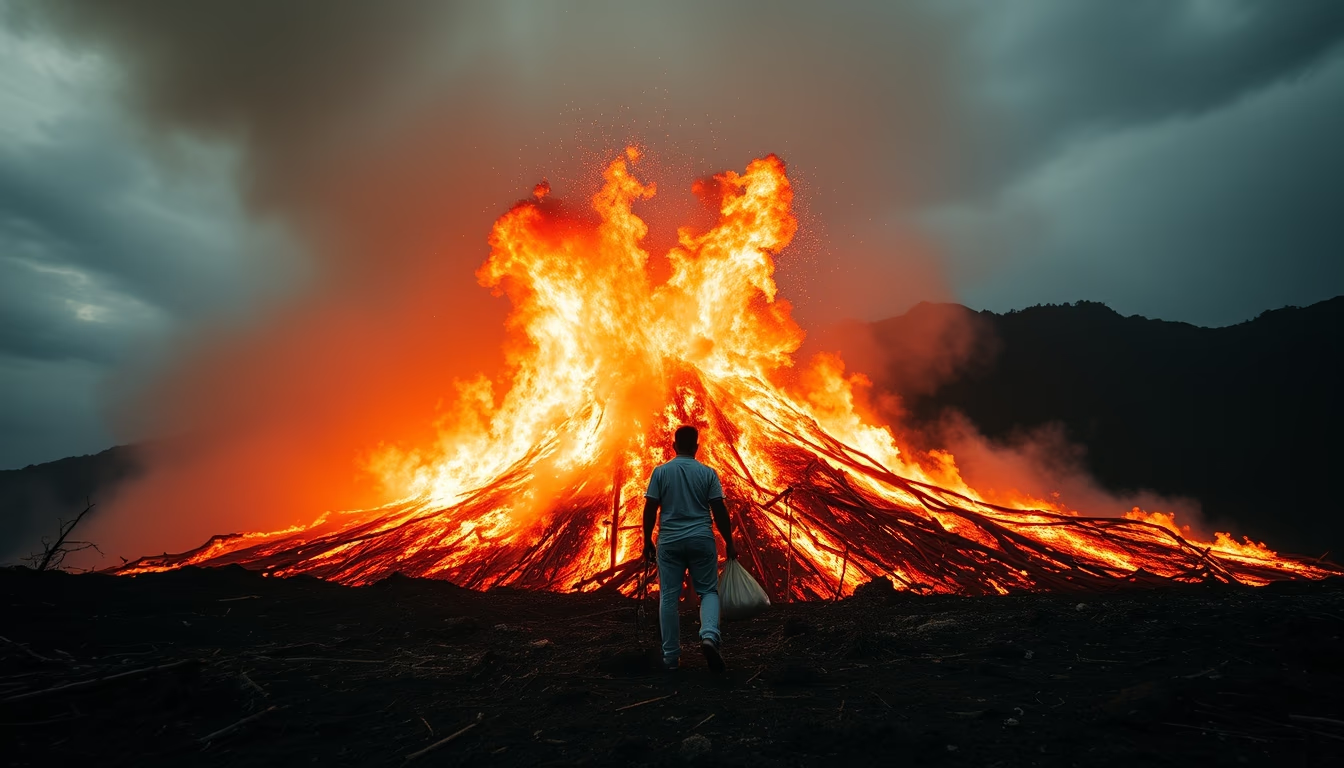
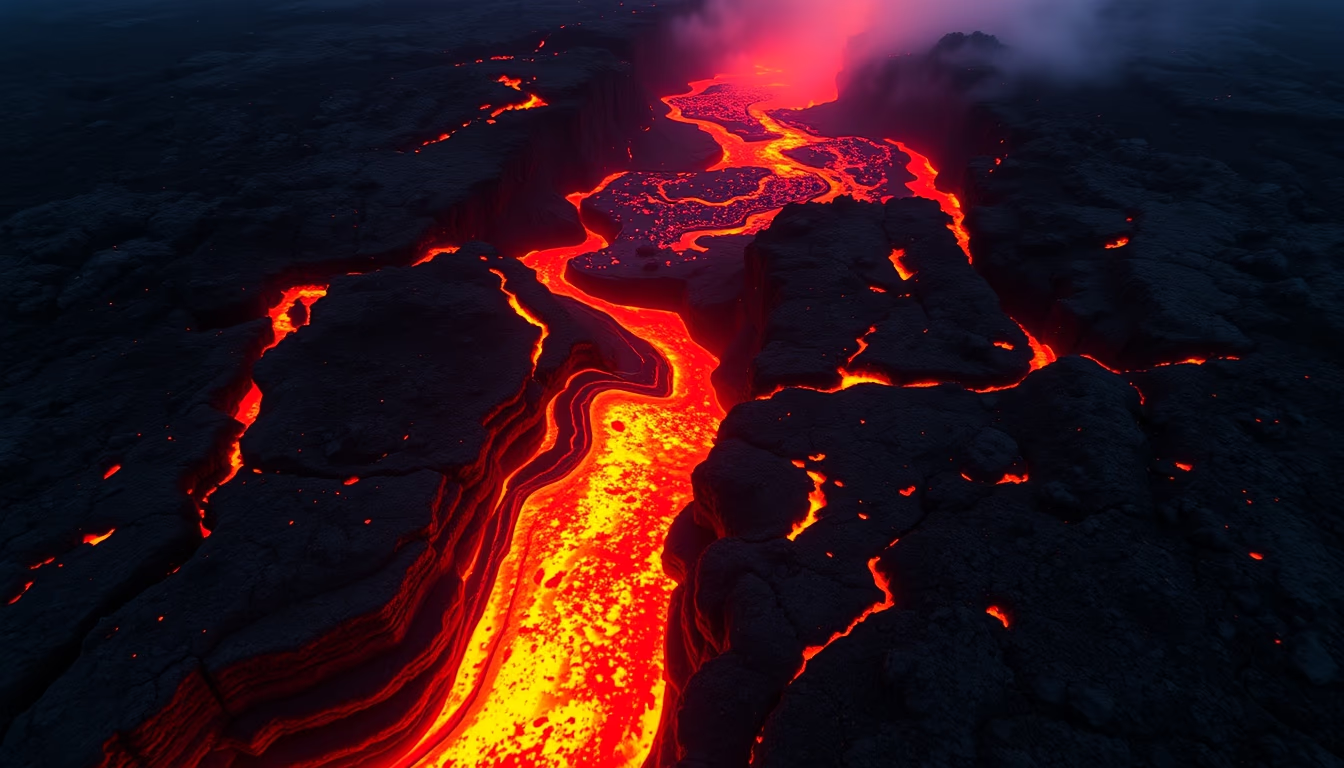
Kilauea's lava flow, one of the most active volcanoes on Earth, shapes the Hawaiian landscape and draws scientists and tourists.
About this subject
Kilauea, located on the Big Island of Hawaii, is one of the most active volcanoes on Earth, with continuous eruptions since 1983. Its basaltic lava flows, often in the form of pahoehoe (smooth and ropy) or aa (rough and clinkery), slowly advance downhill toward the sea, creating new land and reshaping the coastline. The activity is closely monitored by the Hawaiian Volcano Observatory (HVO) using seismic data, GPS, and satellite imagery to forecast eruptions and issue warnings.
Unlike explosive volcanoes such as Mount Vesuvius, Kilauea produces effusive eruptions with low-viscosity lava that flows long distances. The 2018 eruption, for instance, destroyed hundreds of homes in the Puna district and covered large areas with lava, permanently altering the local geography. Despite the hazards, volcanic activity is central to Hawaiian culture: Pele, the goddess of fire and volcanoes, is revered as a creator of new land. Visitors can safely observe the phenomenon at Hawaii Volcanoes National Park, which offers trails and overlooks.
Interestingly, Kilauea is not an isolated volcano; it is part of the Mauna Loa complex, the largest volcano by volume on Earth. The interaction between the two magmatic systems influences seismicity and eruption rates. Lava samples from Kilauea are studied to understand Earth's mantle composition and partial melting processes. Additionally, cooling lava forms minerals like olivine, which can be found in the black sand beaches of Hawaii.
Frequently Asked Questions
Is Kilauea erupting right now?
Kilauea has been erupting almost continuously since 1983, with occasional pauses. The most recent activity occurs at Halemaʻumaʻu crater and along fissures in the East Rift Zone. Check the Hawaiian Volcano Observatory website for real-time updates.
Is it safe to visit Kilauea during an eruption?
Yes, as long as you follow guidelines from Hawaii Volcanoes National Park and the HVO. Safe areas are marked, and visitors can view lava from designated overlooks. Never approach lava flows or unstable terrain.
What is the difference between pahoehoe and aa lava?
Pahoehoe is fluid lava that forms smooth, ropy surfaces, while aa is more viscous and breaks into rough, jagged blocks. Both types are common in Kilauea eruptions.
Direct URL
https://pub-c7d6a6ea828543ac903a74a341ccb2e1.r2.dev/imagens/kilauea-hawaii-lava-flow-studio-still-life-fresh5.avifHow to credit
Include a visible link back to UtilizAí. Copy one of the snippets below:
<a href="https://xn--utiliza-eza.com/en/midia/imagens/kilauea-hawaii-lava-flow-studio-still-life-fresh5">Kilauea hawaii lava flow</a> by <a href="https://xn--utiliza-eza.com">UtilizAí</a>, licensed under <a href="https://creativecommons.org/licenses/by/4.0/">CC BY 4.0</a>.
[Kilauea hawaii lava flow](https://xn--utiliza-eza.com/en/midia/imagens/kilauea-hawaii-lava-flow-studio-still-life-fresh5) by [UtilizAí](https://xn--utiliza-eza.com), CC BY 4.0
License: CC-BY-4.0