Kilauea hawaii lava flow
1344×768 · AVIF · CC BY 4.0
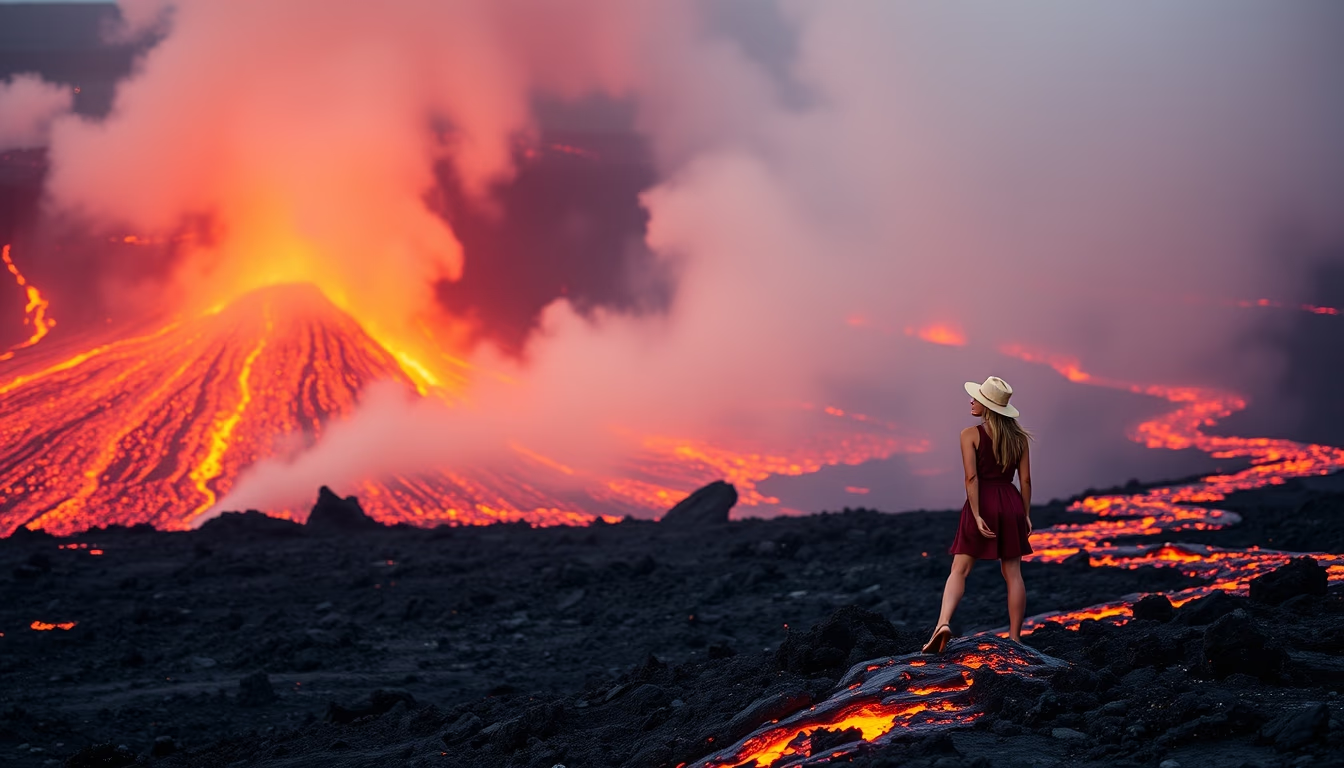
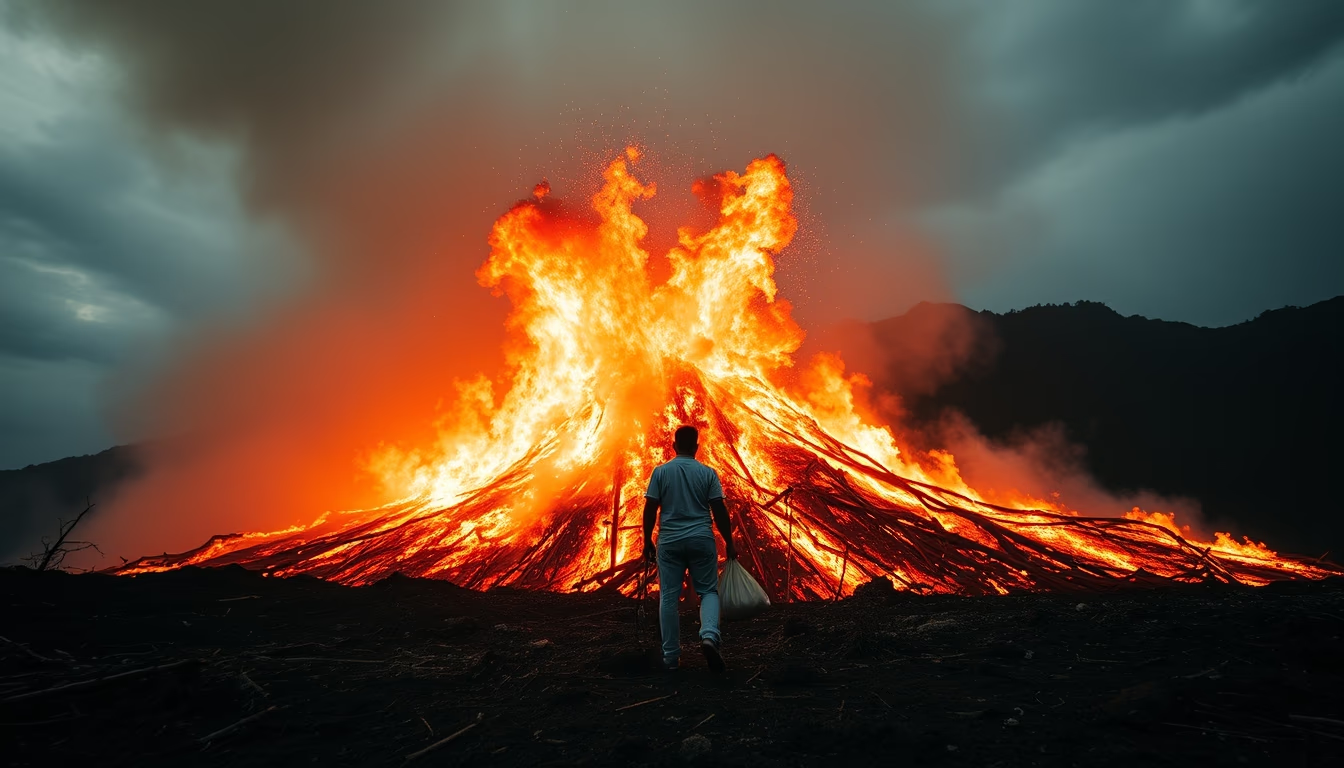
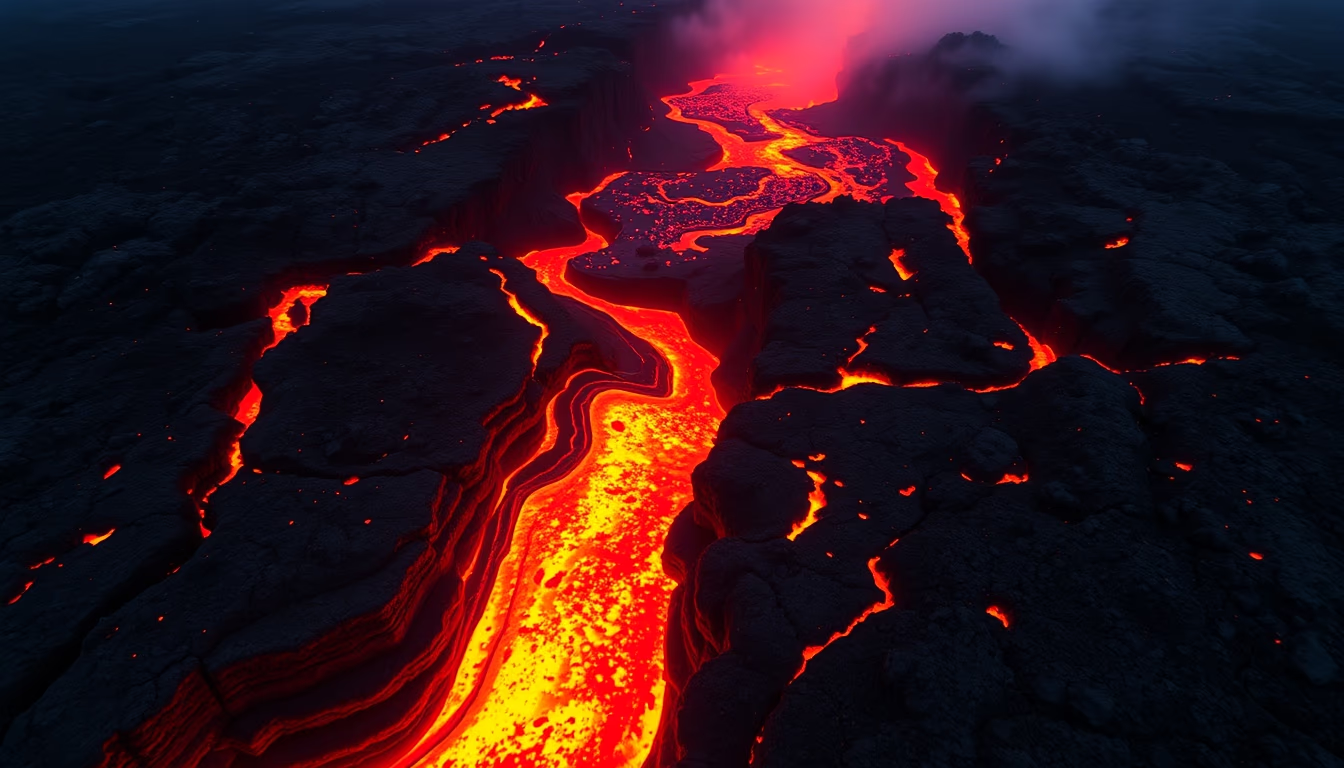
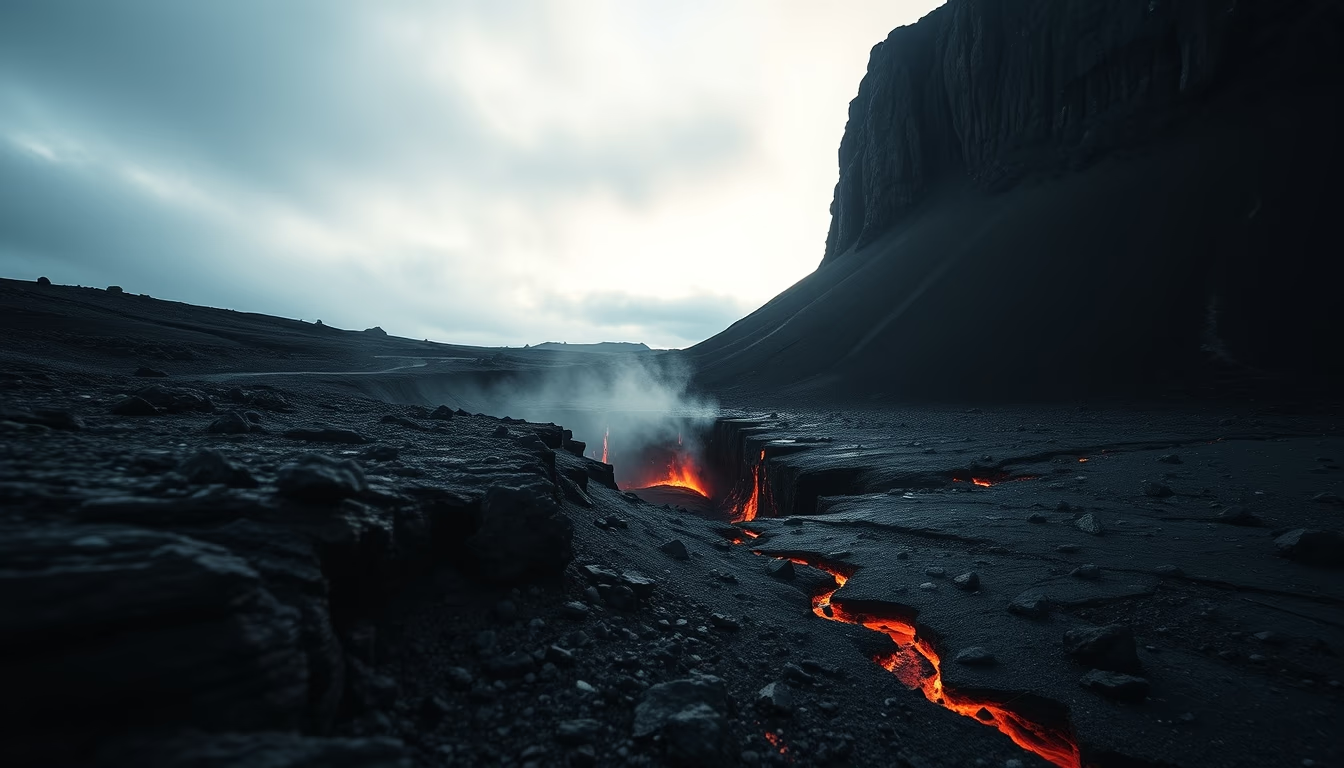
Lava flow from Kilauea, one of the world's most active volcanoes on the Big Island of Hawaii, shapes landscapes and reveals geological processes in real time.
About this subject
Kilauea is a shield volcano located on the Big Island of Hawaii, part of Hawaii Volcanoes National Park. Its eruptive activity has been nearly continuous since 1983, with basaltic lava flows slowly advancing toward the ocean. Two types of lava are common: pahoehoe, with a smooth, ropy surface, and aa, which is rough and fragmented. Kilauea is considered the world's most active volcano by volume of lava emitted, and its eruptions provide valuable data for volcanology.
The area around Kilauea holds deep cultural significance for Native Hawaiians. The volcano is associated with the goddess Pele, who resides in Halemaʻumaʻu crater. Local legends tell of Pele controlling fire and lava, and offerings are left at the crater rim to appease her. Volcanic activity has shaped not only the geology but also mythology and tourism, attracting millions of visitors each year.
Lava flows at Kilauea are closely monitored by the Hawaiian Volcano Observatory (HVO) of the USGS. They use seismic sensors, satellite imagery, and drones to track the direction and speed of lava, issuing warnings for nearby communities. The 2018 eruption, which destroyed hundreds of homes in the Puna district, demonstrated the destructive power of these flows, but also the resilience of ecosystems that quickly regenerate on new rock.
Visiting Kilauea offers a unique opportunity to witness the creation of new land. Hawaii Volcanoes National Park provides controlled access to safe areas, such as the crater rim and trails crossing solidified lava fields. At night, the glow of lava reflects on clouds, a spectacle that attracts photographers and scientists alike. Kilauea continues to serve as a natural laboratory for studying planetary processes, including the formation of volcanic mountains on Mars and Venus.
Frequently Asked Questions
How often does Kilauea erupt?
Kilauea has been erupting almost continuously since 1983, though activity can range from steady lava flows to quiet periods. Major eruptions like the 2018 event occur every few decades.
Is it safe to visit Kilauea during an eruption?
Yes, as long as you follow guidelines from Hawaii Volcanoes National Park. Safe viewing areas are designated, and scientists constantly monitor activity to ensure visitor safety.
What is the difference between pahoehoe and aa lava?
Pahoehoe lava has a smooth, ropy surface, while aa lava is rough and fragmented with sharp edges. Both are common at Kilauea and result from the same basaltic composition but different flow rates and cooling.
Direct URL
https://pub-c7d6a6ea828543ac903a74a341ccb2e1.r2.dev/imagens/kilauea-hawaii-lava-flow-high-fashion-editorial-fresh1.avifHow to credit
Include a visible link back to UtilizAí. Copy one of the snippets below:
<a href="https://xn--utiliza-eza.com/en/midia/imagens/kilauea-hawaii-lava-flow-high-fashion-editorial-fresh1">Kilauea hawaii lava flow</a> by <a href="https://xn--utiliza-eza.com">UtilizAí</a>, licensed under <a href="https://creativecommons.org/licenses/by/4.0/">CC BY 4.0</a>.
[Kilauea hawaii lava flow](https://xn--utiliza-eza.com/en/midia/imagens/kilauea-hawaii-lava-flow-high-fashion-editorial-fresh1) by [UtilizAí](https://xn--utiliza-eza.com), CC BY 4.0
License: CC-BY-4.0