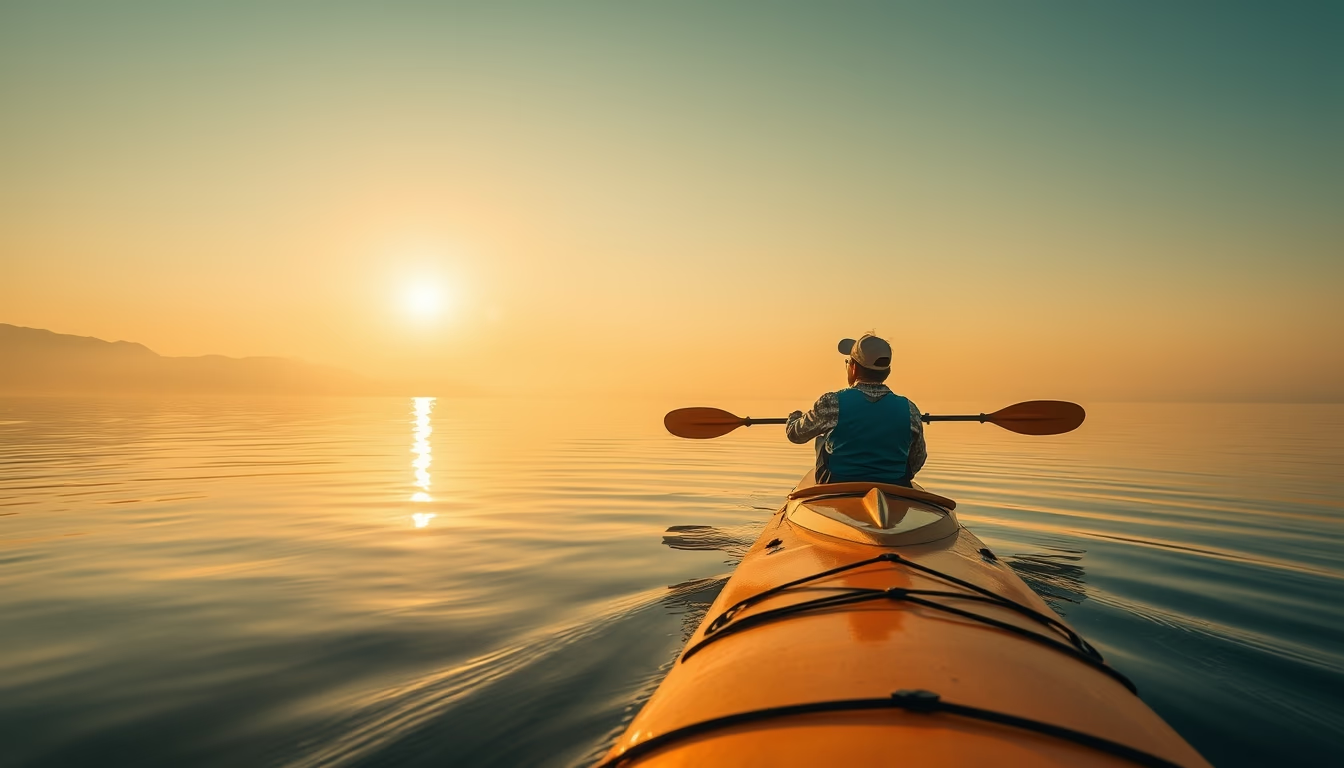
Kayak on calm water
1344×768 · AVIF · CC BY 4.0
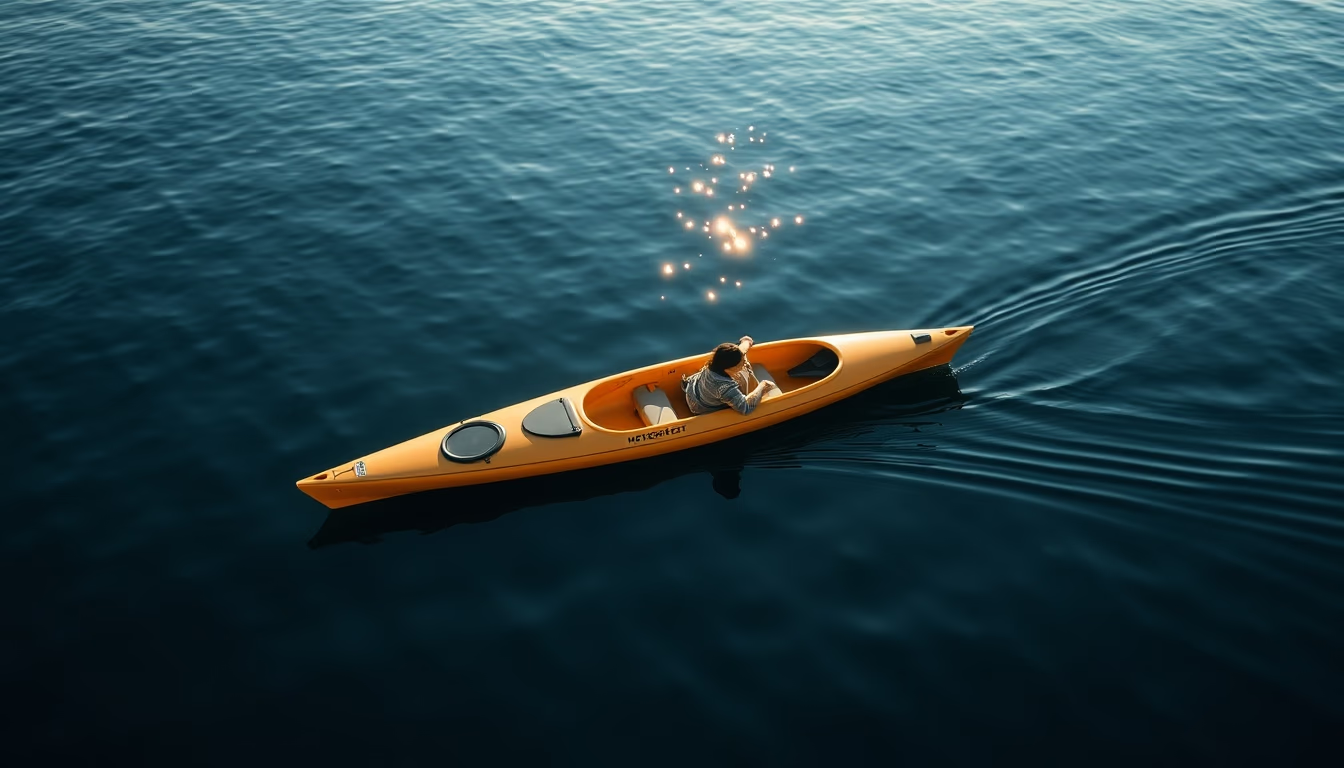
Kayaking on calm water combines nature contact, low-impact exercise, and moments of introspection.
About this subject
Kayaking on calm water is one of the most accessible forms of the sport. Unlike whitewater paddling, it takes place on lakes, reservoirs, sheltered bays, and gentle river sections. In the United States, places like Lake Tahoe, the Florida Keys, and the Boundary Waters Canoe Area are celebrated for flatwater paddling. The lack of strong waves allows paddlers to focus entirely on stroke technique and environmental awareness.
Two main kayak types suit calm water: recreational kayaks, which are wider and more stable for short trips, and touring kayaks, longer and more efficient for longer distances. Basic gear includes the kayak, a double-bladed paddle, a personal flotation device (PFD), and sometimes a spray skirt. Proper technique uses torso rotation rather than just arm strength, which reduces fatigue and helps prevent injury.
The physical benefits are substantial: 30 minutes of paddling burns roughly 150-200 calories, strengthens the back, shoulders, and core, and improves cardiovascular health. Mentally, the combination of rhythmic motion, near silence, and natural scenery lowers stress and promotes mindfulness. By 2026, the rise of portable inflatable kayaks, which pack into a backpack, is making flatwater kayaking even more accessible, allowing spontaneous exploration of any body of water.
Beginners are advised to take a short introductory course covering proper entry/exit, paddle grip, and self-rescue techniques. It is also critical to check weather forecasts and avoid strong winds, which can quickly turn a calm lake into a challenging environment. Kayaking is a democratic sport; with proper training, people of all ages and fitness levels can enjoy the simple pleasure of gliding across the water.
Frequently Asked Questions
What is the difference between a kayak and a canoe?
In a kayak, the paddler sits with legs extended forward and uses a double-bladed paddle. In a canoe, the paddler kneels or sits and uses a single-bladed paddle. Kayaks are usually decked, while canoes are open.
Do I need to know how to swim for calm water kayaking?
Yes, swimming ability is recommended. However, wearing a personal flotation device (PFD) is mandatory and provides extra safety. Even strong swimmers should wear one.
Where can I rent a kayak in the US?
Most lakes, reservoirs, and coastal towns offer hourly or daily rentals. Famous spots include Lake Tahoe (California/Nevada), the Chicago Riverwalk, and the Florida Keys. Search for 'kayak rental near me' for local options.
Direct URL
https://pub-c7d6a6ea828543ac903a74a341ccb2e1.r2.dev/imagens/kayak-on-calm-water-magazine-editorial-p4.avifHow to credit
Include a visible link back to UtilizAí. Copy one of the snippets below:
<a href="https://xn--utiliza-eza.com/en/midia/imagens/kayak-on-calm-water-magazine-editorial-p4">Kayak on calm water</a> by <a href="https://xn--utiliza-eza.com">UtilizAí</a>, licensed under <a href="https://creativecommons.org/licenses/by/4.0/">CC BY 4.0</a>.
[Kayak on calm water](https://xn--utiliza-eza.com/en/midia/imagens/kayak-on-calm-water-magazine-editorial-p4) by [UtilizAí](https://xn--utiliza-eza.com), CC BY 4.0
License: CC-BY-4.0