Jet ski water spray
1344×768 · AVIF · CC BY 4.0
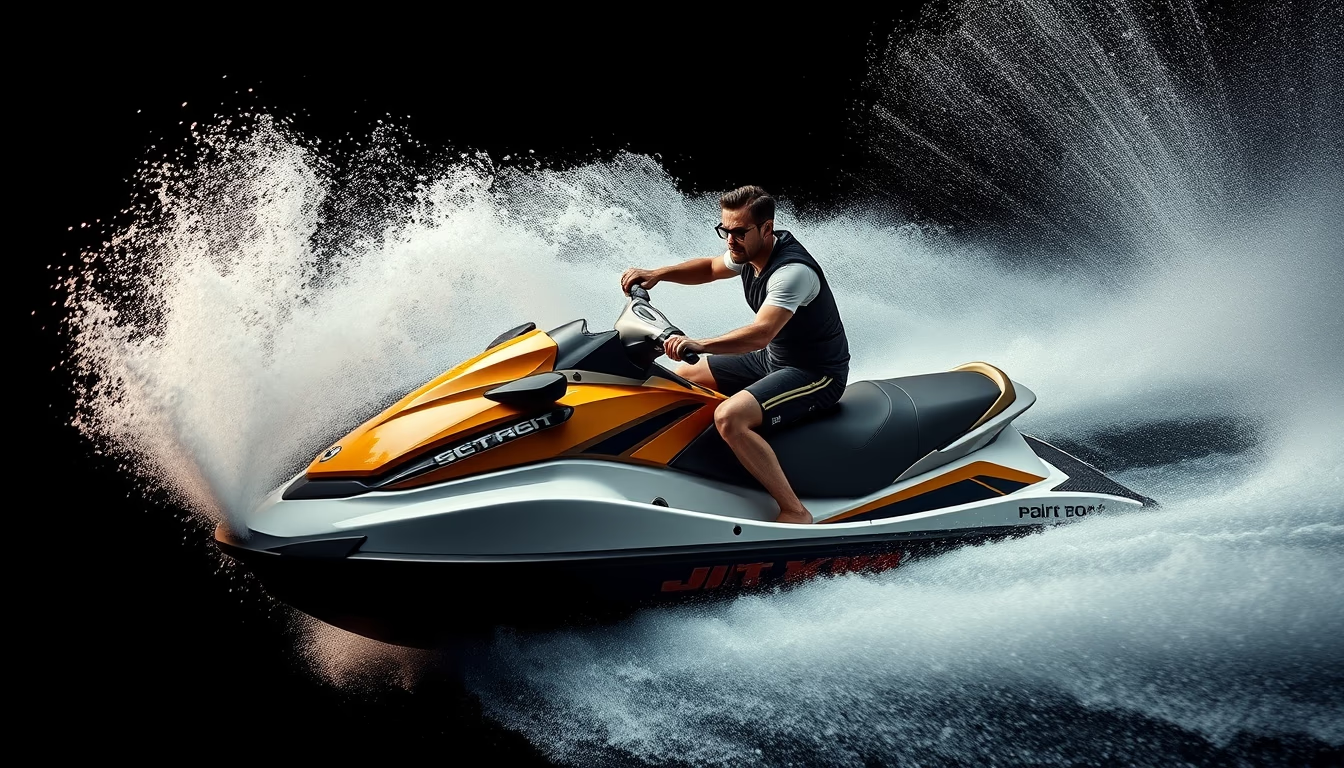
A jet ski is a personal watercraft that produces a distinctive water spray as it moves at high speed across lakes, rivers and seas.
About this subject
A jet ski, also known as a personal watercraft (PWC), is a recreational vehicle designed to glide over water using a jet drive system. Unlike traditional boats, it has no exposed propeller; instead, an impeller draws water in and ejects it at high pressure, creating propulsion and the iconic side spray. This system, invented by Clayton Jacobson II in the 1960s, allows agile maneuvers and speeds exceeding 100 km/h (62 mph) in high-performance models.
In the United States and many countries, jet ski usage is regulated by coast guard authorities, requiring operators to have a boating license and wear life jackets. Popular locations include the Florida Keys, Lake Tahoe, and the Great Lakes. The spray serves both as a visual thrill and a practical indicator of speed and turning intensity, especially during sharp turns where the water plume rises dramatically.
Culturally, jet skis are synonymous with summer fun, water sports, and adrenaline. They feature in competitive events like the World PWC Championship, where riders execute tight turns and wave jumps, relying on the spray pattern to gauge traction. Interestingly, “Jet Ski” is a trademark of Kawasaki, but it has become a generic term for all personal watercraft in many languages, including Portuguese and English.
Environmentally, the spray can carry fuel and oil residues from two-stroke engines, prompting bans in some protected areas. However, electric models such as the Taiga Orca are gaining popularity, offering the same water-spray experience with zero emissions. Proper maintenance and eco-friendly practices help preserve waterways for future riders.
Frequently Asked Questions
Do I need a license to ride a jet ski in the United States?
Yes, most states require a boating safety certificate or a specific PWC license, and operators under 16 often need adult supervision. Always check local laws.
How fast can a typical jet ski go?
Recreational models reach 80 to 100 km/h (50-62 mph), while performance jet skis can exceed 120 km/h (75 mph) depending on engine power and water conditions.
Are jet skis bad for the environment?
Traditional combustion engines can release fuel and oil residues into the water, but modern electric jet skis produce zero emissions. Proper maintenance helps minimize pollution.
Direct URL
https://pub-c7d6a6ea828543ac903a74a341ccb2e1.r2.dev/imagens/jet-ski-water-spray-studio-editorial-portrait-p1.avifHow to credit
Include a visible link back to UtilizAí. Copy one of the snippets below:
<a href="https://xn--utiliza-eza.com/en/midia/imagens/jet-ski-water-spray-studio-editorial-portrait-p1">Jet ski water spray</a> by <a href="https://xn--utiliza-eza.com">UtilizAí</a>, licensed under <a href="https://creativecommons.org/licenses/by/4.0/">CC BY 4.0</a>.
[Jet ski water spray](https://xn--utiliza-eza.com/en/midia/imagens/jet-ski-water-spray-studio-editorial-portrait-p1) by [UtilizAí](https://xn--utiliza-eza.com), CC BY 4.0
License: CC-BY-4.0