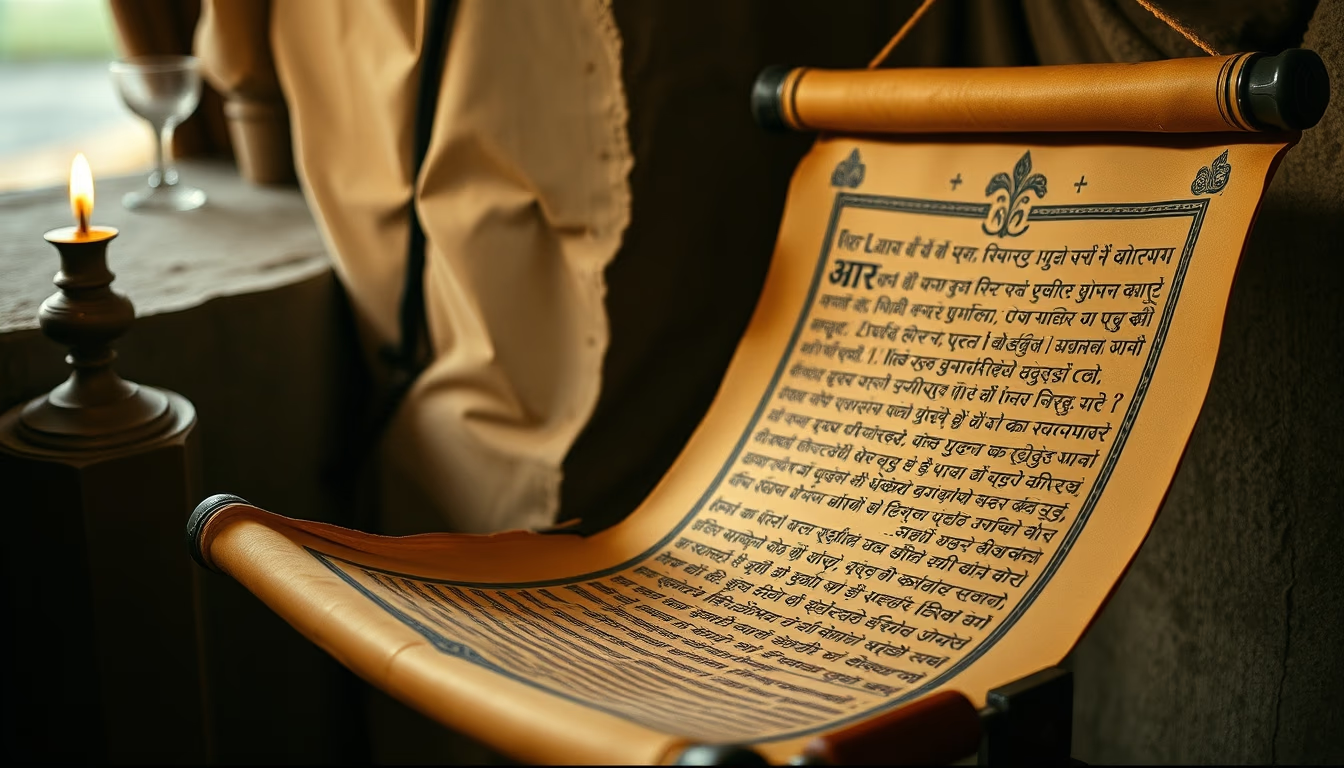
Japanese kanji shodo
1344×768 · AVIF · CC BY 4.0

Japanese shodo calligraphy is an ancient art combining technique, spirituality, and aesthetic expression, using brushes and sumi ink on washi paper.
About this subject
Shodo, Japanese calligraphy, originated from Chinese calligraphy (shufa) brought to Japan around the 6th century with Buddhism and kanji characters. Unlike Western calligraphy, shodo emphasizes not just legibility but the capture of movement, energy (ki), and the calligrapher's state of mind. Each stroke is executed in a single brushstroke without corrections, requiring years to master brush pressure, speed, and angle.
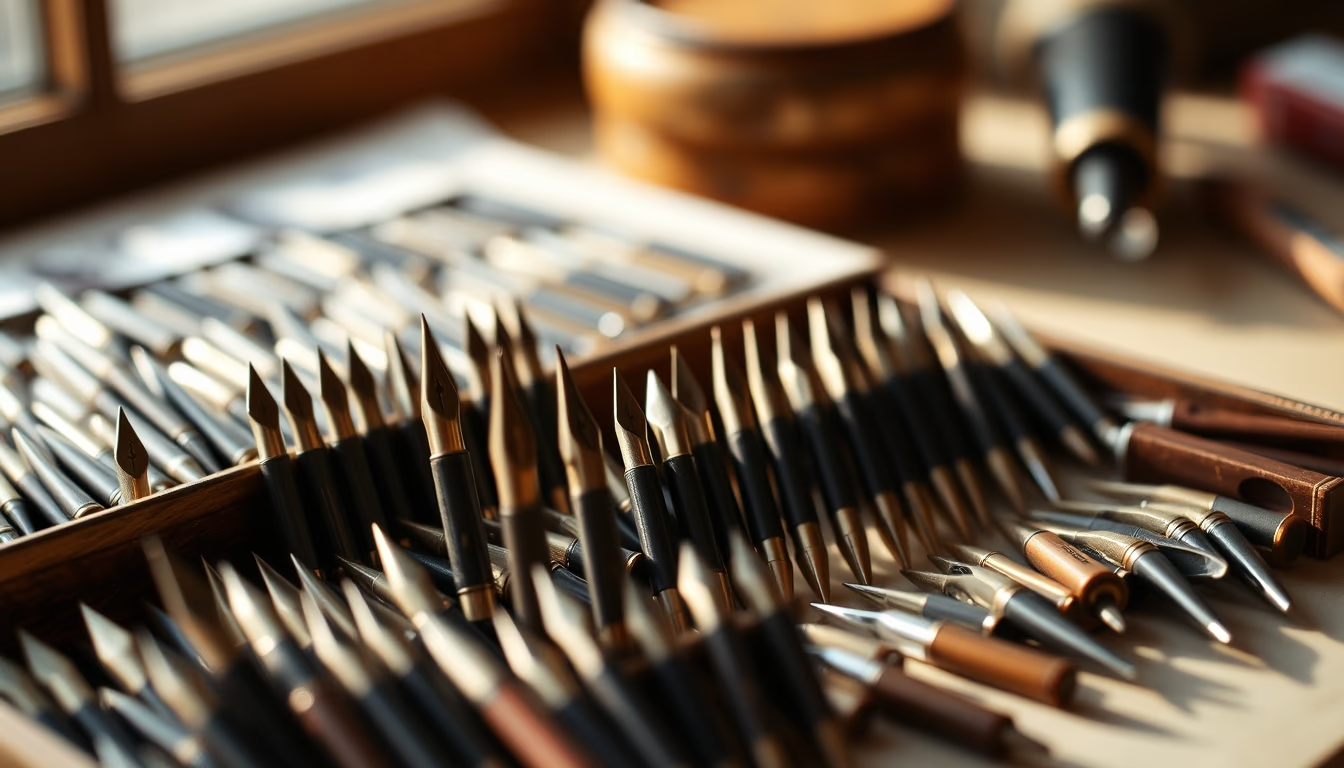
The traditional tools of shodo are called the Four Treasures of Study: brush (fude), sumi ink (made from soot and animal glue), washi paper (fibrous and absorbent), and the inkstone (suzuri) where ink is ground. The practice also incorporates meditative elements from Zen Buddhism, often seen in temples and ceremonies. Three main styles exist: kaisho (block, formal), gyosho (semi-cursive), and sosho (cursive, highly expressive).
Today, shodo has transcended its religious and literary roots to appear in contemporary design, fashion, and high-fashion editorials. The contrast between ancient tradition and modern aesthetics creates powerful visual compositions, such as editorials that blend kimonos and calligraphy with bold silhouettes. Artists like Toko Shinoda and Souun Takeda demonstrate how shodo can adapt to abstract canvases.
A fun fact: shodo is the only art in Japan that can be practiced by anyone regardless of social class, and it is part of the school curriculum. The Japan Calligraphy Association ranks practitioners into grades similar to kyu and dan in judo. Annual exhibitions like the Tokyo Calligraphy Exhibition showcase thousands of works nationwide.
Frequently Asked Questions
What is the difference between shodo and Western calligraphy?
Shodo is more than beautiful writing: it prioritizes brush flow, breathing, and spiritual expression, while Western calligraphy focuses on consistency and ornamentation. In shodo, each stroke is irreversible.
How long does it take to learn shodo?
Basic techniques can be learned in a few months, but mastery takes decades. Daily practice is essential, and many calligraphers dedicate their entire lives to refinement.
Is shodo still practiced in modern Japan?
Yes, it is a popular activity for all ages. There are classes in schools, clubs, and studios, as well as competitions and exhibitions. Shodo is also used in design and media.
Direct URL
https://pub-c7d6a6ea828543ac903a74a341ccb2e1.r2.dev/imagens/japanese-kanji-shodo-high-fashion-editorial-fresh12.avifHow to credit
Include a visible link back to UtilizAí. Copy one of the snippets below:
<a href="https://xn--utiliza-eza.com/en/midia/imagens/japanese-kanji-shodo-high-fashion-editorial-fresh12">Japanese kanji shodo</a> by <a href="https://xn--utiliza-eza.com">UtilizAí</a>, licensed under <a href="https://creativecommons.org/licenses/by/4.0/">CC BY 4.0</a>.
[Japanese kanji shodo](https://xn--utiliza-eza.com/en/midia/imagens/japanese-kanji-shodo-high-fashion-editorial-fresh12) by [UtilizAí](https://xn--utiliza-eza.com), CC BY 4.0
License: CC-BY-4.0