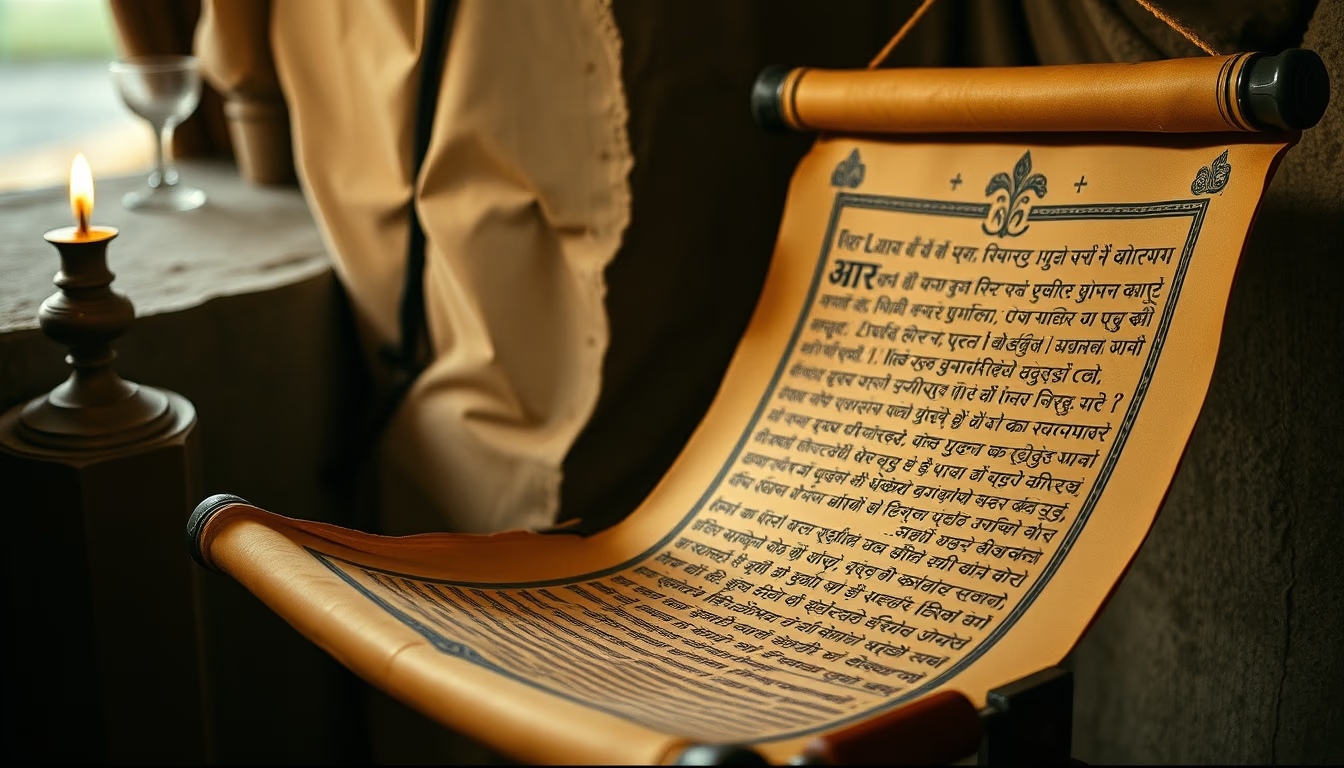
Indian devanagari sanskrit
1344×768 · AVIF · CC BY 4.0
Devanagari is the script used for Sanskrit, one of India's classical languages, with origins dating back to the 7th century BCE.
About this subject
Devanagari (देवनागरी) is an abugida writing system used for several Indian languages, with Sanskrit being the oldest among them. Its name means "script of the city of gods," reflecting its association with Hindu sacred texts such as the Vedas and Upanishads. The Devanagari alphabet consists of 47 main characters, including vowels and consonants, and is characterized by a horizontal line running along the top of the letters.
The origins of Devanagari trace back to Brahmi, the common ancestor of many South Asian scripts. Its current form was standardized around the 11th century CE, but Sanskrit inscriptions in Devanagari date back centuries earlier. Sanskrit itself is an Indo-European language that has heavily influenced the vocabulary of modern languages like Hindi, Bengali, and Marathi. Its grammar was systematized by Panini around the 4th century BCE, making it one of the oldest languages with a complete grammatical description.
Culturally, Devanagari is inseparable from Indian religious and philosophical traditions. Texts on Ayurveda, yoga, astronomy, and mathematics were written in this script. The mathematical concept of zero was documented in Sanskrit Devanagari in the Bakhshali manuscript from the 3rd century CE. Today, Devanagari is used by over 600 million people, primarily in northern India, and is the official script for Hindi, modern Sanskrit, and Marathi.
A notable feature is that Devanagari is phonetic: each symbol represents a basic sound, and consonant combinations are formed through complex ligatures. The alphabetical order follows phonetic principles, starting with vowels and then consonants arranged by place of articulation. This system aids correct pronunciation, essential for reciting mantras and sacred texts that rely on precise intonation.
Frequently Asked Questions
What is the difference between Devanagari and Sanskrit?
Devanagari is the writing system, while Sanskrit is the language that uses this system. Sanskrit can also be written in other scripts, such as Grantha, but Devanagari is the most common.
How many characters are in the Devanagari alphabet?
The standard Devanagari alphabet has 47 characters: 14 vowels and 33 consonants, plus diacritical marks and special ligatures.
Why does Devanagari have a horizontal line on top?
The horizontal line, called shirorekha, connects the letters and facilitates continuous writing. It is a distinctive feature of Devanagari and other scripts derived from Brahmi.
Direct URL
https://pub-c7d6a6ea828543ac903a74a341ccb2e1.r2.dev/imagens/indian-devanagari-sanskrit-fine-art-photography-fresh6.avifHow to credit
Include a visible link back to UtilizAí. Copy one of the snippets below:
<a href="https://xn--utiliza-eza.com/en/midia/imagens/indian-devanagari-sanskrit-fine-art-photography-fresh6">Indian devanagari sanskrit</a> by <a href="https://xn--utiliza-eza.com">UtilizAí</a>, licensed under <a href="https://creativecommons.org/licenses/by/4.0/">CC BY 4.0</a>.
[Indian devanagari sanskrit](https://xn--utiliza-eza.com/en/midia/imagens/indian-devanagari-sanskrit-fine-art-photography-fresh6) by [UtilizAí](https://xn--utiliza-eza.com), CC BY 4.0
License: CC-BY-4.0