Indian devanagari sanskrit
1344×768 · AVIF · CC BY 4.0

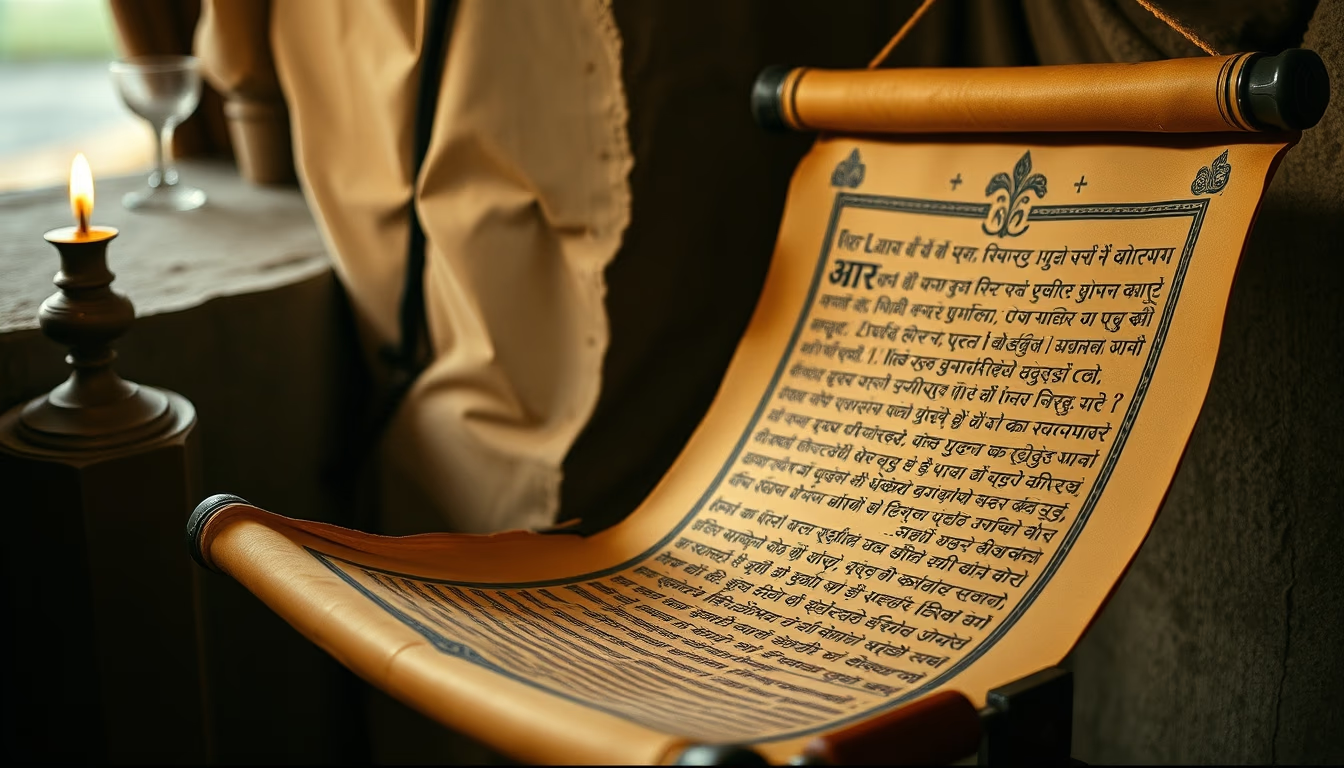
Devanagari script is an abugida writing system used for Sanskrit, the classical language of India, found in ancient religious and literary texts.
About this subject
Devanagari script is an abugida writing system that evolved from the Gupta script around the 7th century CE. It is primarily used for Sanskrit, the classical Indo-Aryan language of India, which served as the liturgical language of Hinduism and a medium for philosophy, science, and literature. The Vedas, composed between 1500 and 500 BCE, were originally transmitted orally and later transcribed in Devanagari, ensuring the preservation of these ancient texts.
As an abugida, Devanagari is phonetic: each consonant carries an inherent vowel that can be altered with diacritics. It is written left to right, characterized by a continuous horizontal line above the letters. The script contains 48 main characters: 14 vowels and 34 consonants, arranged by phonetic properties such as place and manner of articulation. This systematic organization allows precise representation of sounds, making it well-suited for languages with complex phonology.
Devanagari extends beyond Sanskrit to over 120 modern languages, including Hindi, Marathi, Nepali, and others. During the British colonial period, the script was standardized and promoted, eventually becoming the official writing system for several Indian states. Today, it is widely used in academic publishing, religious contexts, and digital media, serving as a cultural bridge between classical heritage and contemporary life.
Notably, Devanagari has influenced neighboring scripts such as Tibetan and remains a subject of paleographic study, reflecting historical migrations and cultural exchanges. UNESCO has included Sanskrit manuscripts written in Devanagari in its Memory of the World register, recognizing their global significance. The script's enduring utility and aesthetic distinctiveness continue to attract scholars and enthusiasts worldwide.
Frequently Asked Questions
What is the origin of the Devanagari script?
Devanagari originated from the Gupta script around the 7th century CE, developing into an abugida used primarily for Sanskrit.
How is Sanskrit used today?
Sanskrit is used in Hindu rituals, academic study of ancient texts, and as a linguistic foundation for modern Indo-Aryan languages.
How does Devanagari differ from other alphabets?
Devanagari is an abugida where each consonant carries an inherent vowel, and it features a continuous horizontal line above characters, unlike alphabets such as Latin.
Direct URL
https://pub-c7d6a6ea828543ac903a74a341ccb2e1.r2.dev/imagens/indian-devanagari-sanskrit-commercial-product-photography-fresh8.avifHow to credit
Include a visible link back to UtilizAí. Copy one of the snippets below:
<a href="https://xn--utiliza-eza.com/en/midia/imagens/indian-devanagari-sanskrit-commercial-product-photography-fresh8">Indian devanagari sanskrit</a> by <a href="https://xn--utiliza-eza.com">UtilizAí</a>, licensed under <a href="https://creativecommons.org/licenses/by/4.0/">CC BY 4.0</a>.
[Indian devanagari sanskrit](https://xn--utiliza-eza.com/en/midia/imagens/indian-devanagari-sanskrit-commercial-product-photography-fresh8) by [UtilizAí](https://xn--utiliza-eza.com), CC BY 4.0
License: CC-BY-4.0