Indian devanagari sanskrit
1344×768 · AVIF · CC BY 4.0
Devanagari, the script used for Sanskrit and many Indian languages, is a syllabic alphabet originating in the 7th century.
About this subject
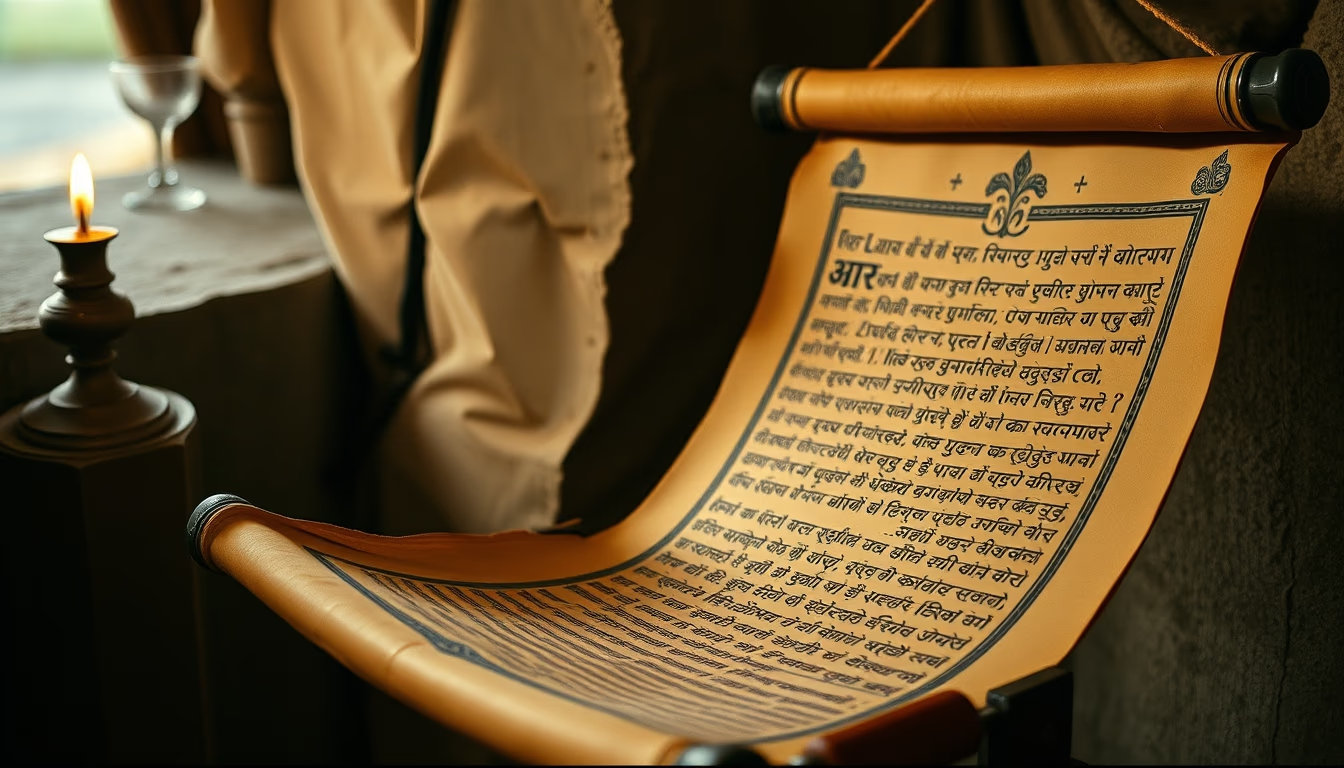
Devanagari is an abugida script derived from Brahmi, emerging around the 7th century CE in India. It is used to write Sanskrit, Hindi, Marathi, Nepali, and other Indo-Aryan languages. The name "Devanagari" means "city of the gods script," reflecting its association with Hindu sacred texts. The alphabet consists of 47 main characters: 14 vowels and 33 consonants, plus diacritics to modify sounds. Its distinctive feature is the horizontal line running above the letters, called "shirorekha."
Sanskrit, the classical language of India, is traditionally written in Devanagari, though regional scripts were also used historically. Most Vedic texts, epics like the Mahabharata and Ramayana, and philosophical treatises are preserved in this script. Devanagari is phonetic: each character represents a specific sound, making pronunciation predictable from writing. For example, the word "Sanskrit" in Devanagari is संस्कृतम् (saṃskṛtam).
Calligraphy in Devanagari is a revered art form in India, with styles ranging from formal to decorative. Today, the script is widely used on signs, publications, and digital media. With globalization, Devanagari fonts have been standardized in Unicode, enabling their use on computers and smartphones. Western interest in yoga and meditation has also popularized the script, especially in tattoos and decorative items. The image features an aerial view of Devanagari inscriptions, likely in an artistic or architectural context.
Frequently Asked Questions
What is Devanagari?
Devanagari is an abugida writing system used for Sanskrit, Hindi, Marathi, and other Indian languages. It derives from Brahmi and emerged around the 7th century CE.
How does Devanagari differ from other alphabets?
A distinctive feature is the horizontal line (shirorekha) connecting letters. Also, it is phonetic: each character represents a sound, making pronunciation predictable.
Why is Devanagari important for Sanskrit?
Most Hindu sacred texts, such as the Vedas and epics, were written in Sanskrit using Devanagari, which helped preserve the classical language over centuries.
Direct URL
https://pub-c7d6a6ea828543ac903a74a341ccb2e1.r2.dev/imagens/indian-devanagari-sanskrit-aerial-drone-shot-fresh3.avifHow to credit
Include a visible link back to UtilizAí. Copy one of the snippets below:
<a href="https://xn--utiliza-eza.com/en/midia/imagens/indian-devanagari-sanskrit-aerial-drone-shot-fresh3">Indian devanagari sanskrit</a> by <a href="https://xn--utiliza-eza.com">UtilizAí</a>, licensed under <a href="https://creativecommons.org/licenses/by/4.0/">CC BY 4.0</a>.
[Indian devanagari sanskrit](https://xn--utiliza-eza.com/en/midia/imagens/indian-devanagari-sanskrit-aerial-drone-shot-fresh3) by [UtilizAí](https://xn--utiliza-eza.com), CC BY 4.0
License: CC-BY-4.0