Incubator lab petri
1344×768 · AVIF · CC BY 4.0
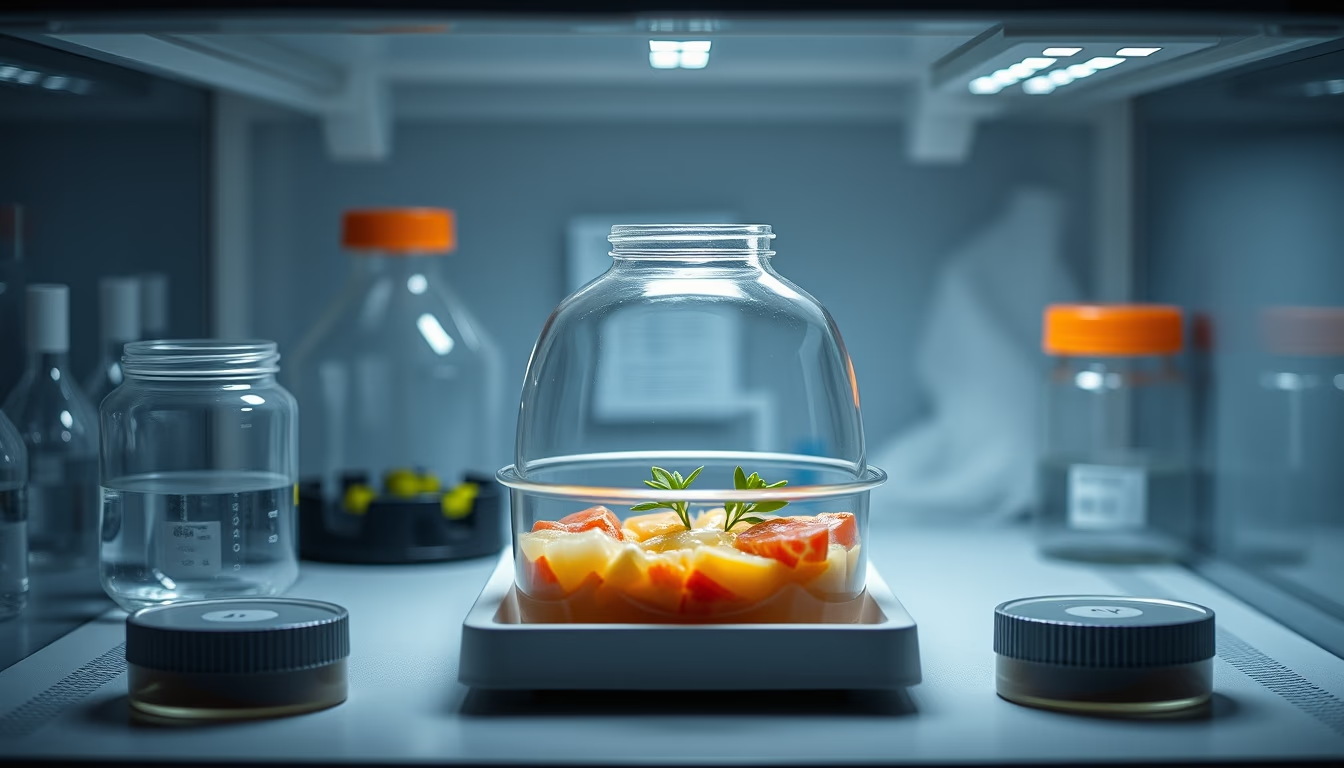
The laboratory incubator maintains optimal temperature conditions for culturing microorganisms in petri dishes, essential in microbiology.
About this subject
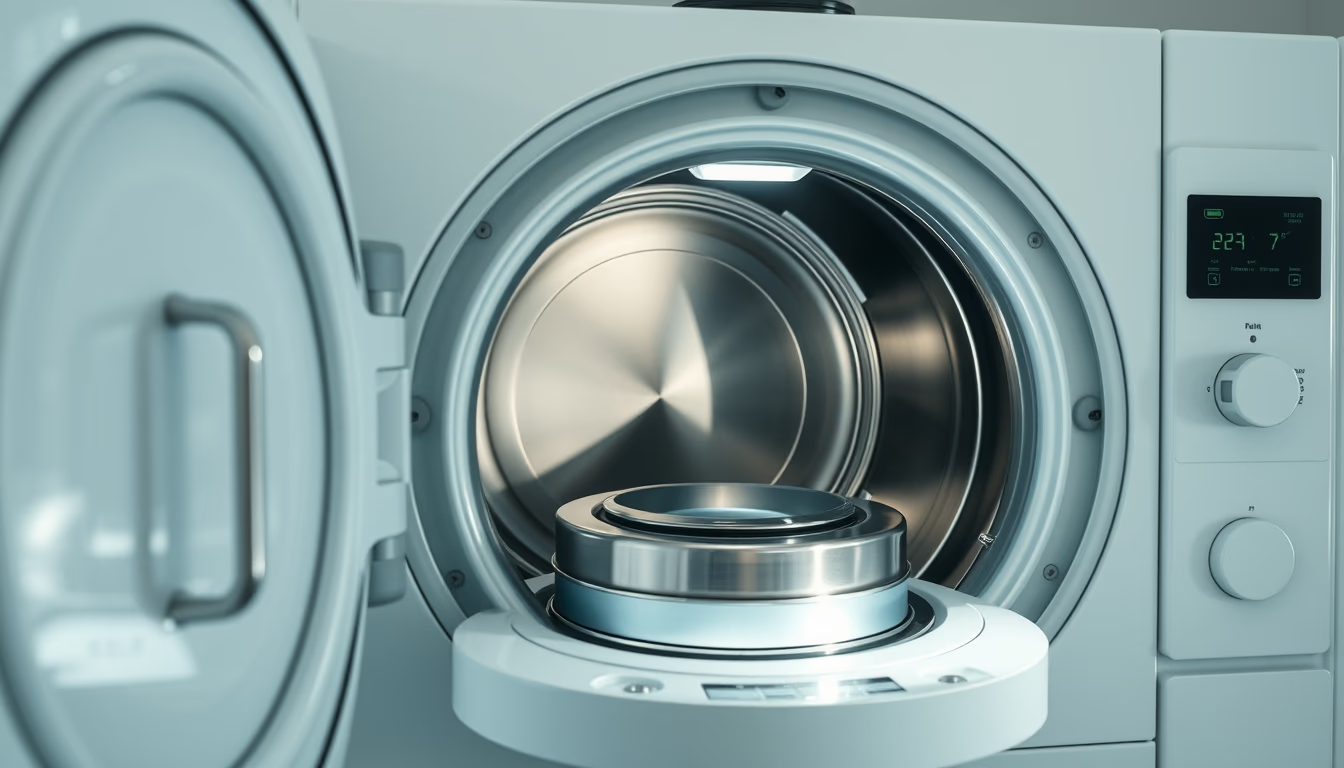
The laboratory incubator is a fundamental piece of equipment in microbiology, molecular biology, and cell culture laboratories. Its main function is to provide a controlled temperature environment, typically between 20°C and 60°C, for the growth of microorganisms such as bacteria and fungi, or eukaryotic cells. Advanced models also regulate CO2 levels, humidity, and oxygen, making them vital for cell cultures that require specific physiological conditions, such as 37°C and 5% CO2.
Petri dishes, invented by German bacteriologist Julius Richard Petri in 1887, are shallow glass or plastic containers with lids, filled with culture media such as nutrient agar or blood agar. They allow isolation and identification of microbial colonies and are widely used in clinical diagnostics, antibiotic testing, and scientific research. The combination of incubator and petri dish revolutionized microbiology by enabling controlled cultivation of pathogens.
In Brazil, incubator use is regulated by Anvisa resolutions and technical standards like NBR 14669. Clinical laboratories, universities, and pharmaceutical industries rely on these devices to ensure reliable results. Regular maintenance, including sensor calibration and cleaning, is crucial to prevent contamination and temperature deviations that could compromise culture quality.
Interestingly, early incubators were heated by kerosene or gas. Today, digital models with touch displays and smart alarms allow remote monitoring. Technological evolution includes compact benchtop incubators and high-capacity systems for large sample volumes. During the COVID-19 pandemic, demand for incubators surged for viral testing and vaccine development.
Frequently Asked Questions
What is a laboratory incubator used for?
A laboratory incubator provides a controlled environment of temperature, humidity, and sometimes CO2 for growing microorganisms, cell cultures, and biological experiments. It is essential in microbiology, molecular biology, and tissue culture.
What is the standard temperature of an incubator?
The most common temperature is 37°C to mimic the human body, but it varies depending on the microorganism or cell type. For example, fungi may grow at 25°C, and environmental bacteria at 30°C. Incubators can operate between 20°C and 60°C.
What is a petri dish and how is it used?
A petri dish is a shallow container with a lid, filled with culture medium like agar. It is used to culture microorganisms, isolate colonies, and perform microbiological tests. Julius Petri invented it in 1887, revolutionizing microbiology.
Direct URL
https://pub-c7d6a6ea828543ac903a74a341ccb2e1.r2.dev/imagens/incubator-lab-petri-studio-still-life-fresh8.avifHow to credit
Include a visible link back to UtilizAí. Copy one of the snippets below:
<a href="https://xn--utiliza-eza.com/en/midia/imagens/incubator-lab-petri-studio-still-life-fresh8">Incubator lab petri</a> by <a href="https://xn--utiliza-eza.com">UtilizAí</a>, licensed under <a href="https://creativecommons.org/licenses/by/4.0/">CC BY 4.0</a>.
[Incubator lab petri](https://xn--utiliza-eza.com/en/midia/imagens/incubator-lab-petri-studio-still-life-fresh8) by [UtilizAí](https://xn--utiliza-eza.com), CC BY 4.0
License: CC-BY-4.0