Icebreaker arctic ship
1344×768 · AVIF · CC BY 4.0
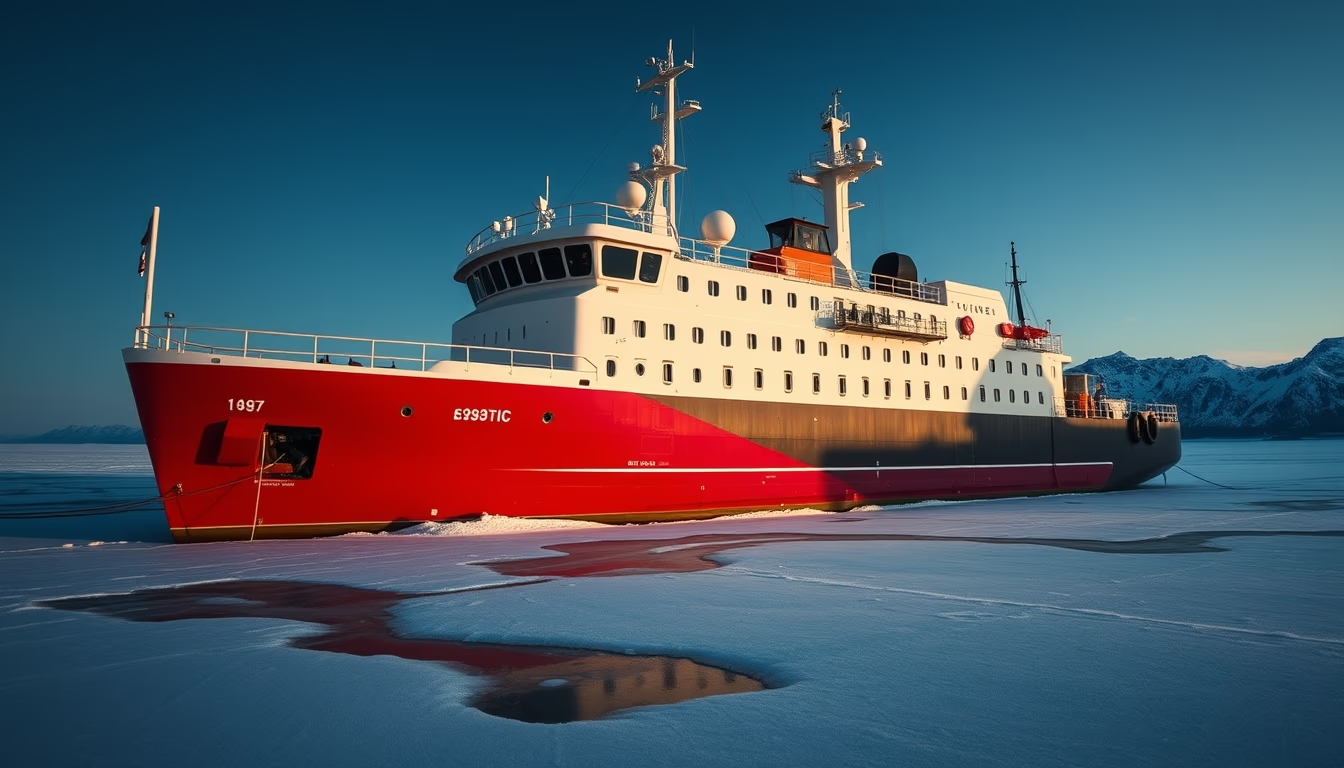
Icebreakers are ships designed to navigate and break through ice-covered waters, vital for Arctic logistics and research.
About this subject
Icebreakers are specialized vessels with reinforced hulls and powerful propulsion systems designed to break through sea ice. They operate primarily in the Arctic and Antarctic, where ice can be several meters thick. There are two main types: conventional diesel-powered and nuclear-powered, such as those in the Russian fleet, which can operate for years without refueling. The world's first nuclear icebreaker, Lenin, was launched by the Soviet Union in 1957, opening the way for navigation along the Northern Sea Route.
Today, Russia operates the largest fleet of nuclear icebreakers, including the Arktika-class, the most powerful in the world. These ships are essential for transporting natural resources like liquefied natural gas and maintaining military and scientific bases in the Arctic. Other countries, including the United States, Canada, and Finland, also maintain icebreaker fleets, often used for climate research and rescue missions.
An icebreaker's design features a curved hull that rides up onto the ice and breaks it with the ship's weight. The thickness of ice they can break ranges from 1 to 6 meters, depending on the class. In extreme conditions, they can create channels for smaller vessels. These ships are also equipped with robust propellers and heating systems to prevent freezing.
The Arctic is experiencing rapid climate change, with reduced summer ice cover, increasing interest in new shipping routes. However, even with less ice, icebreakers remain crucial for ensuring safety and efficiency in maritime traffic, especially during winter months when ice still dominates.
Frequently Asked Questions
What is the difference between a conventional and a nuclear icebreaker?
Conventional icebreakers use diesel engines and need periodic refueling, while nuclear icebreakers use atomic reactors, allowing continuous operation for months or years. Nuclear ones are also more powerful, capable of breaking thicker ice.
How many icebreakers are there in the world?
There are estimated to be about 100 active icebreakers globally, with Russia having the largest fleet, including over 40 vessels, several of which are nuclear-powered.
Are icebreakers only used in the Arctic?
No, they also operate in Antarctica and in regions such as the Great Lakes and the Baltic Sea, where seasonal ice can block shipping routes.
Direct URL
https://pub-c7d6a6ea828543ac903a74a341ccb2e1.r2.dev/imagens/icebreaker-arctic-ship-magazine-editorial-p11.avifHow to credit
Include a visible link back to UtilizAí. Copy one of the snippets below:
<a href="https://xn--utiliza-eza.com/en/midia/imagens/icebreaker-arctic-ship-magazine-editorial-p11">Icebreaker arctic ship</a> by <a href="https://xn--utiliza-eza.com">UtilizAí</a>, licensed under <a href="https://creativecommons.org/licenses/by/4.0/">CC BY 4.0</a>.
[Icebreaker arctic ship](https://xn--utiliza-eza.com/en/midia/imagens/icebreaker-arctic-ship-magazine-editorial-p11) by [UtilizAí](https://xn--utiliza-eza.com), CC BY 4.0
License: CC-BY-4.0