Icebreaker arctic ship
1344×768 · AVIF · CC BY 4.0
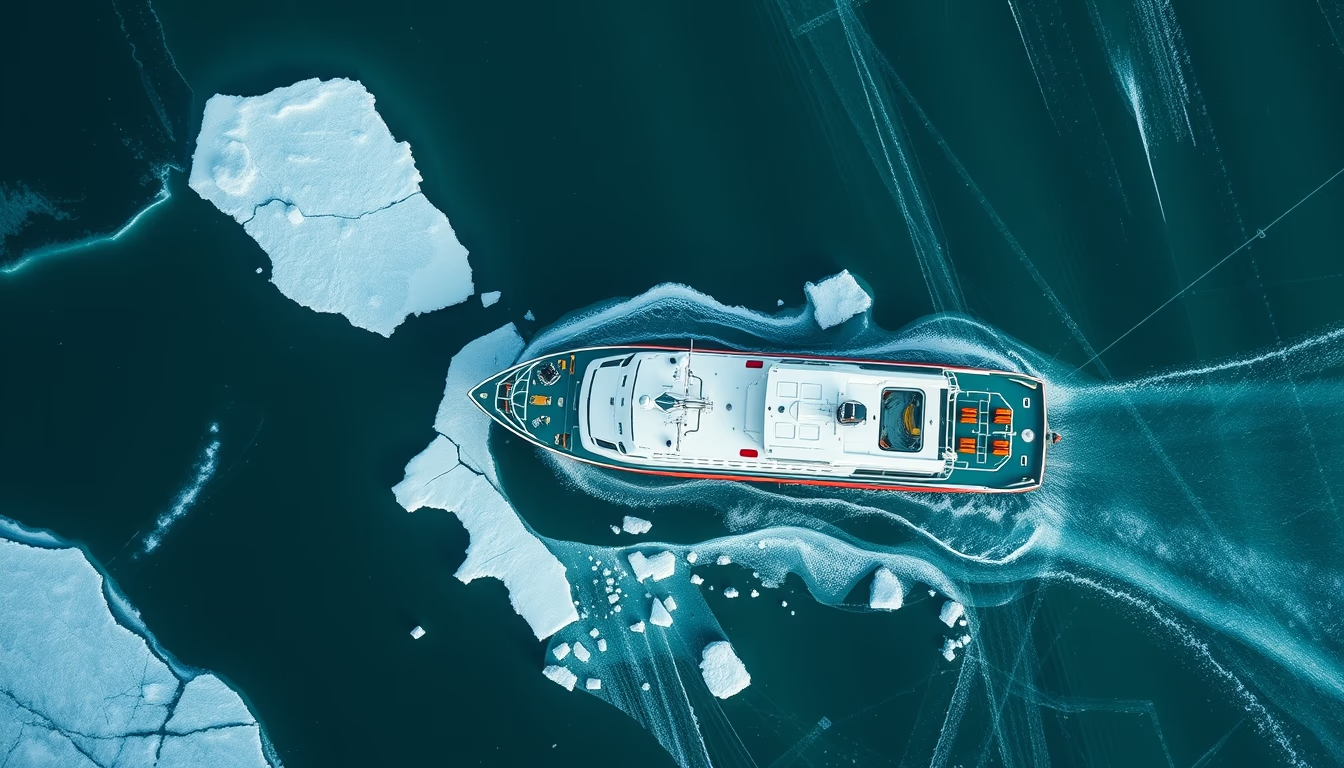
Icebreakers are ships designed to navigate and clear paths through ice-covered waters, essential for Arctic exploration and commerce.
About this subject
Icebreakers are specialized vessels with reinforced hulls and powerful engines designed to break through sea ice. They operate primarily in the Arctic Ocean, where temperatures can drop to -50°C and ice thickness reaches several meters. Russia possesses the world's largest icebreaker fleet, including nuclear-powered ships like the NS 50 Let Pobedy, capable of breaking ice up to 2.8 meters thick. These ships are vital for maintaining the Northern Sea Route, which shortens shipping distances between Europe and Asia.
The design of an icebreaker features a rounded hull that rides up onto the ice, using the ship's weight to crack it. Advanced propulsion systems and protected propellers ensure maneuverability. Countries such as Canada, the United States, Finland, and Sweden also maintain icebreaker fleets for scientific research, patrol, and logistics support. As Arctic ice melts due to climate change, demand for these vessels increases, but construction is expensive and time-consuming.
Russian nuclear icebreakers are unique for their ability to operate for years without refueling. The LK-60Ya class, for instance, can navigate ice up to 3 meters thick. Meanwhile, the U.S. relies on conventional icebreakers like the USCGC Polar Star, built in 1976, whose replacement is overdue. Technology continues to evolve, with newer designs focusing on efficiency and reduced emissions, such as electric motors and alternative fuels.
Frequently Asked Questions
What is the maximum ice thickness an icebreaker can break?
It varies: Russian nuclear icebreakers like the NS 50 Let Pobedy can break up to 2.8 meters of continuous ice, while smaller models can handle about 1 meter.
Why doesn't Brazil have icebreakers?
Brazil has no polar seas; its navy focuses on Antarctic support vessels like the Ary Rongel, which operates near ice but is not classified as an icebreaker.
Are nuclear icebreakers environmentally safe?
Yes, their reactors have multiple safety layers and produce no CO2 during operation, though spent fuel disposal remains a challenge.
Direct URL
https://pub-c7d6a6ea828543ac903a74a341ccb2e1.r2.dev/imagens/icebreaker-arctic-ship-isometric-flat-lay-p1.avifHow to credit
Include a visible link back to UtilizAí. Copy one of the snippets below:
<a href="https://xn--utiliza-eza.com/en/midia/imagens/icebreaker-arctic-ship-isometric-flat-lay-p1">Icebreaker arctic ship</a> by <a href="https://xn--utiliza-eza.com">UtilizAí</a>, licensed under <a href="https://creativecommons.org/licenses/by/4.0/">CC BY 4.0</a>.
[Icebreaker arctic ship](https://xn--utiliza-eza.com/en/midia/imagens/icebreaker-arctic-ship-isometric-flat-lay-p1) by [UtilizAí](https://xn--utiliza-eza.com), CC BY 4.0
License: CC-BY-4.0