Icebreaker arctic ship
1344×768 · AVIF · CC BY 4.0
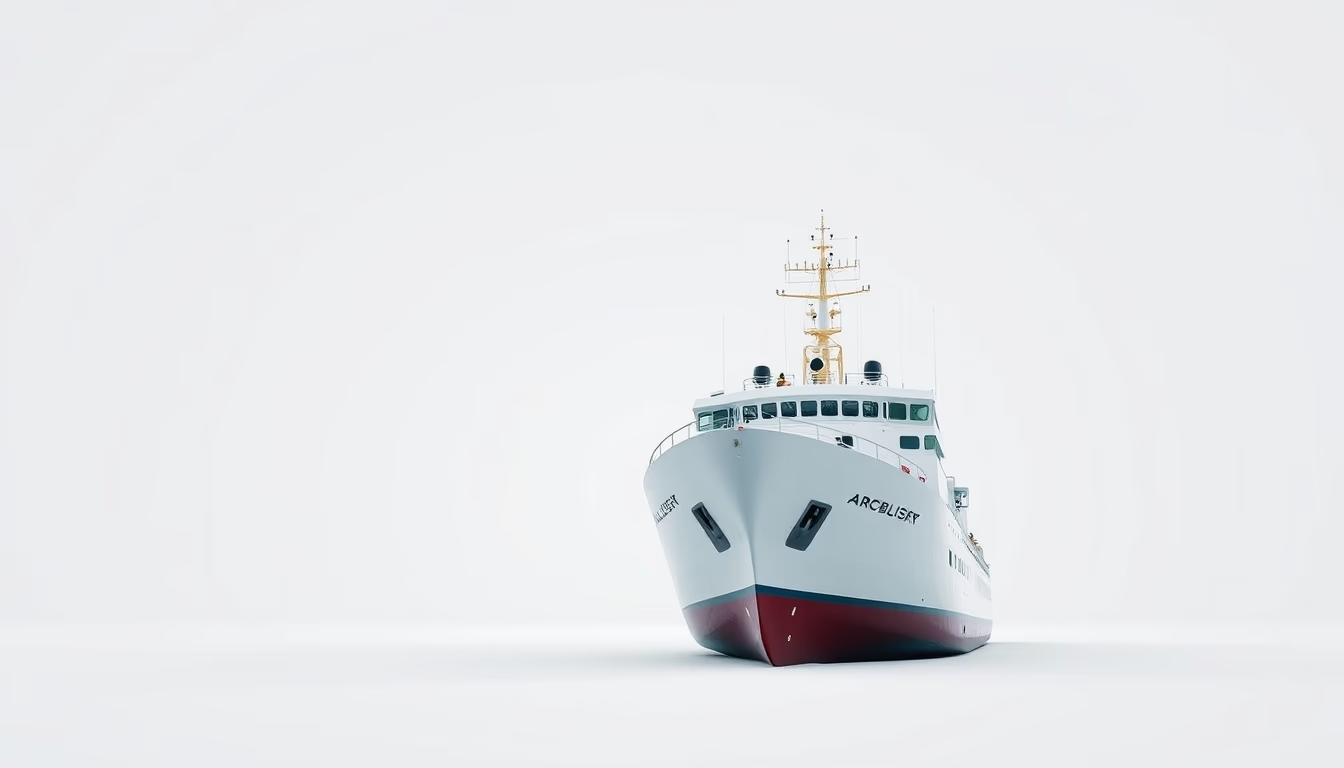
Icebreakers are ships designed to navigate through ice-covered waters, essential for Arctic exploration and trade.
About this subject
Icebreaker ships are built with reinforced hulls and specialized shapes to break sea ice, ensuring safe passage through polar regions. They play a vital role in maintaining Arctic shipping routes, such as the Northern Sea Route, which shortens journeys between Europe and Asia. They are also used for scientific research, support of oil and gas platforms, and rescue operations.
The technology of these vessels has evolved significantly since the first modern icebreaker, the 'Ermak', built in 1899 for Russia. Today, many use nuclear propulsion, like the '50 Let Pobedy', one of the largest in the world. The hull design, with a sloping bow and reinforced stern, allows the ship to ride up onto the ice and break it under its own weight. Powerful engines and special propellers are also crucial for maneuverability in extreme conditions.
Global warming has increased interest in icebreakers, as Arctic melting opens new commercial opportunities but also environmental challenges. Countries like Russia, Canada, the United States, and Norway invest in modern fleets to ensure sovereignty and security in their polar waters. Ships like the German 'Polarstern' combine icebreaking capability with research laboratories, conducting long-term scientific expeditions.
One of the world's largest nuclear icebreakers, the 'Arktika' (launched in 2020), can break ice up to 3 meters thick. These vessels are true marvels of naval engineering, designed to withstand temperatures below -50°C and constant ice impacts. Maintenance of these ships is complex and costly, but essential for Arctic logistics and exploration.
Frequently Asked Questions
How does an icebreaker ship work?
An icebreaker uses its reinforced hull and specially shaped bow to ride up onto the ice and break it under the vessel's weight. Powerful engines and special propellers allow maneuvering in extreme conditions. Some models use nuclear propulsion for greater autonomy.
What is the largest icebreaker in the world?
The largest nuclear icebreaker in operation is the '50 Let Pobedy' (Russia), at 160 meters long. However, ships like the 'Arktika' (launched in 2020) are also among the largest and most modern, capable of breaking ice up to 3 meters thick.
Why are icebreakers important for global trade?
They keep Arctic shipping routes open, such as the Northern Sea Route, which shortens journeys between Europe and Asia by up to 40%. This reduces costs and transit time, while also facilitating access to the region's natural resources.
Direct URL
https://pub-c7d6a6ea828543ac903a74a341ccb2e1.r2.dev/imagens/icebreaker-arctic-ship-commercial-product-photography-p12.avifHow to credit
Include a visible link back to UtilizAí. Copy one of the snippets below:
<a href="https://xn--utiliza-eza.com/en/midia/imagens/icebreaker-arctic-ship-commercial-product-photography-p12">Icebreaker arctic ship</a> by <a href="https://xn--utiliza-eza.com">UtilizAí</a>, licensed under <a href="https://creativecommons.org/licenses/by/4.0/">CC BY 4.0</a>.
[Icebreaker arctic ship](https://xn--utiliza-eza.com/en/midia/imagens/icebreaker-arctic-ship-commercial-product-photography-p12) by [UtilizAí](https://xn--utiliza-eza.com), CC BY 4.0
License: CC-BY-4.0