Ice axe alpine
1344×768 · AVIF · CC BY 4.0
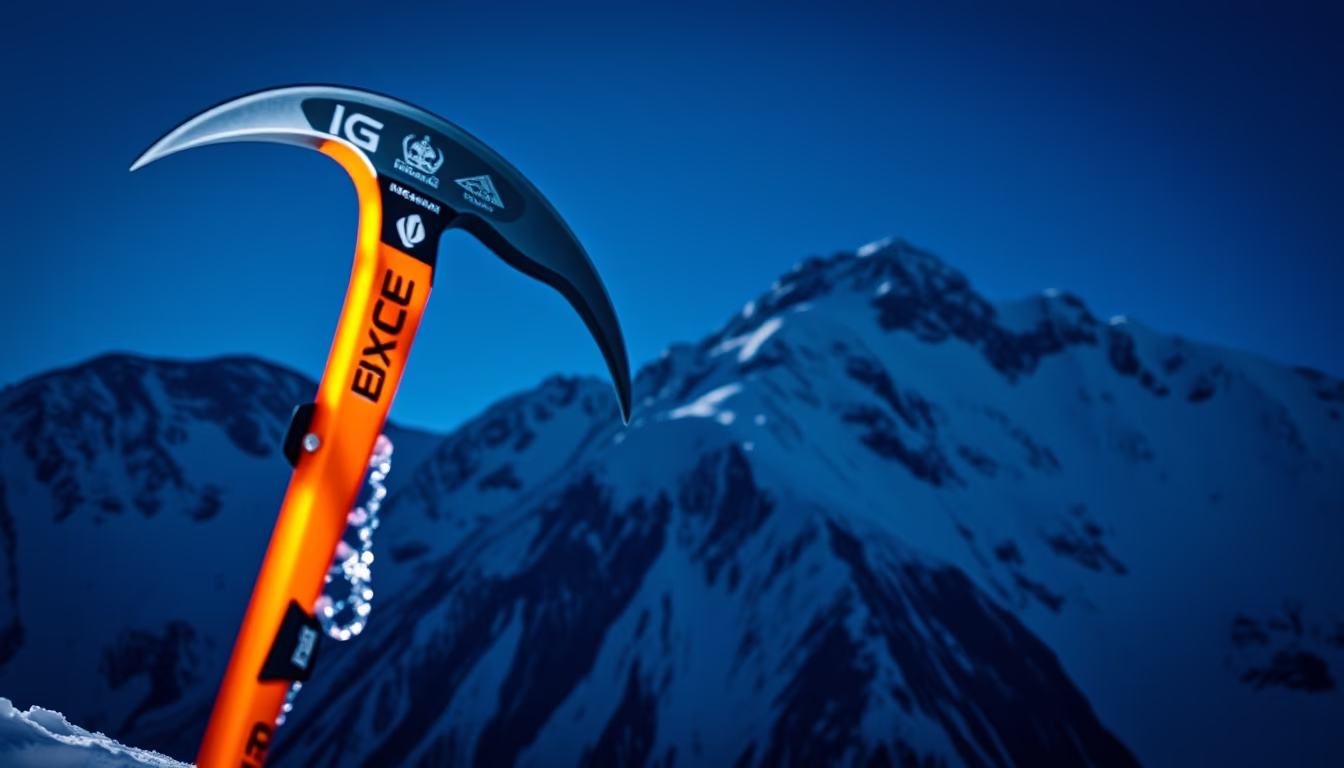
The alpine ice axe is an essential tool for ice and snow climbing. Discover its history, types, and techniques in mountaineering.
About this subject
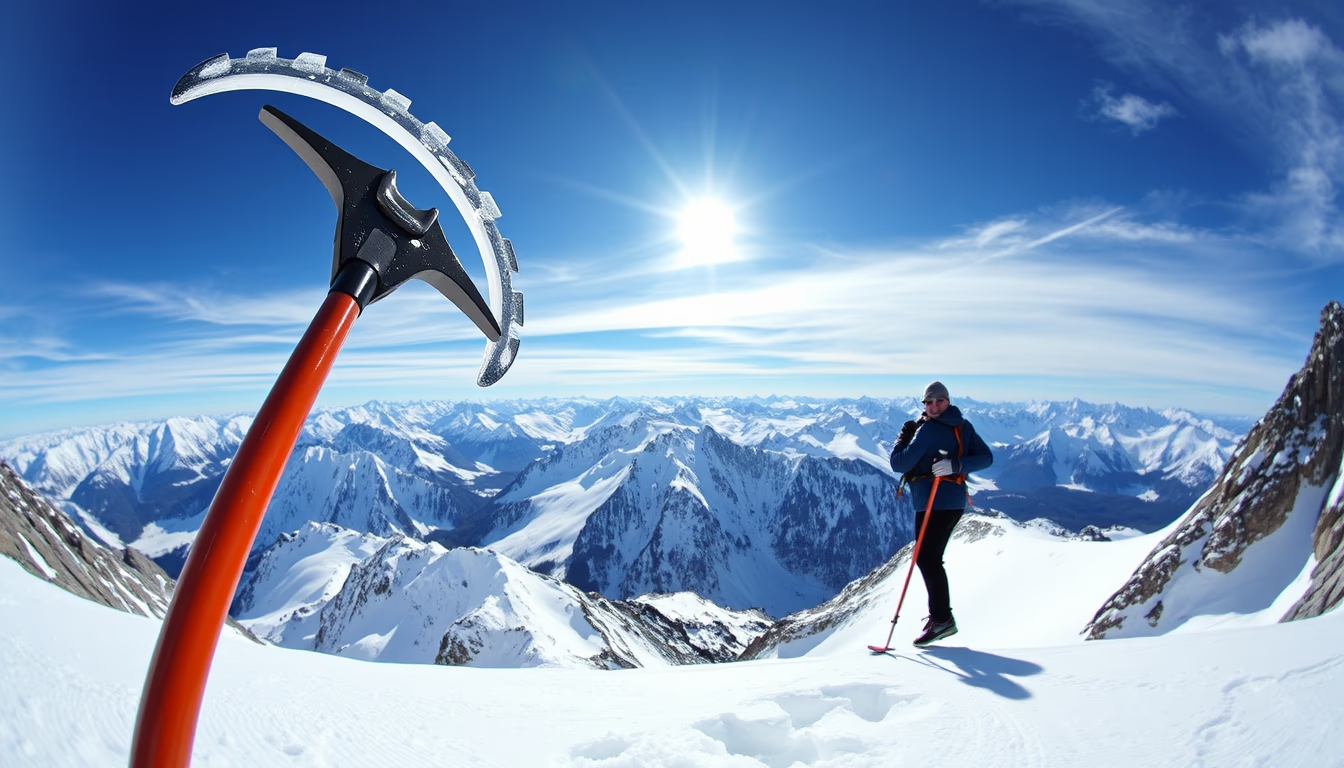
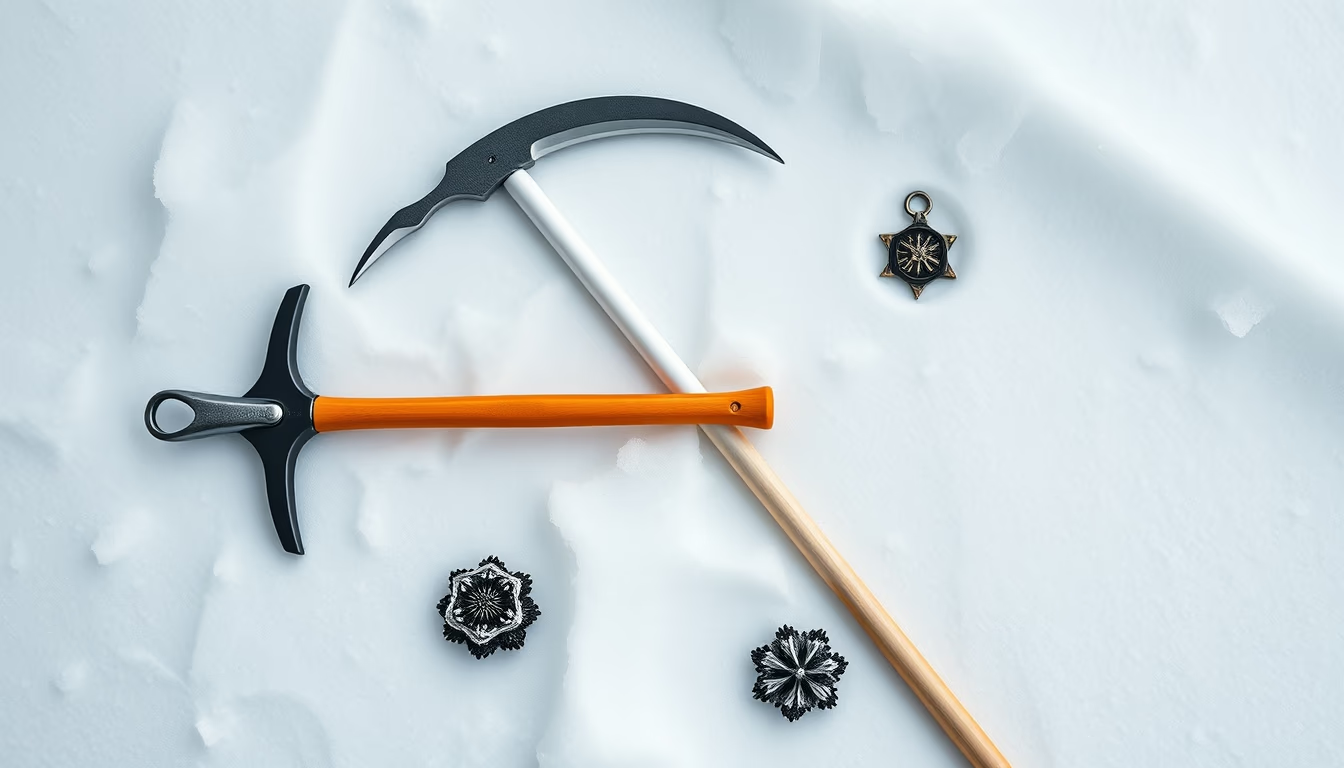
The alpine ice axe is one of the most iconic tools in mountaineering, essential for traveling on snow and ice. Its origins date back to the 19th century, when climbers like Edward Whymper used rudimentary tools to tackle glacial slopes. The modern design was standardized by Oscar Eckenstein in the early 1900s, featuring a metal head with a curved pick and a straight shaft made of wood or metal. Today, ice axes are crafted from stainless steel or aluminum, with shafts of carbon fiber or titanium to reduce weight and increase durability. They are crucial for self-arrest, cutting steps in ice, and providing stability on steep terrain.
There are several types of ice axes, classified by use: classic axes for snow hiking, technical axes for vertical ice climbing, and lightweight axes for high-altitude traverses. Each model varies in pick angle, shaft length, and handle shape. Ideal length ranges from 60 to 80 cm, depending on the user's height and terrain. During expeditions like the 1953 conquest of Everest, ice axes were essential for breaking trail and ensuring safety on exposed ridges. Today, they remain mandatory gear for any winter mountaineering kit, despite advances in snowshoes and crampons.
Proper technique is critical. The basic grip involves one hand on the head and the other on the shaft, balancing the weight. For self-arrest, the climber drives the pick into the snow and leans back, using the axe as an anchor. On descents, it can be used as a brake by dragging the pick. In traverses, it provides lateral support. Renowned mountaineers like Reinhold Messner and Junko Tabei emphasized its importance in their accounts. Maintenance, including sharpening the pick and checking shaft integrity, is vital for safety.
Fun facts: the record for the most ice axes used in a single expedition was 150, carried by an Italian team on K2 in 1954. Electrically heated shafts are being tested for extreme climates, but remain rare. Professional alpine models can cost up to $600, while basic versions start at $40. Proper swing technique reduces effort by 30%, according to biomechanical studies. In ice climbing competitions, athletes use ultra-light axes weighing under 400 grams.
Frequently Asked Questions
What is the difference between an alpine ice axe and a piolet?
The alpine ice axe and piolet are the same tool. 'Piolet' is the French term, commonly used in French-speaking countries, while 'ice axe' is more common in English.
How do I choose the correct length for an ice axe?
The ideal length depends on your height and terrain. For general mountaineering, the shaft should reach your ankle when held by the head. For technical climbing, shorter axes (45-55 cm) offer better control.
Do I need to sharpen the pick of my ice axe?
Yes, a sharp pick is essential for good penetration in hard ice. Use a fine file to sharpen after heavy use, especially before ice climbs. Avoid over-filing to prevent weakening the metal.
Direct URL
https://pub-c7d6a6ea828543ac903a74a341ccb2e1.r2.dev/imagens/ice-axe-alpine-fine-art-photography-fresh7.avifHow to credit
Include a visible link back to UtilizAí. Copy one of the snippets below:
<a href="https://xn--utiliza-eza.com/en/midia/imagens/ice-axe-alpine-fine-art-photography-fresh7">Ice axe alpine</a> by <a href="https://xn--utiliza-eza.com">UtilizAí</a>, licensed under <a href="https://creativecommons.org/licenses/by/4.0/">CC BY 4.0</a>.
[Ice axe alpine](https://xn--utiliza-eza.com/en/midia/imagens/ice-axe-alpine-fine-art-photography-fresh7) by [UtilizAí](https://xn--utiliza-eza.com), CC BY 4.0
License: CC-BY-4.0