Hydrogen fuel station
1344×768 · AVIF · CC BY 4.0

Hydrogen fuel stations are the essential infrastructure for fuel cell vehicles, driving sustainable mobility in countries like Japan, Germany, and California.
About this subject
Hydrogen fuel stations supply fuel to vehicles equipped with fuel cells, which convert the gas into electricity to power electric motors. Refueling takes three to five minutes, similar to gasoline, and provides a range of 500 to 700 km per tank. The infrastructure is still limited but growing rapidly. Japan leads with over 160 stations in operation, followed by Germany with about 100, and California, which surpassed 60 units in 2024. Most of these stations use compressed hydrogen at 700 bar, stored in cryogenic or composite tanks.
The importance of hydrogen stations lies in their ability to decarbonize sectors difficult to electrify, such as heavy transport, commercial fleets, and long-distance vehicles. Unlike batteries, the fast refueling and high energy density of hydrogen make it competitive for trucks, buses, and even trains. In Europe, hydrogen corridors are being established, such as the H2 Mobility project in Germany, which plans 400 stations by 2030.
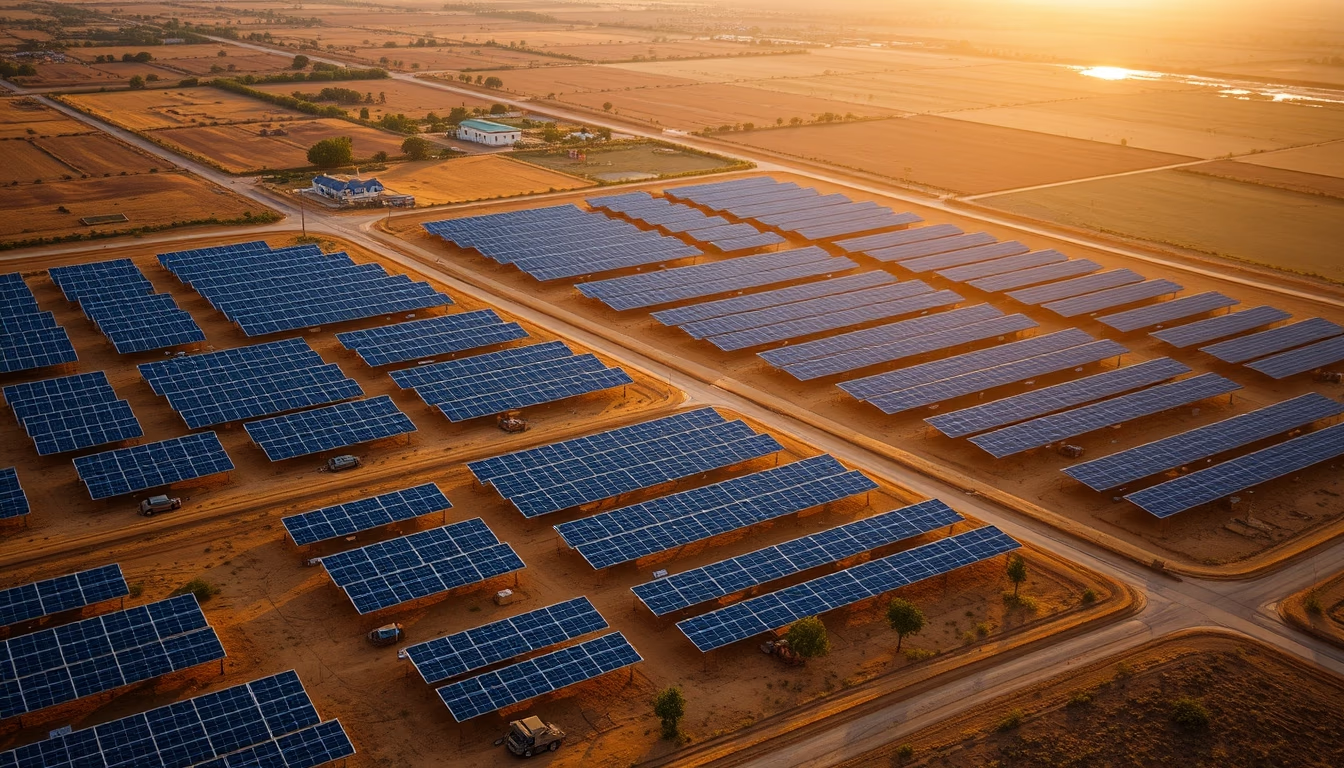
Challenges include the high installation cost (around 1 to 2 million dollars per station) and the production of green hydrogen, which still represents less than 1% of global output. Innovations like modular stations and on-site production via electrolysis are reducing barriers. In Brazil, there are only a few experimental stations, but the potential for green hydrogen from solar and wind energy places the country in a strategic position for the future.
Frequently Asked Questions
How does a hydrogen fuel station work?
Hydrogen is stored in high-pressure tanks (700 bar) and pumped into the vehicle via a special hose. The process is automated and takes 3 to 5 minutes, similar to a gasoline station.
How many hydrogen stations are there in Brazil?
There are still few and experimental. The country has about 5 stations, located in universities and research centers, mainly in São Paulo and Rio de Janeiro.
Is it safe to refuel with hydrogen?
Yes, stations follow international safety standards. Hydrogen is highly flammable, but the systems have leak sensors, relief valves, and robust materials. Accidents are rare.
Direct URL
https://pub-c7d6a6ea828543ac903a74a341ccb2e1.r2.dev/imagens/hydrogen-fuel-station-travel-photography-p1.avifHow to credit
Include a visible link back to UtilizAí. Copy one of the snippets below:
<a href="https://xn--utiliza-eza.com/en/midia/imagens/hydrogen-fuel-station-travel-photography-p1">Hydrogen fuel station</a> by <a href="https://xn--utiliza-eza.com">UtilizAí</a>, licensed under <a href="https://creativecommons.org/licenses/by/4.0/">CC BY 4.0</a>.
[Hydrogen fuel station](https://xn--utiliza-eza.com/en/midia/imagens/hydrogen-fuel-station-travel-photography-p1) by [UtilizAí](https://xn--utiliza-eza.com), CC BY 4.0
License: CC-BY-4.0