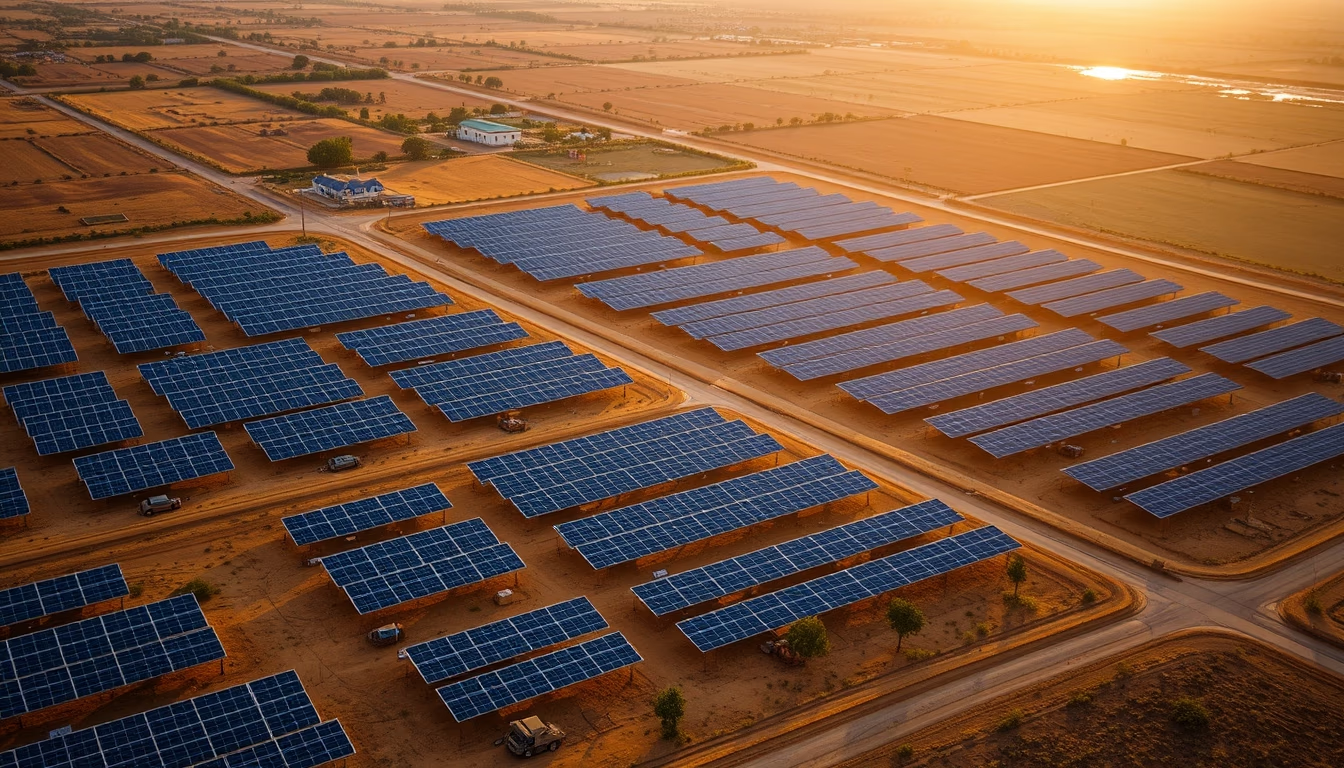
Hydrogen fuel station
1344×768 · AVIF · CC BY 4.0

Hydrogen refueling stations are essential infrastructure for fuel cell vehicles, with global expansion underway in 2026.
About this subject
Hydrogen refueling stations are facilities designed to supply compressed or liquid hydrogen gas to vehicles equipped with fuel cells. Unlike conventional gasoline or diesel stations, these stations store hydrogen in high-pressure tanks (350, 700 bar) or as cryogenic liquid at -253°C. The refueling process takes 3, 5 minutes, similar to fossil fuels, and the hydrogen is converted into electricity inside the vehicle, emitting only water vapor.
Global deployment of hydrogen stations has grown significantly, especially in Asia and Europe. In 2026, over 1,000 new stations are expected to become operational, driven by decarbonization policies and investments in sustainable mobility. Countries like Japan, South Korea, Germany, and the United States lead the ranking, with planned networks covering strategic highway corridors. In Brazil, the technology is still incipient, but pilot projects in São Paulo and Rio de Janeiro states have already demonstrated technical feasibility.
Hydrogen for these stations can be produced from renewable sources (green hydrogen, via water electrolysis using solar or wind energy) or from fossil fuels with carbon capture (blue hydrogen). The overall system efficiency depends on the production method and transportation logistics. A central challenge is the high cost of green hydrogen, currently two to three times more expensive than gray hydrogen. However, with falling renewable energy prices, cost parity is expected by the end of the decade.
Interestingly, some stations are fully automated, operating without on-site supervision, while others are integrated into existing fuel stations. Safety is strictly controlled: sensors detect leaks, ventilation systems prevent gas accumulation, and special materials resist hydrogen embrittlement. The expansion of the refueling network is considered a key bottleneck for the mass adoption of fuel cell vehicles.
Frequently Asked Questions
What is the difference between green, blue, and gray hydrogen?
Green hydrogen is produced by water electrolysis using renewable energy (solar, wind), emitting zero carbon. Blue hydrogen is derived from natural gas with carbon capture, reducing emissions by up to 90%. Gray hydrogen is the most common, also from natural gas but without capture, releasing CO₂ directly.
Are hydrogen refueling stations safe?
Yes, they follow strict safety standards. Tanks are tested to withstand extreme pressures and impacts. Sensors instantly detect leaks, and ventilation and isolation systems prevent explosion risks. The infrastructure is designed to operate with the same reliability as conventional stations.
What is the range of hydrogen vehicles?
Fuel cell vehicles have a typical range of 500, 700 km per tank, comparable to gasoline cars. Examples include the Toyota Mirai (up to 650 km) and Hyundai Nexo (up to 750 km), depending on driving conditions.
Direct URL
https://pub-c7d6a6ea828543ac903a74a341ccb2e1.r2.dev/imagens/hydrogen-fuel-station-high-fashion-editorial-p3.avifHow to credit
Include a visible link back to UtilizAí. Copy one of the snippets below:
<a href="https://xn--utiliza-eza.com/en/midia/imagens/hydrogen-fuel-station-high-fashion-editorial-p3">Hydrogen fuel station</a> by <a href="https://xn--utiliza-eza.com">UtilizAí</a>, licensed under <a href="https://creativecommons.org/licenses/by/4.0/">CC BY 4.0</a>.
[Hydrogen fuel station](https://xn--utiliza-eza.com/en/midia/imagens/hydrogen-fuel-station-high-fashion-editorial-p3) by [UtilizAí](https://xn--utiliza-eza.com), CC BY 4.0
License: CC-BY-4.0