Hydrogen fuel station
1344×768 · AVIF · CC BY 4.0
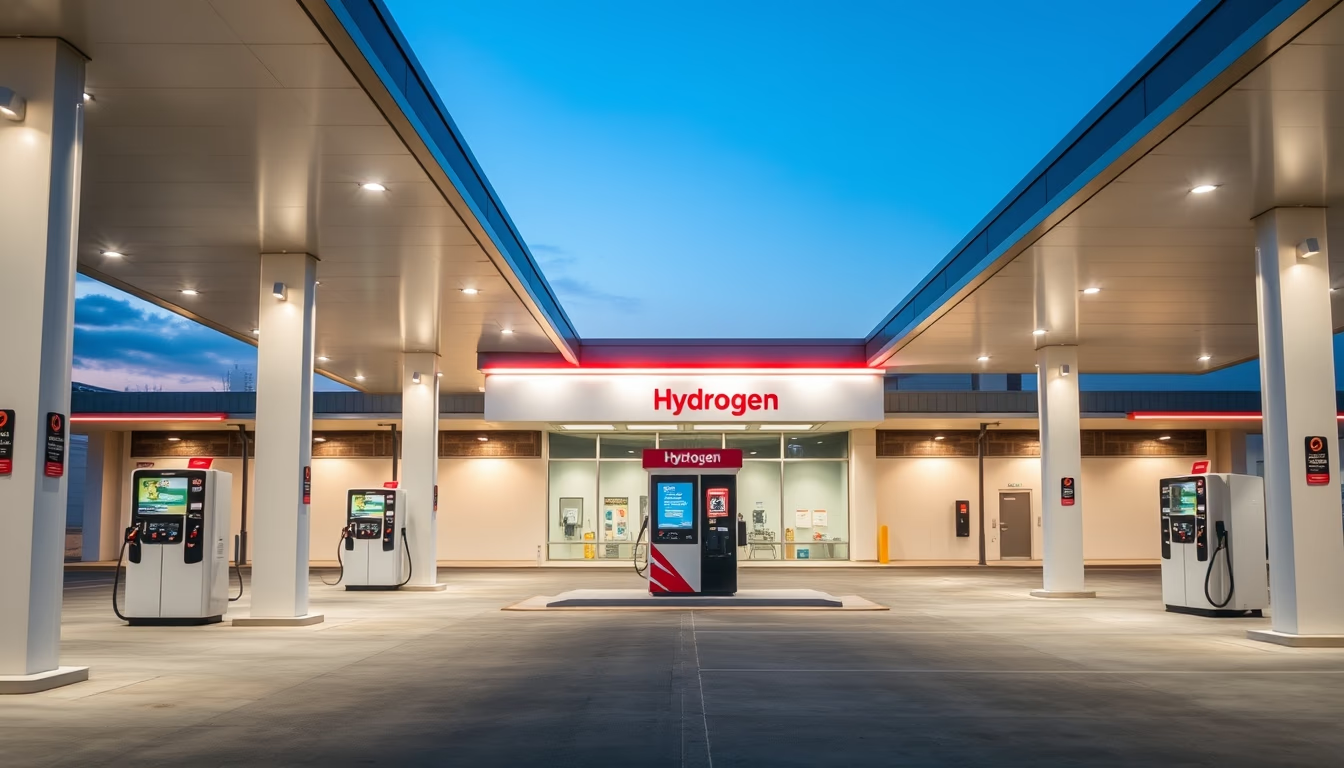
Hydrogen fueling station: essential infrastructure for fuel cell vehicles and the global energy transition.
About this subject
A hydrogen fueling station dispenses compressed hydrogen gas to fuel cell vehicles (FCVs), which convert hydrogen into electricity to power an electric motor. The gas is stored at high pressures, typically 350 bar for buses and heavy trucks or 700 bar for passenger cars, ensuring sufficient range. As of 2024, there are over 500 publicly accessible stations worldwide, led by Japan (160+), South Korea (110+), and Germany (about 100). California also hosts around 60 stations, supported by state incentives. Refueling takes 3 to 5 minutes, comparable to conventional gasoline pumps.
These stations are critical for decarbonizing transportation, particularly for long-haul trucks, buses, and commercial fleets where battery-electric solutions face challenges in range and charging time. Hydrogen can be produced from natural gas (gray hydrogen), with carbon capture (blue hydrogen), or via electrolysis using renewable energy (green hydrogen). Green hydrogen is the most environmentally friendly and is central to global climate strategies.
Brazil is emerging as a potential green hydrogen hub due to its abundant renewable energy resources. Pilot projects include a hydrogen plant at the Port of Açu (Rio de Janeiro) and a large-scale hub in Ceará led by Fortescue. Additionally, hydrogen-powered trucks are being tested in logistics corridors like Suape (Pernambuco). Worldwide, the number of stations is projected to exceed 10,000 by 2030, driven by corporate net-zero commitments and government policies. Innovations extend to rail, maritime, and aviation applications, cementing hydrogen's role in the clean energy transition.
Frequently Asked Questions
How does a hydrogen fueling station work?
The station compresses hydrogen to high pressure (700 bar for cars) and stores it in tanks. The vehicle connects a nozzle and receives the gas in 3 to 5 minutes. The hydrogen then reacts in a fuel cell to generate electricity, emitting only water vapor.
How many hydrogen stations are there worldwide?
There are about 500 publicly accessible stations globally, mostly in Japan, South Korea, and Germany. California also has a growing network.
Does Brazil have hydrogen fueling stations?
As of 2024, only a few experimental stations exist, but large-scale projects like the Port of Açu (RJ) and Ceará hub aim to produce green hydrogen for export and domestic use. Refueling infrastructure is expected to expand in the coming decade.
Direct URL
https://pub-c7d6a6ea828543ac903a74a341ccb2e1.r2.dev/imagens/hydrogen-fuel-station-architectural-photography-p4.avifHow to credit
Include a visible link back to UtilizAí. Copy one of the snippets below:
<a href="https://xn--utiliza-eza.com/en/midia/imagens/hydrogen-fuel-station-architectural-photography-p4">Hydrogen fuel station</a> by <a href="https://xn--utiliza-eza.com">UtilizAí</a>, licensed under <a href="https://creativecommons.org/licenses/by/4.0/">CC BY 4.0</a>.
[Hydrogen fuel station](https://xn--utiliza-eza.com/en/midia/imagens/hydrogen-fuel-station-architectural-photography-p4) by [UtilizAí](https://xn--utiliza-eza.com), CC BY 4.0
License: CC-BY-4.0