Honey extractor stainless
1344×768 · AVIF · CC BY 4.0
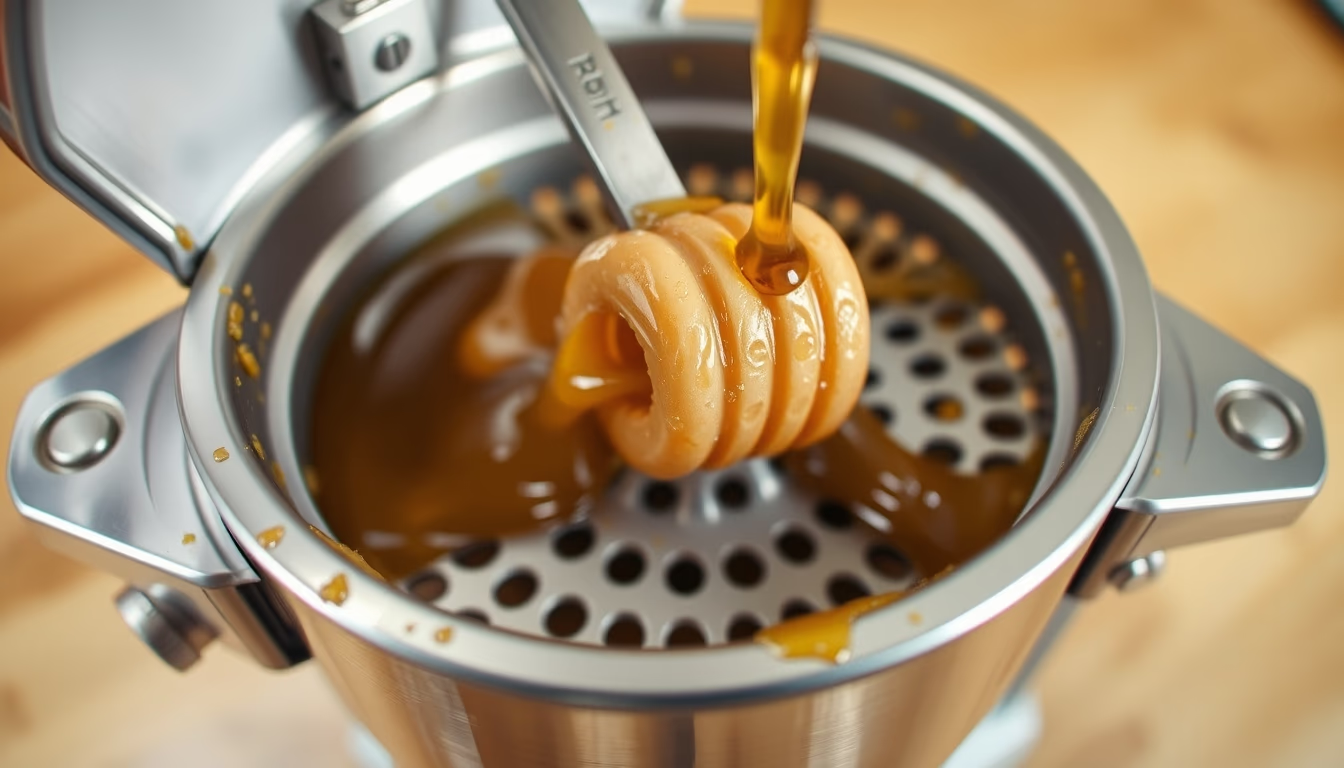
Stainless steel honey extractor, essential in modern beekeeping for spinning and harvesting honey without damaging the combs.
About this subject
A honey extractor is a key tool for beekeepers aiming for efficient and high-quality harvests. It operates through centrifugal force: frames of honey are placed in a rotating basket inside a drum. As it spins, honey is flung out of the combs, flows to the bottom, and is collected via a spout. This method preserves the integrity of the combs, allowing bees to reuse them and reducing the need for comb rebuilding.
Extractors come in various sizes and capacities, from manual 2-frame models to electric versions holding dozens of frames. Stainless steel is the preferred material due to its durability, corrosion resistance, and ease of cleaning, crucial for maintaining honey purity and meeting sanitary standards. Unlike plastic, stainless steel does not absorb odors or react with honey, preserving its natural flavor and aroma.
In Brazil, beekeeping has become more professionalized, and stainless steel extractors are common among medium to large producers. Countries like the United States and New Zealand also widely adopt this technology. Popular features include viewing windows, speed controls, and braking systems, allowing fine adjustments for different honey viscosities. Proper maintenance involves washing with warm water and thorough drying to prevent oxidation or contamination.
Interestingly, the first manual extractors appeared in the 19th century, invented by Franz Hruschka, an Austrian beekeeper. Since then, the basic principle has remained largely unchanged, but materials and efficiency have evolved dramatically, with stainless steel representing the gold standard in the beekeeping industry.
Frequently Asked Questions
How does a honey extractor work?
A honey extractor uses centrifugal force. Frames of honey are placed in a rotating basket. When spun, honey is flung against the drum walls and flows to the bottom, where it is collected. The process does not damage the combs, allowing them to be reused by bees.
What are the types of honey extractors?
There are manual and electric extractors, with capacities from 2 to dozens of frames. Manual models use a hand crank, ideal for small-scale beekeepers. Electric models have motors and speed controls, recommended for large-scale production.
Why is stainless steel the best material for honey extractors?
Stainless steel is corrosion-resistant, non-reactive with honey, and easy to clean, ensuring purity and durability. Unlike plastic, it does not absorb odors and meets strict sanitary standards required in professional beekeeping.
Direct URL
https://pub-c7d6a6ea828543ac903a74a341ccb2e1.r2.dev/imagens/honey-extractor-stainless-fish-eye-wide-angle-fresh2.avifHow to credit
Include a visible link back to UtilizAí. Copy one of the snippets below:
<a href="https://xn--utiliza-eza.com/en/midia/imagens/honey-extractor-stainless-fish-eye-wide-angle-fresh2">Honey extractor stainless</a> by <a href="https://xn--utiliza-eza.com">UtilizAí</a>, licensed under <a href="https://creativecommons.org/licenses/by/4.0/">CC BY 4.0</a>.
[Honey extractor stainless](https://xn--utiliza-eza.com/en/midia/imagens/honey-extractor-stainless-fish-eye-wide-angle-fresh2) by [UtilizAí](https://xn--utiliza-eza.com), CC BY 4.0
License: CC-BY-4.0