Hieroglyphs egyptian wall
1344×768 · AVIF · CC BY 4.0
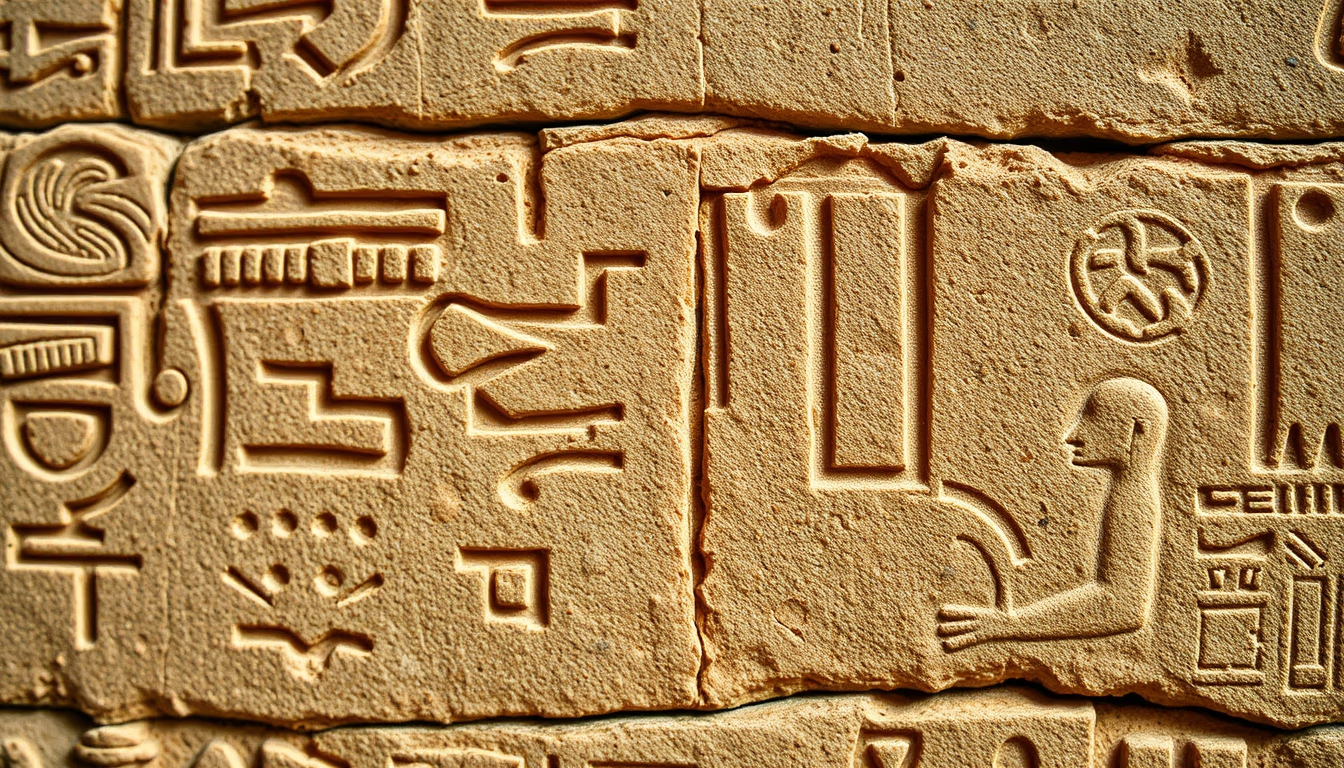
Egyptian hieroglyphs are one of the world's oldest writing systems, combining logograms and phonograms in monumental inscriptions.
About this subject
Egyptian hieroglyphs are a writing system that thrived in ancient Egypt for over 3,500 years, from around 3200 BCE to the Roman period. This script combines logographic (symbols representing words or morphemes), phonographic (signs representing sounds), and determinative (ideograms clarifying meaning) elements. Inscriptions were carved in stone to adorn temples, tombs, and monuments, but were also written on papyrus with ink. The reading direction could be right-to-left, left-to-right, or top-to-bottom, with signs always facing the beginning of the line.
The decipherment of hieroglyphs was largely due to the Rosetta Stone, discovered in 1799 by French soldiers during Napoleon's campaign in Egypt. This granodiorite fragment bears the same decree in three scripts: hieroglyphic, demotic, and ancient Greek. French linguist Jean-François Champollion, in 1822, succeeded in deciphering the hieroglyphs using the Greek text as a key and his knowledge of Coptic, a descendant of ancient Egyptian. This breakthrough allowed reading inscriptions that revealed details of religion, administration, and daily life under the pharaohs.
There are about 700 hieroglyphic signs in the classical period, though the number varied over time. Some symbols are iconic, such as the Eye of Horus (symbol of protection), the ankh (cross with a loop, representing life), and the scarab beetle (rebirth). Egyptian scribes, considered elite, used a cursive version called hieratic for administrative and literary texts, while hieroglyphs were reserved for sacred and monumental contexts. The script remained a mystery for centuries after ancient Egyptian ceased to be a spoken language, until Champollion's work.
Interestingly, many signs originated from everyday objects, animals, and human body parts, reflecting Egypt's material culture. For example, a human face sign could represent the word "face" or the sound "her". Mastering the system required years of training. Today, monuments such as the temples of Karnak and Luxor, the pyramids of Giza, and the Valley of the Kings display thousands of inscriptions that continue to be studied by Egyptologists worldwide.
Frequently Asked Questions
How were Egyptian hieroglyphs deciphered?
The decipherment was made possible by the Rosetta Stone, which bore the same text in hieroglyphic, demotic, and ancient Greek. Jean-François Champollion, in 1822, used Greek as a key and his knowledge of Coptic to interpret the hieroglyphs.
How many symbols are there in hieroglyphic writing?
In the classical period, there were about 700 signs. However, this number varied over time: fewer in the Old Kingdom and over 5,000 signs in the Ptolemaic period.
What is the difference between hieroglyphs and hieratic writing?
Hieroglyphs are the monumental, figurative form used on stone. Hieratic is a simplified cursive version, written with a brush on papyrus, used for everyday and administrative texts.
Direct URL
https://pub-c7d6a6ea828543ac903a74a341ccb2e1.r2.dev/imagens/hieroglyphs-egyptian-wall-macro-closeup-fresh9.avifHow to credit
Include a visible link back to UtilizAí. Copy one of the snippets below:
<a href="https://xn--utiliza-eza.com/en/midia/imagens/hieroglyphs-egyptian-wall-macro-closeup-fresh9">Hieroglyphs egyptian wall</a> by <a href="https://xn--utiliza-eza.com">UtilizAí</a>, licensed under <a href="https://creativecommons.org/licenses/by/4.0/">CC BY 4.0</a>.
[Hieroglyphs egyptian wall](https://xn--utiliza-eza.com/en/midia/imagens/hieroglyphs-egyptian-wall-macro-closeup-fresh9) by [UtilizAí](https://xn--utiliza-eza.com), CC BY 4.0
License: CC-BY-4.0