Hieroglyphs egyptian wall
1344×768 · AVIF · CC BY 4.0
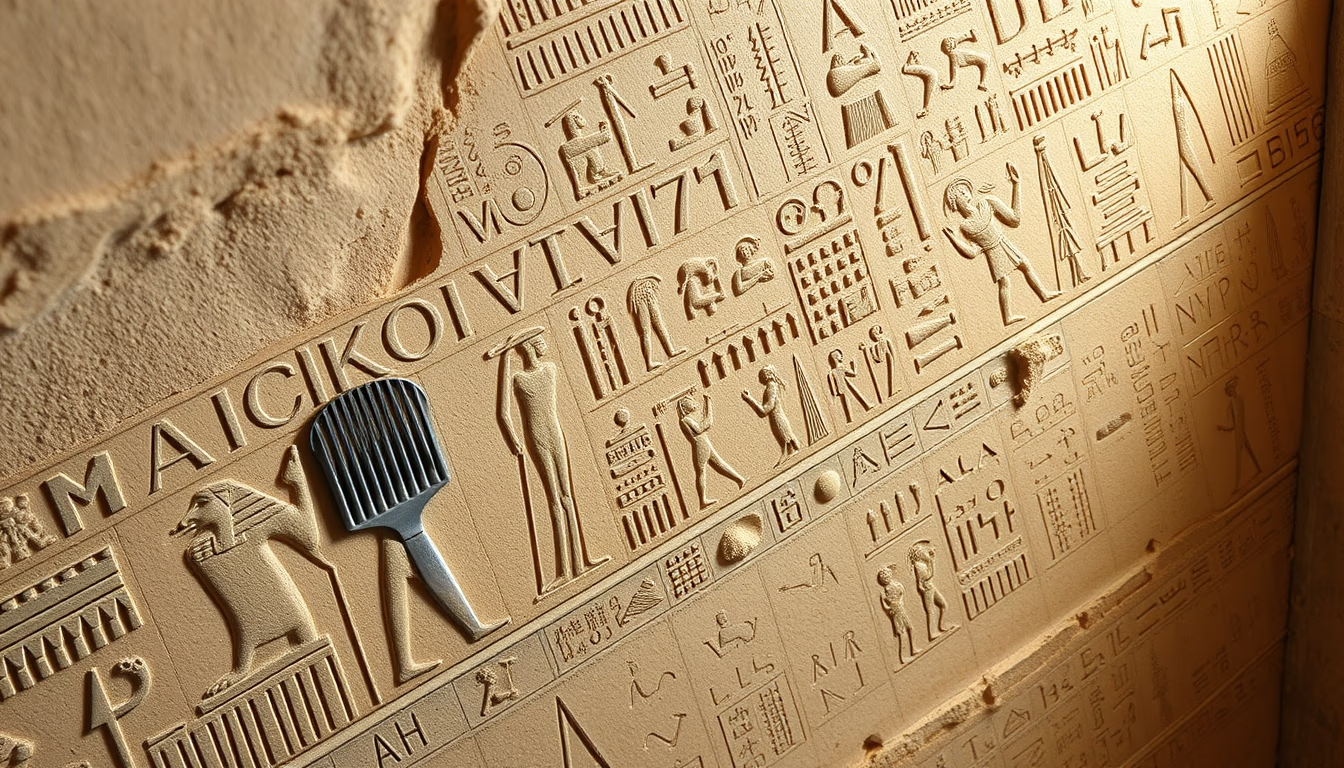
Egyptian hieroglyphs are one of the oldest writing systems, combining logographic and alphabetic symbols on temple and tomb walls.
About this subject
Egyptian hieroglyphs represent one of the oldest and most enduring writing systems, used for over 3,500 years from around 3200 BCE to the 4th century CE. The term "hieroglyph" derives from Greek and means "sacred carved writing," highlighting its primary use on temple and tomb walls. The script combines logographic, syllabic, and alphabetic elements, with roughly 700 to 800 distinct signs. These signs could represent sounds (phonograms), whole words (logograms), or act as determinatives to clarify meaning. Inscriptions were carved into stone for monuments or written with reed brushes on papyrus.
The direction of writing could be either left-to-right or right-to-left, determined by the orientation of human and animal figures: they always face toward the beginning of the line. Scribes, who formed an elite social class, underwent rigorous training to master the complex glyph system. Notable examples include the Pyramid Texts and the Book of the Dead, which were intended to guide the deceased in the afterlife. The Rosetta Stone, discovered in 1799, was the key to deciphering hieroglyphs, as it contained the same text in Greek, Demotic, and hieroglyphic scripts.
Beyond communication, hieroglyphs were a form of art. Each glyph was meticulously crafted according to strict aesthetic and proportional canons. Colors such as red, blue, green, and gold were often added, particularly in funerary contexts. After the decline of ancient Egyptian religion and the spread of Christianity, hieroglyphic writing fell out of use, replaced by the Coptic alphabet. Nevertheless, these ancient symbols remain a powerful cultural icon, with original wall carvings still visible at sites like Luxor and the Valley of the Kings, captivating historians and tourists alike.
Frequently Asked Questions
What do Egyptian hieroglyphs mean?
Egyptian hieroglyphs are a writing system that combines signs for sounds (phonograms), ideas (logograms), and classifiers (determinatives). They were primarily used in religious and funerary contexts, recording texts such as hymns, magical formulas, and historical records.
How were hieroglyphs deciphered?
Modern decipherment began with the Rosetta Stone, which contained a decree in three scripts: hieroglyphic, Demotic, and ancient Greek. The French scholar Jean-François Champollion, in 1822, correlated Greek royal names with hieroglyphic cartouches, paving the way for full reading of the system.
Where can I see original hieroglyphs?
Original hieroglyphic wall carvings can be seen at various archaeological sites in Egypt, such as the Temple of Karnak, the Valley of the Kings, and the Giza pyramids. Many artifacts and papyri are also displayed in museums like the Egyptian Museum in Cairo and the British Museum.
Direct URL
https://pub-c7d6a6ea828543ac903a74a341ccb2e1.r2.dev/imagens/hieroglyphs-egyptian-wall-isometric-flat-lay-fresh1.avifHow to credit
Include a visible link back to UtilizAí. Copy one of the snippets below:
<a href="https://xn--utiliza-eza.com/en/midia/imagens/hieroglyphs-egyptian-wall-isometric-flat-lay-fresh1">Hieroglyphs egyptian wall</a> by <a href="https://xn--utiliza-eza.com">UtilizAí</a>, licensed under <a href="https://creativecommons.org/licenses/by/4.0/">CC BY 4.0</a>.
[Hieroglyphs egyptian wall](https://xn--utiliza-eza.com/en/midia/imagens/hieroglyphs-egyptian-wall-isometric-flat-lay-fresh1) by [UtilizAí](https://xn--utiliza-eza.com), CC BY 4.0
License: CC-BY-4.0