Hieroglyphs egyptian wall
1344×768 · AVIF · CC BY 4.0
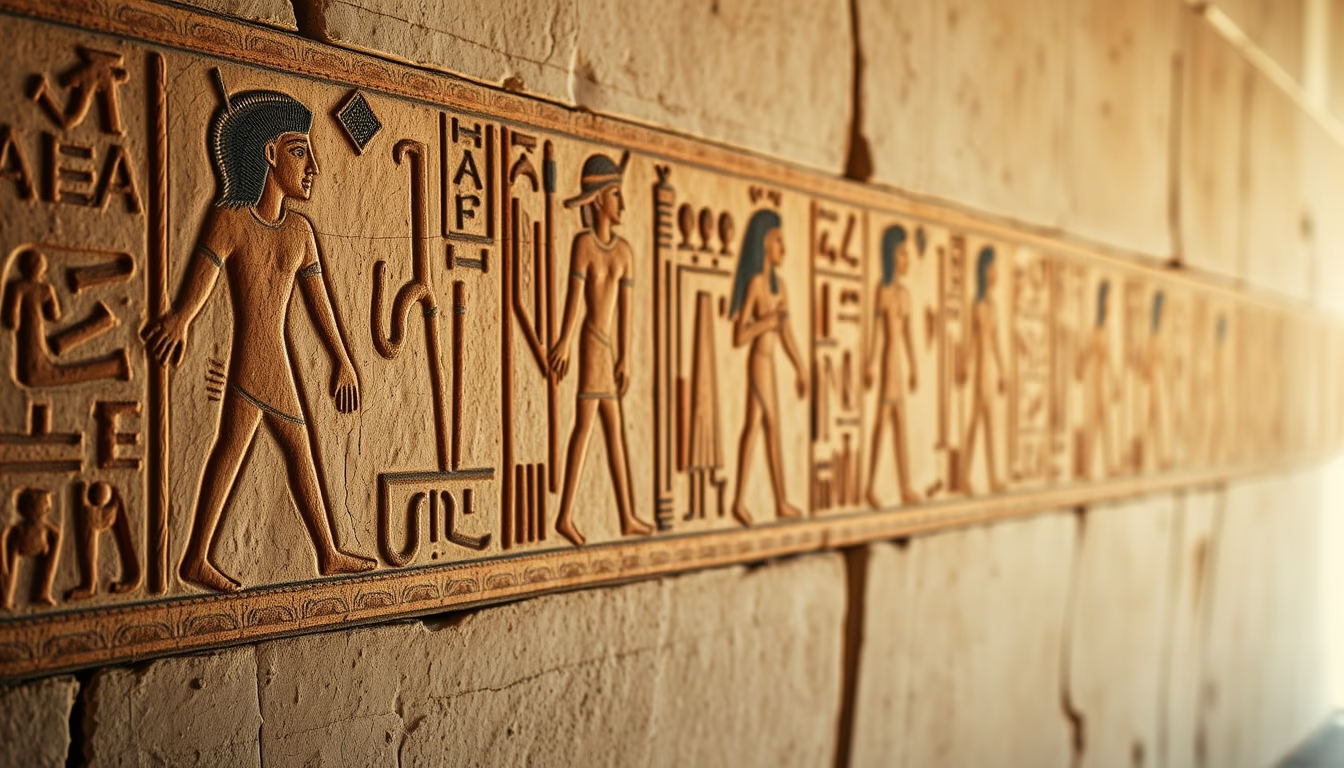
Egyptian hieroglyphs: the sacred script of pharaohs, carved on temple and tomb walls along the Nile.
About this subject
Egyptian hieroglyphs are among the world's oldest and most enduring writing systems, originating around 3200 BCE. Used for over 3,500 years, these symbols combined logograms (representing words or concepts) and phonograms (representing sounds), enabling records ranging from religious hymns to commercial transactions. The word 'hieroglyph' comes from Greek 'hieros' (sacred) and 'glyphein' (to carve), reflecting the belief that writing was a divine gift from the god Thoth.
Temple walls at Karnak and Luxor in Upper Egypt are covered with hieroglyphic reliefs and inscriptions narrating battles, offerings, and rituals. Tombs in the Valley of the Kings, including Tutankhamun's, used hieroglyphs to guide the pharaoh in the afterlife, as described in the Book of the Dead. Each symbol carried precise meaning: the Eye of Horus (Udjat) represented protection, and the scarab beetle symbolized rebirth.
Modern decipherment of hieroglyphs is owed to the Rosetta Stone, discovered in 1799 by French soldiers. Inscribed in three scripts (hieroglyphic, demotic, and Greek), it allowed Jean-François Champollion in 1822 to identify phonograms and logograms, unlocking understanding of Egyptian civilization. Today, an estimated 700 to 800 common hieroglyphic signs exist, but full grammatical knowledge remains an ongoing study.
Hieroglyphs were not limited to monuments: papyri such as the Ebers Papyrus (on medicine) or the Rhind Papyrus (on mathematics) show their daily use. Unfortunately, many texts were lost due to decay and reuse of materials. UNESCO lists hieroglyphic writing as an Intangible Cultural Heritage of Humanity, and Egyptologists still discover new inscriptions in excavations, such as recent ones at the Saqqara necropolis, revealing unprecedented details about life in ancient Egypt.
Frequently Asked Questions
How many hieroglyphic symbols exist?
It is estimated that there are between 700 and 800 common hieroglyphic signs, but the total number varies by period and context. Some scholars list up to 1,000 variations, including rare combinations.
Are hieroglyphs still used today?
Not as a living writing system. However, they are studied by Egyptologists and used in decorative or symbolic contexts, such as jewelry, tattoos, and logos inspired by ancient Egypt.
What is the difference between hieroglyphs, hieratic, and demotic?
Hieroglyphs are the monumental carved script. Hieratic is a cursive form used on papyri, faster to write. Demotic, emerging around 650 BCE, is an even more simplified version, used for everyday and administrative texts.
Direct URL
https://pub-c7d6a6ea828543ac903a74a341ccb2e1.r2.dev/imagens/hieroglyphs-egyptian-wall-documentary-photography-fresh5.avifHow to credit
Include a visible link back to UtilizAí. Copy one of the snippets below:
<a href="https://xn--utiliza-eza.com/en/midia/imagens/hieroglyphs-egyptian-wall-documentary-photography-fresh5">Hieroglyphs egyptian wall</a> by <a href="https://xn--utiliza-eza.com">UtilizAí</a>, licensed under <a href="https://creativecommons.org/licenses/by/4.0/">CC BY 4.0</a>.
[Hieroglyphs egyptian wall](https://xn--utiliza-eza.com/en/midia/imagens/hieroglyphs-egyptian-wall-documentary-photography-fresh5) by [UtilizAí](https://xn--utiliza-eza.com), CC BY 4.0
License: CC-BY-4.0