Hieroglyphs egyptian wall
1344×768 · AVIF · CC BY 4.0
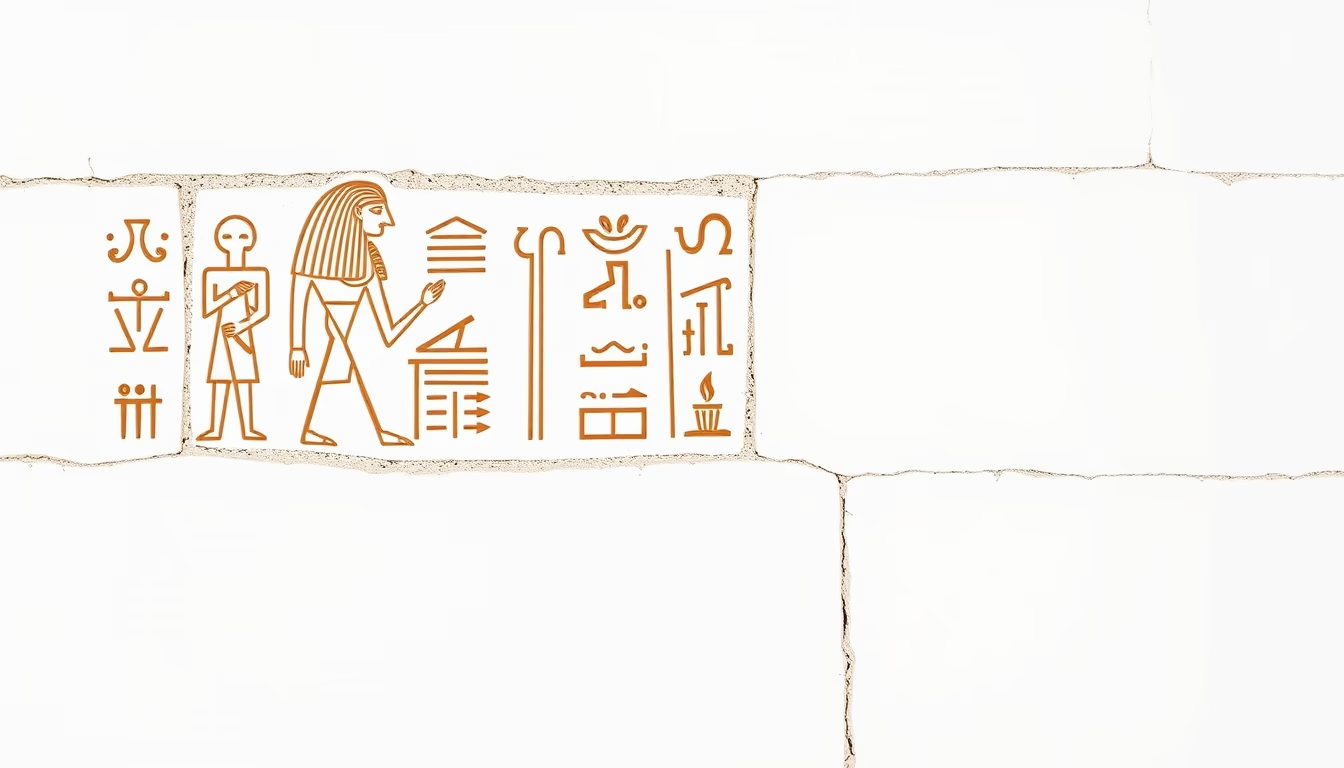
Egyptian hieroglyphs are one of the world's oldest writing systems, combining logographic and alphabetic symbols carved on monuments and tombs.
About this subject
Egyptian hieroglyphs emerged around 3200 BCE and were used for over 3,500 years. This writing system combines logographic signs (representing words or ideas) and phonetic signs (representing sounds), with about 700 distinct characters. The word "hieroglyph" comes from the Greek "hieros" (sacred) and "glyphein" (to carve), reflecting its primary use in religious and monumental contexts such as temples and royal tombs.
Egyptian scribes mastered a complex calligraphy that included carved hieroglyphs (for stone inscriptions) and cursive versions like hieratic and demotic. The Rosetta Stone, discovered in 1799, was crucial for deciphering hieroglyphs as it presented the same text in Greek, demotic, and hieroglyphic scripts. The Frenchman Jean-François Champollion established the key to reading them in 1822, opening a path to understanding Egyptian civilization.
On tomb and temple walls, hieroglyphs often narrated the deeds of pharaohs, hymns to gods, and spells from the Book of the Dead. The direction of writing could be left-to-right or right-to-left, indicated by the orientation of human and animal figures. The dry climate preserved many inscriptions intact for millennia. Today, replicas of hieroglyphic walls are popular in decoration and themed products, keeping the fascination with this ancient writing alive.
Frequently Asked Questions
What are Egyptian hieroglyphs?
Egyptian hieroglyphs are a writing system combining logographic and alphabetic symbols, used in ancient Egypt for over 3,500 years, primarily on monuments and tombs.
How were hieroglyphs deciphered?
The Rosetta Stone, with text in Greek, demotic, and hieroglyphic, was key. Jean-François Champollion used the Greek as a base to decipher the hieroglyphs in 1822.
What is the difference between hieroglyphs and hieratic?
Hieroglyphs are the carved, monumental form on stone, while hieratic is a simplified cursive version used on papyrus for everyday and administrative writing.
Direct URL
https://pub-c7d6a6ea828543ac903a74a341ccb2e1.r2.dev/imagens/hieroglyphs-egyptian-wall-commercial-product-photography-fresh13.avifHow to credit
Include a visible link back to UtilizAí. Copy one of the snippets below:
<a href="https://xn--utiliza-eza.com/en/midia/imagens/hieroglyphs-egyptian-wall-commercial-product-photography-fresh13">Hieroglyphs egyptian wall</a> by <a href="https://xn--utiliza-eza.com">UtilizAí</a>, licensed under <a href="https://creativecommons.org/licenses/by/4.0/">CC BY 4.0</a>.
[Hieroglyphs egyptian wall](https://xn--utiliza-eza.com/en/midia/imagens/hieroglyphs-egyptian-wall-commercial-product-photography-fresh13) by [UtilizAí](https://xn--utiliza-eza.com), CC BY 4.0
License: CC-BY-4.0