Hieroglyphs egyptian wall
1344×768 · AVIF · CC BY 4.0
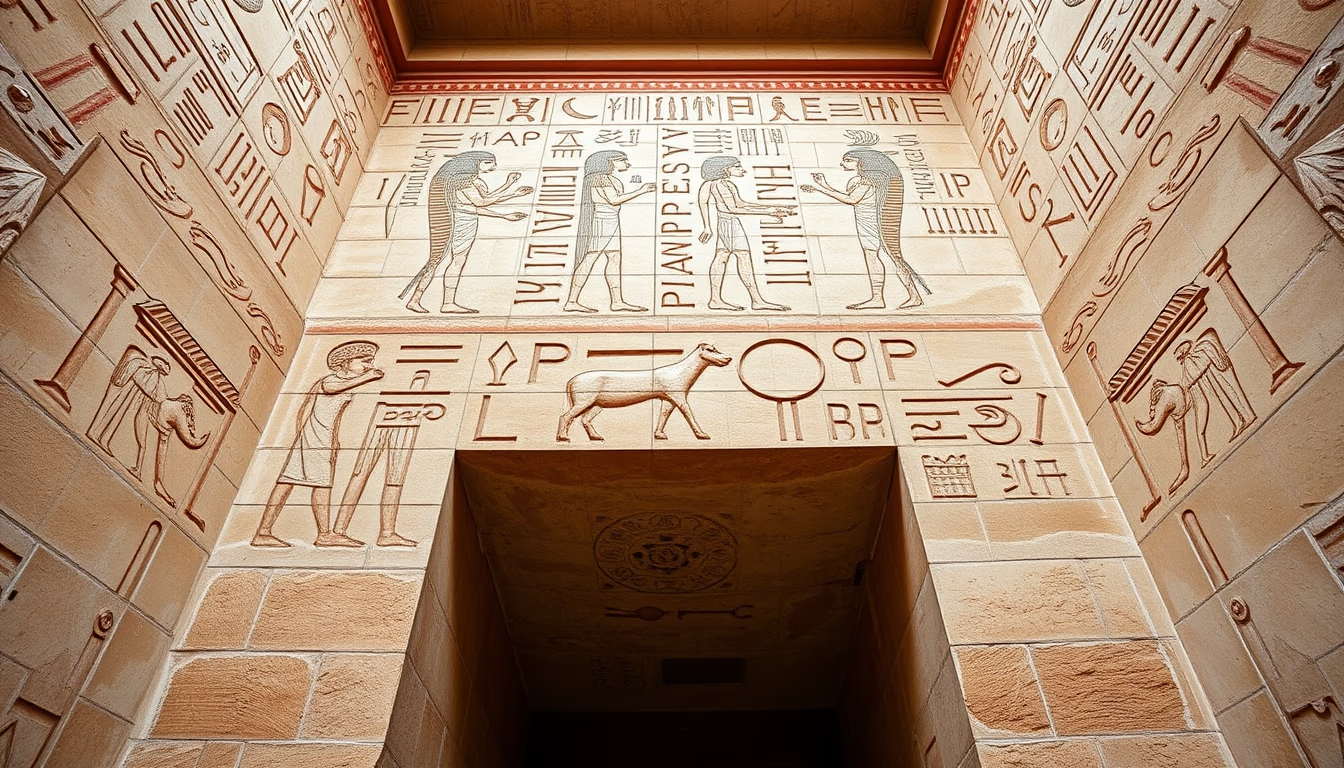
Egyptian hieroglyphs are one of the oldest writing systems, combining logograms and phonetic signs, carved on temple and tomb walls for millennia.
About this subject
Egyptian hieroglyphs emerged around 3200 BCE and were used for over 3,500 years. This writing system combines ideograms (symbols representing ideas) and phonograms (signs representing sounds), allowing the recording of everything from religious rituals to commercial transactions. Inscriptions were often carved into stone on the walls of temples, tombs, and monuments, such as the famous reliefs at the Temple of Karnak or the Valley of the Kings. The word "hieroglyph" comes from the Greek "hieros" (sacred) and "glyphein" (to carve), reflecting their primary use in sacred and funerary contexts.
The modern decipherment of hieroglyphs was made possible by the Rosetta Stone, discovered in 1799 by French soldiers in Egypt. This granite slab contains the same text in three scripts: hieroglyphs, demotic, and ancient Greek. The work of French linguist Jean-François Champollion, who compared royal names (such as Ptolemy and Cleopatra) within cartouches, established the phonetic basis of the system. From 1822 onward, reading hieroglyphs became feasible, opening a window into Egyptian civilization.
Hieroglyphs were not the only Egyptian script. For everyday use, cursive forms such as hieratic (a simplified version) and later demotic (even more abbreviated) were developed. While hieroglyphs were used for monumental inscriptions, hieratic was written on papyrus with a reed pen. Interestingly, the Egyptians believed that writing was a gift from the god Thoth, associated with wisdom and magic. Therefore, texts were considered powerful and were often included in amulets or on tomb walls to assist the deceased in the afterlife.
The structure of hieroglyphic writing is complex: signs can be read from left to right or right to left, depending on the direction the human and animal figures face. This aesthetic flexibility allowed scribes to arrange texts harmoniously with architecture. Today, hieroglyphs continue to fascinate, studied by Egyptologists and inspiring pop culture, such as in the movie "The Mummy" or games like "Assassin's Creed Origins." They represent a unique legacy of humanity's ability to record history and beliefs through images and symbols.
Frequently Asked Questions
How were hieroglyphs deciphered?
The decipherment was made possible by the Rosetta Stone, which contained the same text in hieroglyphs, demotic, and Greek. Jean-François Champollion compared proper names within cartouches to identify sounds and announced the reading key in 1822.
What is a cartouche?
A cartouche is an oval outline that encloses the hieroglyphs forming the name of a pharaoh or deity. It served to protect the royal name and delineate it within inscriptions.
Are hieroglyphs still used today?
They are not used as a living script, but they continue to be studied academically and appear in art, decoration, and pop culture. There are Unicode fonts for hieroglyphs, allowing digital representation.
Direct URL
https://pub-c7d6a6ea828543ac903a74a341ccb2e1.r2.dev/imagens/hieroglyphs-egyptian-wall-architectural-photography-fresh16.avifHow to credit
Include a visible link back to UtilizAí. Copy one of the snippets below:
<a href="https://xn--utiliza-eza.com/en/midia/imagens/hieroglyphs-egyptian-wall-architectural-photography-fresh16">Hieroglyphs egyptian wall</a> by <a href="https://xn--utiliza-eza.com">UtilizAí</a>, licensed under <a href="https://creativecommons.org/licenses/by/4.0/">CC BY 4.0</a>.
[Hieroglyphs egyptian wall](https://xn--utiliza-eza.com/en/midia/imagens/hieroglyphs-egyptian-wall-architectural-photography-fresh16) by [UtilizAí](https://xn--utiliza-eza.com), CC BY 4.0
License: CC-BY-4.0