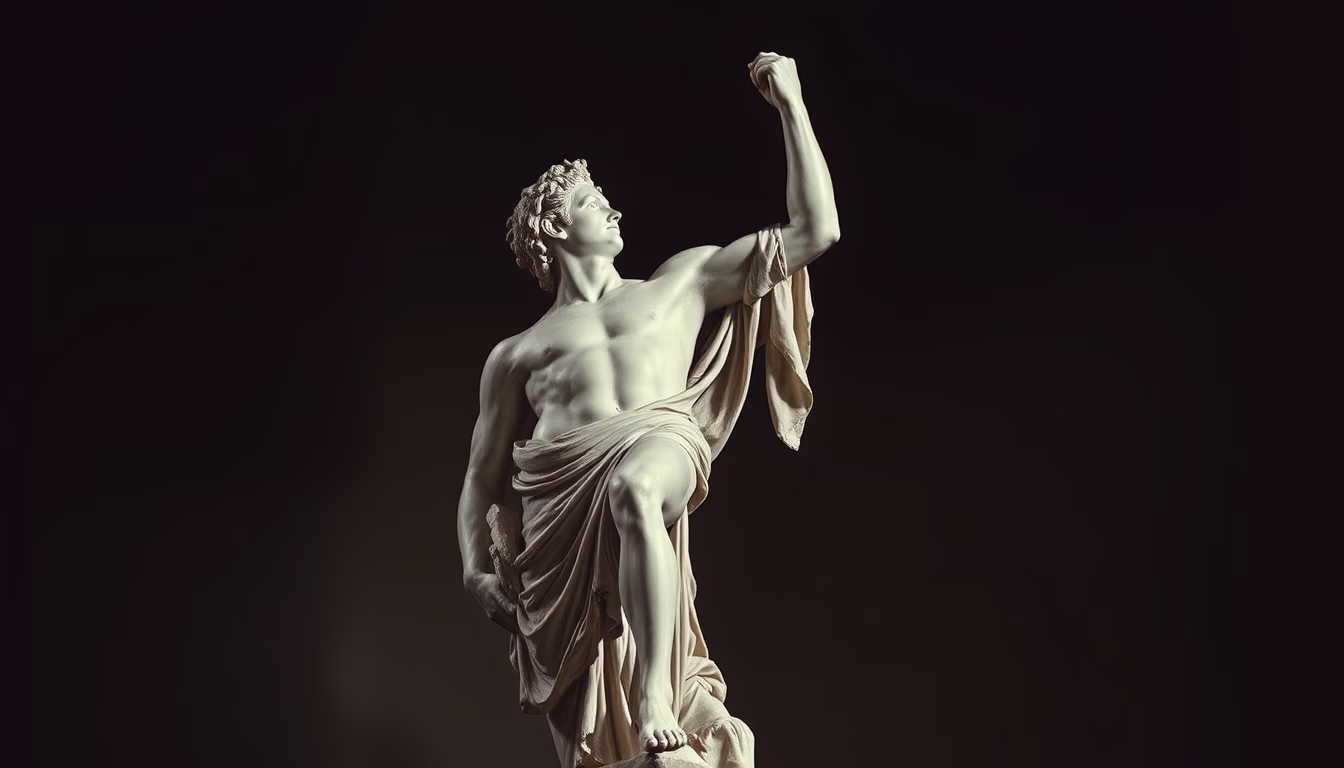
Henry moore abstract
1344×768 · AVIF · CC BY 4.0
Henry Moore, master of abstract sculpture, transformed organic forms into monuments that dialogue with landscape and urban space.
About this subject
Henry Moore (1898, 1986) was one of the most influential sculptors of the 20th century, renowned for his abstract works that evoke human figures and natural forms. Born in Castleford, England, Moore developed a unique style blending surrealism with primitive art, especially after studying the collections of the British Museum. His sculptures, often in bronze or stone, are characterized by perforations and fluid curves that create a dialogue between void and volume.
The concept of "open form" is central to Moore's work. He insisted that the space around and through the sculpture was as important as the solid matter. Works like "Reclining Figure" became his hallmark, exploring the abstraction of the human body in sinuous curves. Moore also pioneered the integration of sculpture with architecture and landscaping, as seen in his pieces for public buildings and parks.
His creations are found in museums and public spaces worldwide, including Tate Britain, the Museum of Modern Art in New York, and the Henry Moore Sculpture Garden in Yorkshire. In Brazil, Ibirapuera Park in São Paulo displays one of his works, "Reclining Figure", donated after an exhibition in 1953. Moore received numerous awards, such as the British Order of Merit, and his influence persists in contemporary artists exploring organic abstraction.
Interestingly, Moore often collected bones, shells, and stones to inspire his forms. He argued that sculpture should be touched, bringing viewers closer to the materiality of art. His philosophy "sculpture is the art of the hole and the bulge" sums up his innovative approach, which challenged academic conventions and celebrated the primal connection between form and nature.
Frequently Asked Questions
What characterizes Henry Moore's abstract sculptures?
Henry Moore's sculptures are marked by fluid organic forms, perforations that integrate empty space, and an abstraction that alludes to the human body and nature. He primarily used bronze and stone, and his works often interact with the surrounding environment.
Where can I see Henry Moore's works in Brazil?
In Brazil, one of Henry Moore's most famous works is the 'Reclining Figure' at Ibirapuera Park in São Paulo. The piece was donated by the artist after his exhibition at the Museum of Modern Art of São Paulo in 1953.
What is Henry Moore's importance to modern sculpture?
Henry Moore revolutionized sculpture by introducing the concept of 'open form', where emptiness is as important as solid mass. He also integrated sculpture into landscape and architecture, influencing generations of artists and establishing organic abstraction as a lasting movement.
Direct URL
https://pub-c7d6a6ea828543ac903a74a341ccb2e1.r2.dev/imagens/henry-moore-abstract-travel-photography-p6.avifHow to credit
Include a visible link back to UtilizAí. Copy one of the snippets below:
<a href="https://xn--utiliza-eza.com/en/midia/imagens/henry-moore-abstract-travel-photography-p6">Henry moore abstract</a> by <a href="https://xn--utiliza-eza.com">UtilizAí</a>, licensed under <a href="https://creativecommons.org/licenses/by/4.0/">CC BY 4.0</a>.
[Henry moore abstract](https://xn--utiliza-eza.com/en/midia/imagens/henry-moore-abstract-travel-photography-p6) by [UtilizAí](https://xn--utiliza-eza.com), CC BY 4.0
License: CC-BY-4.0