Henry moore abstract
1344×768 · AVIF · CC BY 4.0
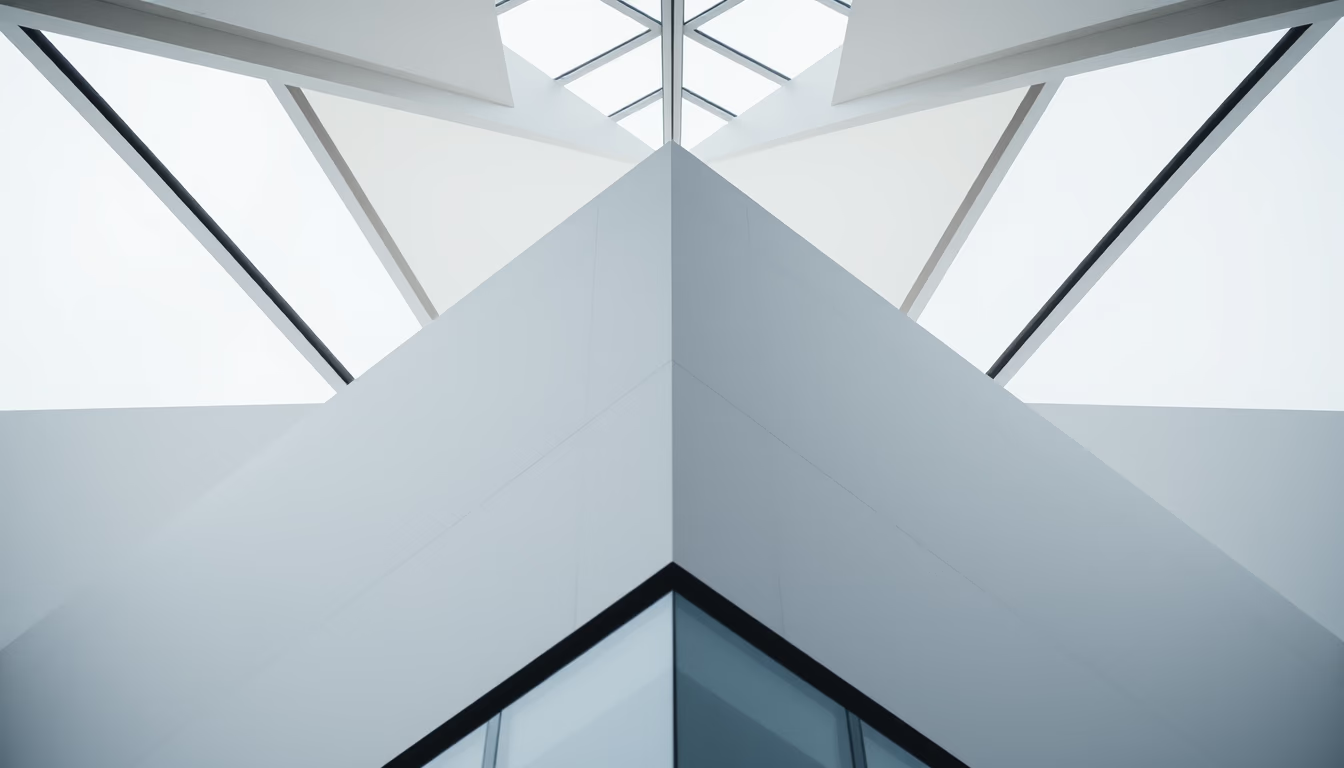
Henry Moore revolutionized 20th-century abstract sculpture, blending organic forms into architectural spaces and urban landscapes.
About this subject
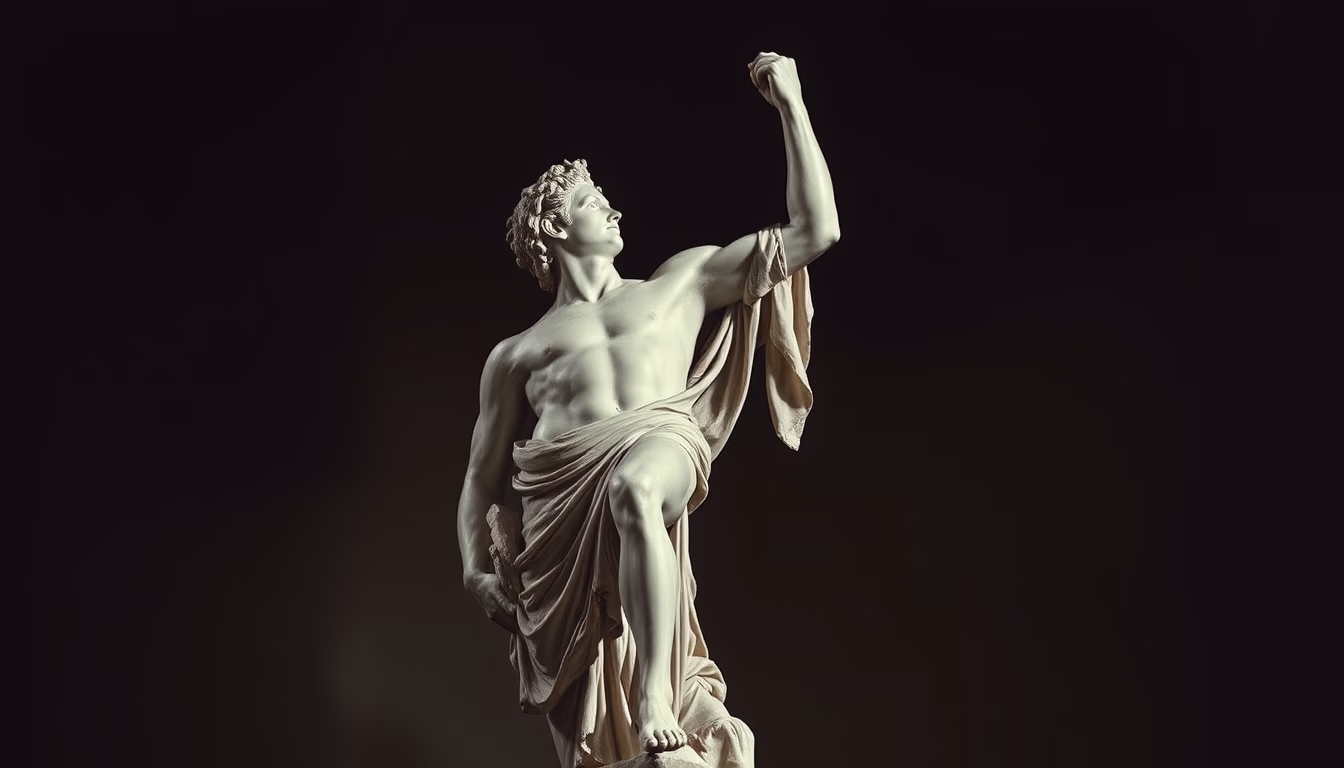
Henry Moore (1898, 1986) was one of the most influential British sculptors, renowned for abstract forms that evoke the human body and nature. His works, often in bronze or stone, explore cavities and fluid curves, creating a sense of monumentality and movement. Moore's abstract sculpture is not merely decorative; it engages in a dialogue with its surroundings, whether in parks, squares, or building facades.
Moore's relationship with architecture was profound. He believed sculpture should interact with architectural space, and many of his pieces were commissioned for specific sites, such as the UNESCO building in Paris (1958) and the Lincoln Center in New York. His abstract approach allowed the works to visually integrate with various architectural styles, from modernist to contemporary. This integration is often captured by architectural photographers, who find in Moore's curves a counterpoint to the straight lines of buildings.
Moore's abstraction is not purely geometric; it incorporates subtle figurative references, such as bones, shells, and the reclining body. His famous "Reclining Figure" series exemplifies how he transformed human anatomy into abstract, hollowed volumes. These pieces are often placed in locations that allow multiple viewpoints, inviting the viewer to walk around and discover new relationships with the architectural environment.
Interestingly, Moore also influenced furniture design and even set design, demonstrating the versatility of his abstract language. His works continue to be studied in art and architecture schools as examples of balance among form, space, and function.
Frequently Asked Questions
What are the main characteristics of Henry Moore's abstract sculptures?
Henry Moore's abstract sculptures are characterized by organic forms, internal cavities, and fluid curves, often inspired by the human body, bones, and shells. They explore the relationship between solids and voids, creating a sense of movement and monumentality.
How did Henry Moore integrate his sculptures into architecture?
Moore designed his works to dialogue with specific architectural spaces, such as the UNESCO building in Paris. He used abstract forms that contrast with or complement the straight lines of buildings, creating visual and spatial interaction.
Where can I see Henry Moore's sculptures in architectural contexts?
Besides UNESCO, Moore's works are at locations like Lincoln Center (New York), Tate Britain (London), and the Sculpture Garden of the São Paulo Museum of Art (MASP). Many are in public parks and squares, integrated into the landscape.
Direct URL
https://pub-c7d6a6ea828543ac903a74a341ccb2e1.r2.dev/imagens/henry-moore-abstract-architectural-photography-p9.avifHow to credit
Include a visible link back to UtilizAí. Copy one of the snippets below:
<a href="https://xn--utiliza-eza.com/en/midia/imagens/henry-moore-abstract-architectural-photography-p9">Henry moore abstract</a> by <a href="https://xn--utiliza-eza.com">UtilizAí</a>, licensed under <a href="https://creativecommons.org/licenses/by/4.0/">CC BY 4.0</a>.
[Henry moore abstract](https://xn--utiliza-eza.com/en/midia/imagens/henry-moore-abstract-architectural-photography-p9) by [UtilizAí](https://xn--utiliza-eza.com), CC BY 4.0
License: CC-BY-4.0