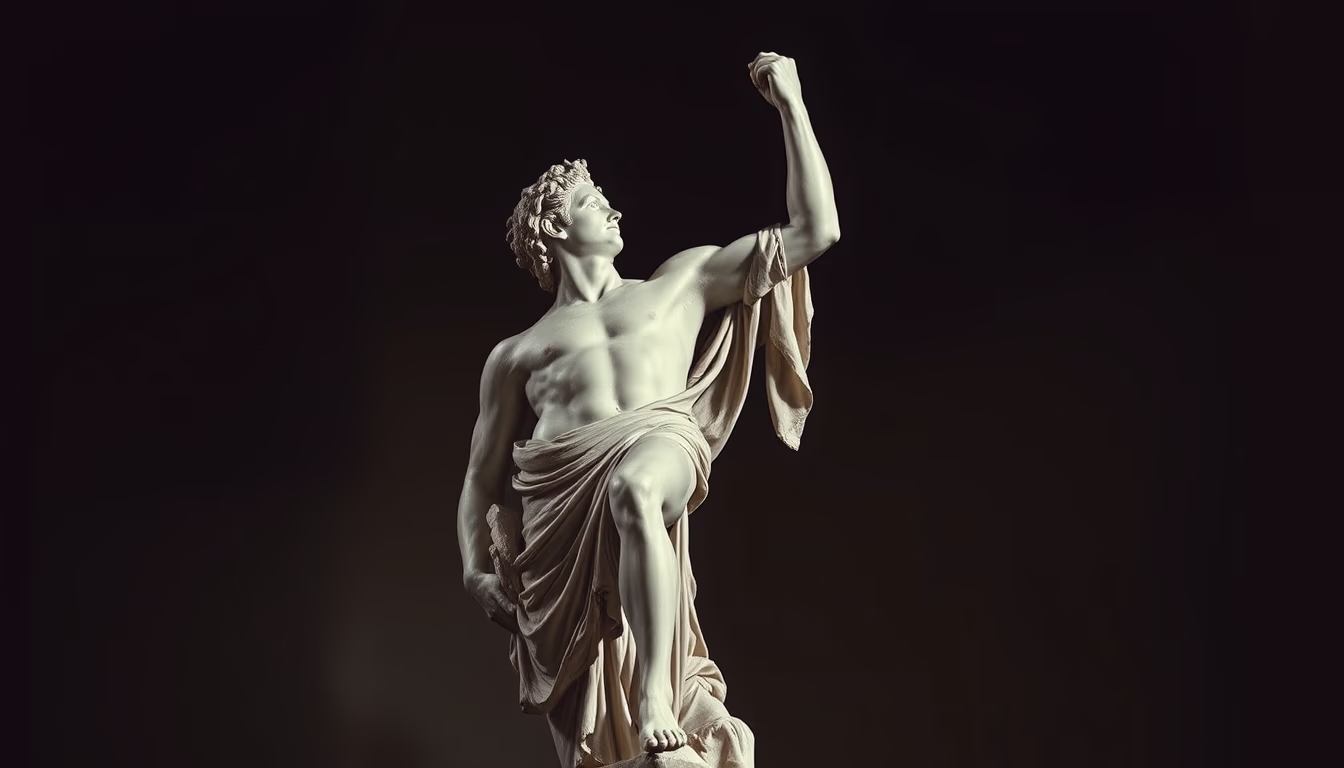
Henry moore abstract
1344×768 · AVIF · CC BY 4.0
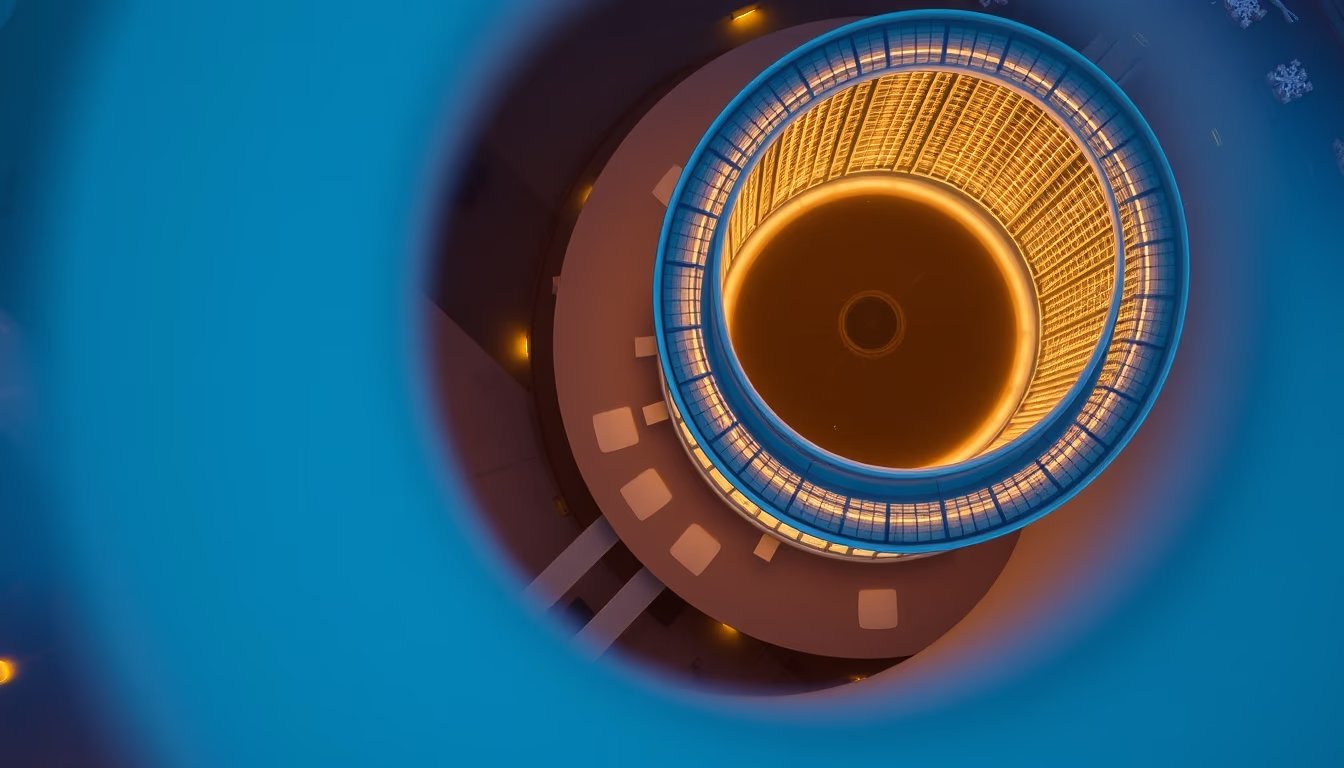
Abstract sculptures by Henry Moore, a 20th-century British master who transformed urban landscapes with monumental organic forms.
About this subject
Henry Moore (1898, 1986) was one of the most influential sculptors of the 20th century, known for his abstract organic forms that evoke human figures and landscapes. Born in Castleford, England, Moore studied at the Leeds School of Art and the Royal College of Art, where he developed his characteristic style influenced by primitive art and Michelangelo's sculptures. His work is marked by the use of perforated and fluid forms, often inspired by bones, shells, and pebbles, which he saw as expressions of natural beauty.
Among his most famous works are 'Reclining Figure', which appears in many variations, and 'Large Two Forms'. Moore also created many pieces for public spaces, such as the monumental sculpture in front of the UNESCO building in Paris. His abstract sculptures, often in bronze or stone, invite the viewer to walk around them and experience different perspectives. Abstraction in Moore is not a negation of the human figure but a simplification that seeks to capture its essence and movement.
During World War II, Moore produced drawings of Londoners in the subway shelters, which became iconic. After the war, he received numerous international commissions, establishing himself as one of the most sought-after artists. His legacy includes the Henry Moore Foundation, which promotes contemporary sculpture. Moore's abstract forms continue to inspire architects and designers, often incorporated into landscape and urban projects worldwide.
Frequently Asked Questions
What is the main feature of Henry Moore's abstract sculptures?
Henry Moore's abstract sculptures are characterized by organic, fluid forms, often with perforations that create a dialogue between interior and exterior. He sought to simplify the human figure while retaining its essence and movement.
What materials did Henry Moore work with?
Moore primarily worked with bronze, stone, and concrete. His monumental sculptures are often in bronze, while smaller pieces can be in wood or plaster.
Where can I see Henry Moore's sculptures in public spaces?
Henry Moore's works can be found in various public locations, such as the Yorkshire Sculpture Park (England), in front of UNESCO headquarters in Paris, and in the MoMA Sculpture Garden in New York. Many cities around the world have his pieces in parks and squares.
Direct URL
https://pub-c7d6a6ea828543ac903a74a341ccb2e1.r2.dev/imagens/henry-moore-abstract-aerial-drone-shot-p0.avifHow to credit
Include a visible link back to UtilizAí. Copy one of the snippets below:
<a href="https://xn--utiliza-eza.com/en/midia/imagens/henry-moore-abstract-aerial-drone-shot-p0">Henry moore abstract</a> by <a href="https://xn--utiliza-eza.com">UtilizAí</a>, licensed under <a href="https://creativecommons.org/licenses/by/4.0/">CC BY 4.0</a>.
[Henry moore abstract](https://xn--utiliza-eza.com/en/midia/imagens/henry-moore-abstract-aerial-drone-shot-p0) by [UtilizAí](https://xn--utiliza-eza.com), CC BY 4.0
License: CC-BY-4.0