Hebrew calligraphy torah
1344×768 · AVIF · CC BY 4.0
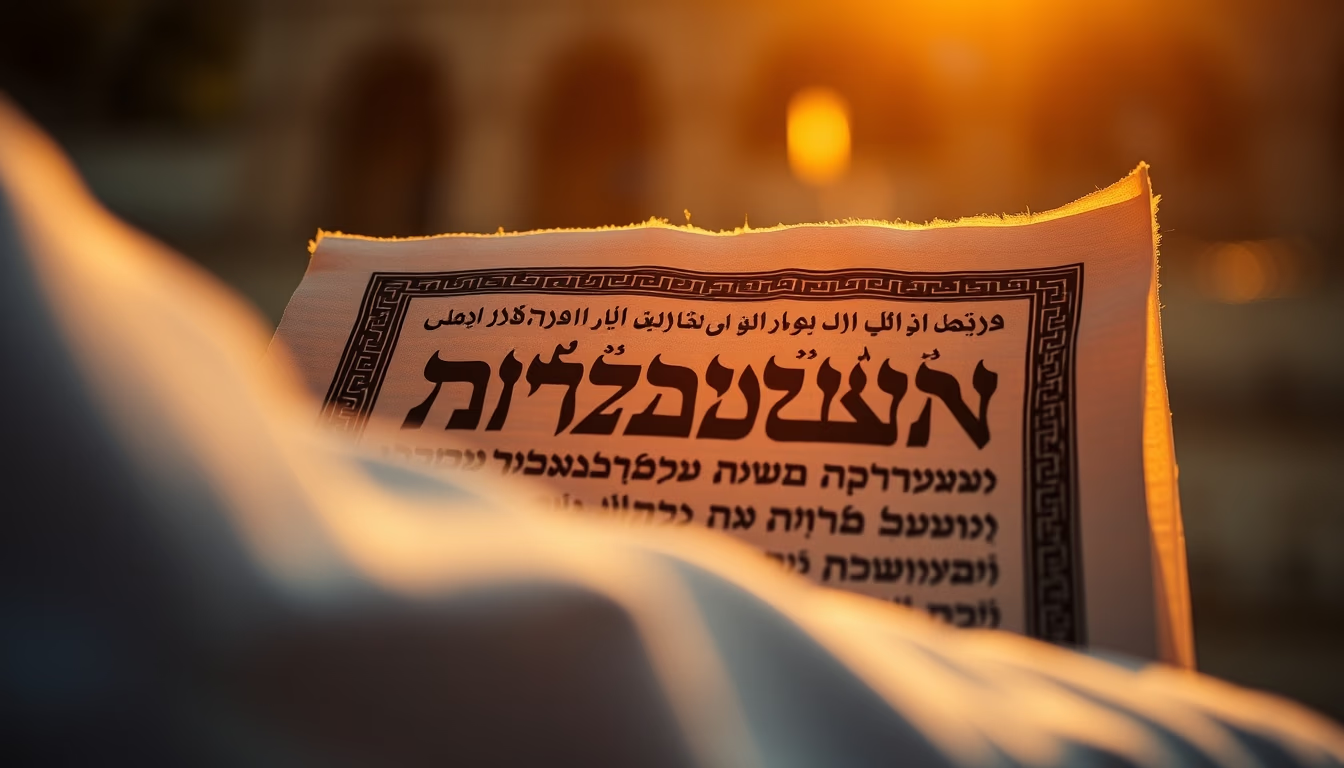
Hebrew calligraphy of the Torah is an ancient art that combines technical precision and religious devotion in transcribing the sacred texts of Judaism.
About this subject
The Torah, the first five books of the Hebrew Bible, is traditionally handwritten on a parchment scroll by a trained scribe called a sofer. The Hebrew calligraphy used follows strict rules: each letter must be drawn with specific strokes, maintaining standardized proportions and spacing. The sofer uses a bird feather (usually turkey) and special black ink, prepared from iron sulfate and gall nuts. A single mistake can invalidate the entire scroll, requiring the scribe to restart from the point of error or even redo the entire page.
The art of Hebrew Torah calligraphy dates back to antiquity, with origins in the Dead Sea Scrolls and evolving through schools such as Ashkenazi and Sephardic. Each writing style, called ktav, has its own characteristics: ktav Ashuri (square script) is the most common in Torah scrolls, recognizable by its straight, angular letters. Letters are adorned with crowns (tagin), small decorations that appear on certain letters and must be drawn precisely. The Hebrew alphabet has 22 letters, each with mystical significance in Kabbalah.
Producing a Torah scroll is a lengthy and expensive process, taking one to two years to complete. The parchment is made from kosher animal skin (usually sheep, cow, or goat), tanned and prepared according to religious laws. The text is written in columns, without vowels or punctuation, and is read from right to left. The complete Torah contains 304,805 letters. When the scroll is finished, it is consecrated in a special ceremony and stored in an Ark in the synagogue, being the most sacred object in Judaism.
Beyond Torah scrolls, Hebrew calligraphy is also used in other liturgical texts, such as the Scroll of Esther (Megillah) and phylacteries (tefilin). Today, some artists work with Hebrew calligraphy as a form of artistic expression, creating contemporary works on paper, ceramics, and even murals. UNESCO recognized Hebrew Torah calligraphy as an Intangible Cultural Heritage of Humanity in 2021, highlighting its historical and cultural importance.
Frequently Asked Questions
What is a sofer?
A sofer is a trained scribe who handwrites sacred Jewish texts, such as the Torah, following strict religious and calligraphic rules.
Why can't a Torah scroll contain errors?
Any error in a Torah scroll is considered a flaw in the transmission of the divine word. If an error is found, the scroll cannot be used for public reading until it is corrected or replaced.
How many letters are in the Torah?
The complete Torah contains exactly 304,805 letters. This count is traditionally verified to ensure the scroll's accuracy.
Direct URL
https://pub-c7d6a6ea828543ac903a74a341ccb2e1.r2.dev/imagens/hebrew-calligraphy-torah-cinematic-wide-shot-fresh2.avifHow to credit
Include a visible link back to UtilizAí. Copy one of the snippets below:
<a href="https://xn--utiliza-eza.com/en/midia/imagens/hebrew-calligraphy-torah-cinematic-wide-shot-fresh2">Hebrew calligraphy torah</a> by <a href="https://xn--utiliza-eza.com">UtilizAí</a>, licensed under <a href="https://creativecommons.org/licenses/by/4.0/">CC BY 4.0</a>.
[Hebrew calligraphy torah](https://xn--utiliza-eza.com/en/midia/imagens/hebrew-calligraphy-torah-cinematic-wide-shot-fresh2) by [UtilizAí](https://xn--utiliza-eza.com), CC BY 4.0
License: CC-BY-4.0