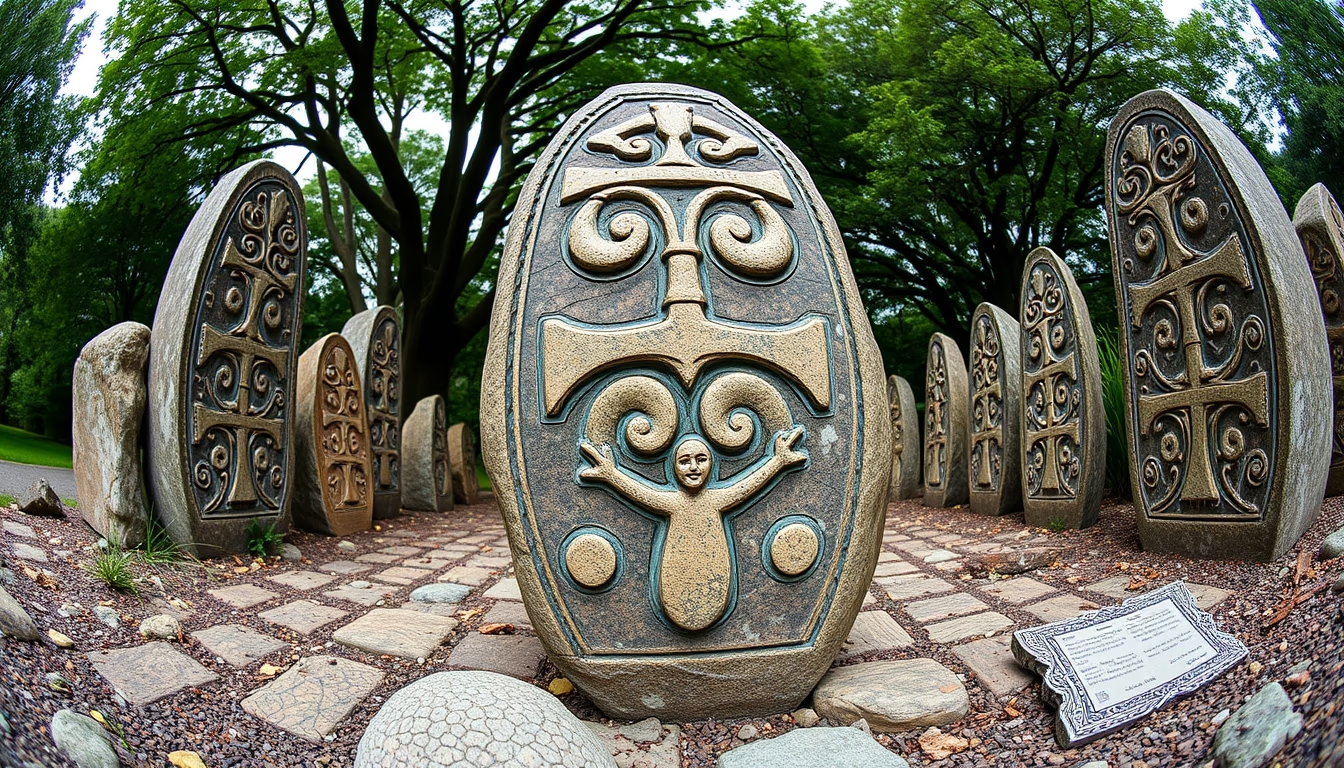
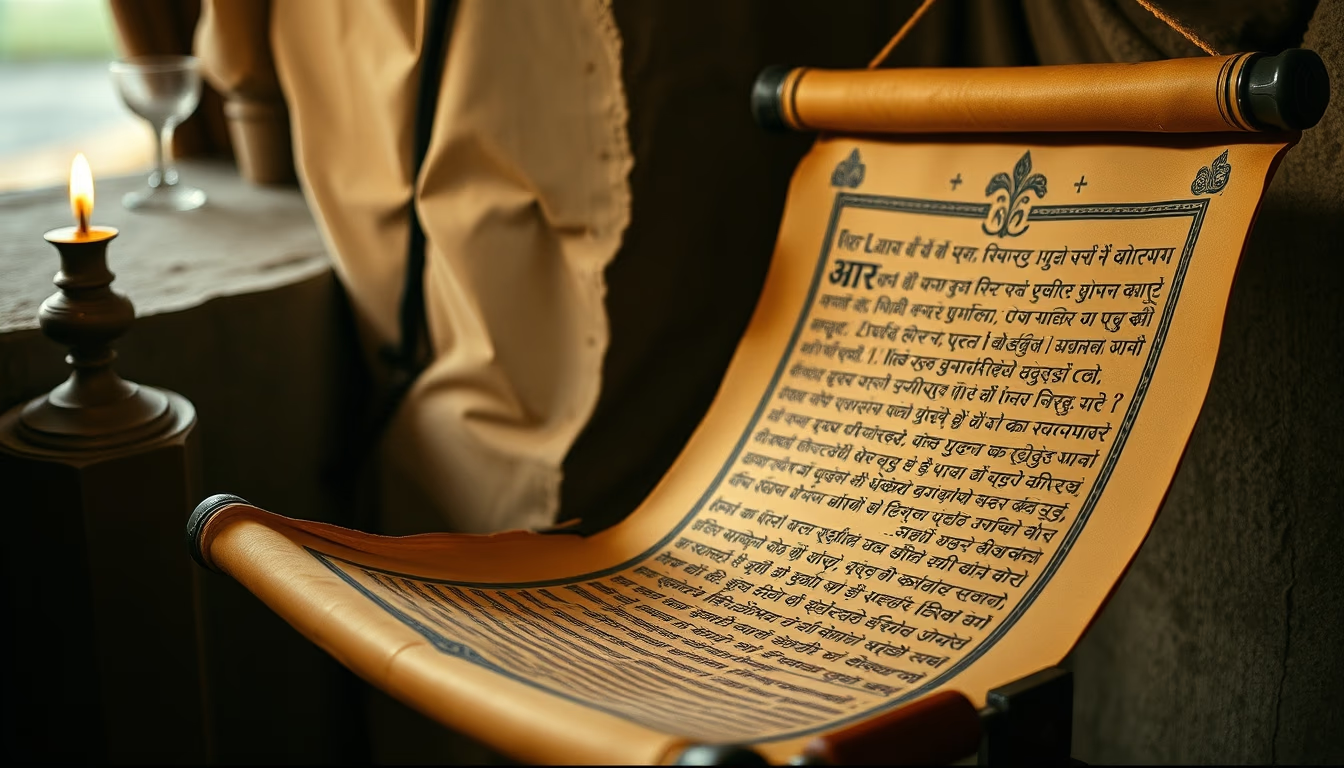
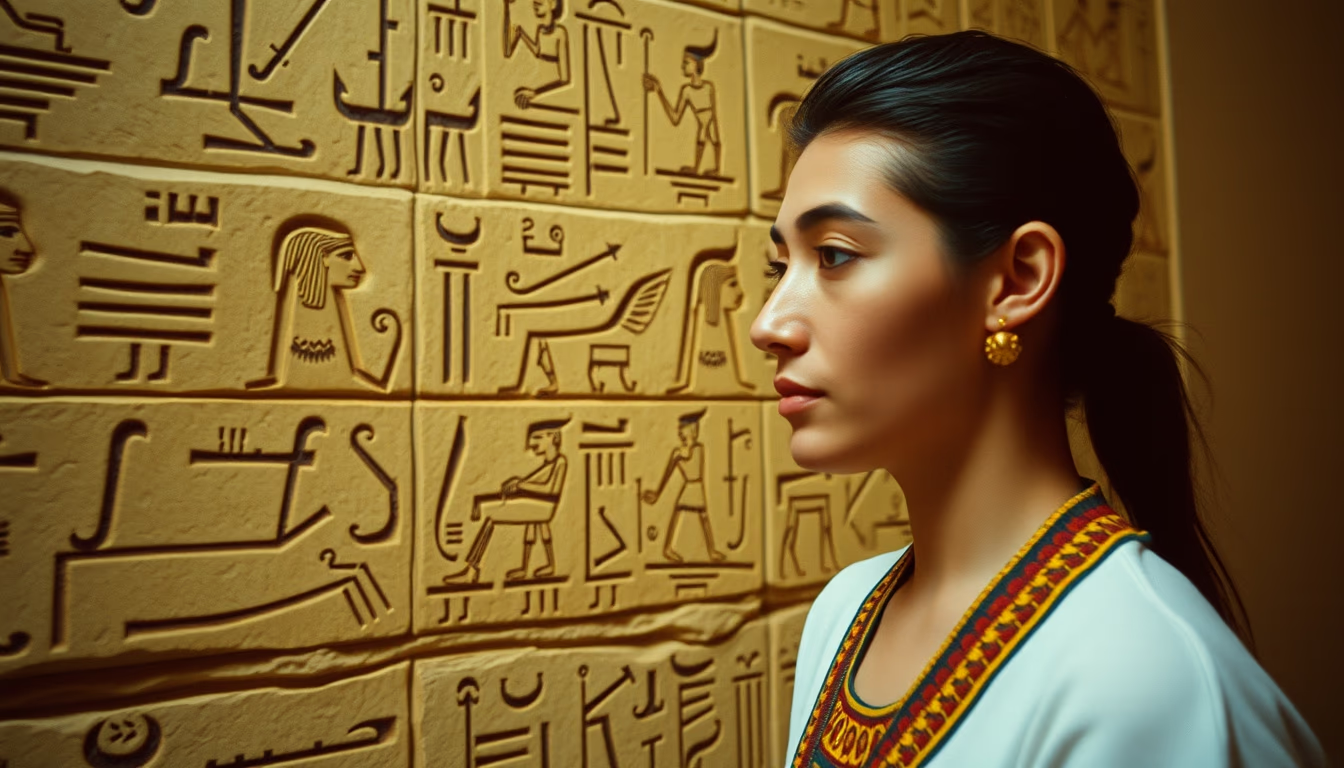
Hangul korean ancient
1344×768 · AVIF · CC BY 4.0
Hangul, the Korean alphabet created in the 15th century by King Sejong, is one of the world's most scientific writing systems, with letters shaped to represent the articulatory organs.
About this subject
The Korean alphabet, known as Hangul, was promulgated in 1446 by King Sejong the Great of the Joseon dynasty. Unlike logographic systems such as Hanja (Chinese characters), Hangul was designed to be easy to learn, promoting literacy among the Korean people. Its structure is phonemic: each syllabic block combines consonants and vowels, which are derived from geometric shapes that imitate the position of the tongue, lips, and throat when pronouncing sounds.
The creation of Hangul represented a cultural revolution. Before it, only the elite could read and write in Hanja, leaving the majority illiterate. Historical documents like the Hunminjeongeum (The Correct Sounds for the Instruction of the People) explain the alphabet's principles in detail. In 1997, the Hunminjeongeum was inscribed on the UNESCO Memory of the World Register, recognizing its value as documentary heritage.
Today, Hangul is celebrated on Hangul Day (October 9) in South Korea, and its design has inspired modern writing systems and typography. Korean calligraphy (seoye) uses Hangul artistically, emphasizing balance and fluidity of letters. Although Hangul is relatively young compared to other alphabets, its efficiency and beauty have made it a symbol of Korean identity and an example of linguistic innovation.
Frequently Asked Questions
When was the Korean alphabet Hangul created?
Hangul was created in 1446 by King Sejong the Great of the Joseon dynasty to increase literacy among the Korean people.
Why is Hangul considered a scientific writing system?
Because its letters were designed to represent the shape of the vocal organs (tongue, lips, throat) when producing sounds, making it systematic and easy to learn.
What is the difference between Hangul and Hanja?
Hangul is the native Korean phonetic alphabet, while Hanja are Chinese characters used to write words of Chinese origin. Hangul is simpler and phonemic; Hanja is logographic and complex.
Direct URL
https://pub-c7d6a6ea828543ac903a74a341ccb2e1.r2.dev/imagens/hangul-korean-ancient-tilt-shift-miniature-fresh18.avifHow to credit
Include a visible link back to UtilizAí. Copy one of the snippets below:
<a href="https://xn--utiliza-eza.com/en/midia/imagens/hangul-korean-ancient-tilt-shift-miniature-fresh18">Hangul korean ancient</a> by <a href="https://xn--utiliza-eza.com">UtilizAí</a>, licensed under <a href="https://creativecommons.org/licenses/by/4.0/">CC BY 4.0</a>.
[Hangul korean ancient](https://xn--utiliza-eza.com/en/midia/imagens/hangul-korean-ancient-tilt-shift-miniature-fresh18) by [UtilizAí](https://xn--utiliza-eza.com), CC BY 4.0
License: CC-BY-4.0