Hangul korean ancient
1344×768 · AVIF · CC BY 4.0
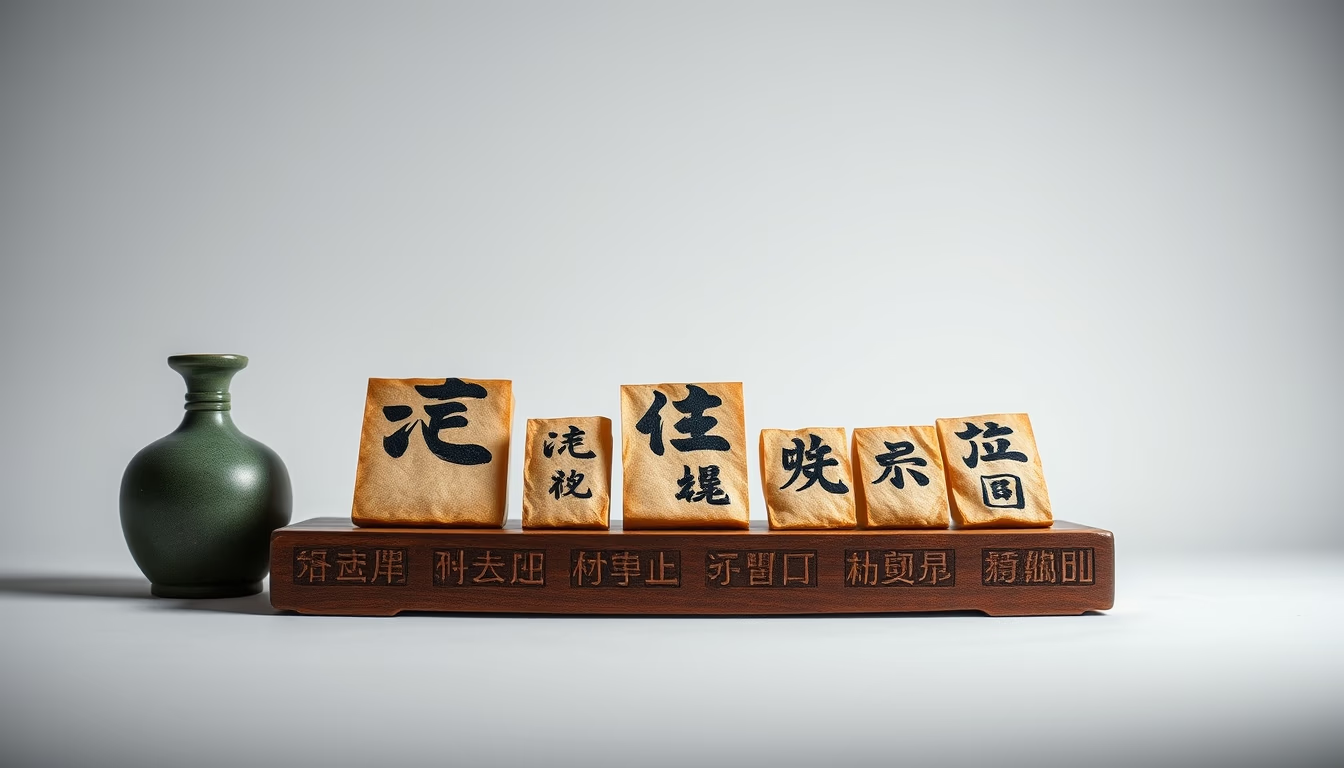
Hangul is the Korean alphabet created in the 15th century by King Sejong, a scientific writing system that revolutionized literacy in Korea.
About this subject
Hangul is a unique writing system, developed in 1443 by King Sejong the Great of the Joseon dynasty and promulgated in 1446 through the document Hunminjeongeum. Unlike other alphabets, Hangul was artificially created based on articulatory phonetics: consonants mimic the shape of the speech organs (tongue, lips, throat), while vowels represent heaven, earth, and humankind. This scientific design enabled anyone to learn reading and writing within days, democratizing knowledge previously restricted to the elite using Chinese characters.
Initially called Hunminjeongeum ("correct sounds for instructing the people"), the alphabet faced resistance from the literate class but gained prominence over centuries. After Korea's liberation from Japanese rule in 1945, Hangul became the official writing system. In 1997, it was inscribed in UNESCO's Memory of the World Register, and its creator King Sejong is celebrated with holidays and statues across Korea.
Hangul consists of 24 basic letters (14 consonants and 10 vowels) that combine into syllabic blocks. Its simplicity and logic make it one of the easiest alphabets to learn, resulting in a literacy rate of nearly 100% in South Korea. Furthermore, Hangul is studied in typography and design, appearing in logos and contemporary art, as seen in still-life images evoking ancient scholarly atmospheres.
Frequently Asked Questions
Why was Hangul created?
King Sejong created Hangul so that ordinary Koreans, who did not know Chinese characters, could read and write. Previously, only the literate elite mastered writing, limiting access to knowledge.
How many letters does Hangul have?
Hangul has 24 basic letters: 14 consonants and 10 vowels. They combine into syllabic blocks to form words, creating thousands of possible combinations.
Is Hangul a UNESCO heritage?
Yes, the original Hunminjeongeum document, explaining Hangul's creation, was inscribed on UNESCO's Memory of the World Register in 1997, recognizing its historical and cultural value.
Direct URL
https://pub-c7d6a6ea828543ac903a74a341ccb2e1.r2.dev/imagens/hangul-korean-ancient-studio-still-life-fresh14.avifHow to credit
Include a visible link back to UtilizAí. Copy one of the snippets below:
<a href="https://xn--utiliza-eza.com/en/midia/imagens/hangul-korean-ancient-studio-still-life-fresh14">Hangul korean ancient</a> by <a href="https://xn--utiliza-eza.com">UtilizAí</a>, licensed under <a href="https://creativecommons.org/licenses/by/4.0/">CC BY 4.0</a>.
[Hangul korean ancient](https://xn--utiliza-eza.com/en/midia/imagens/hangul-korean-ancient-studio-still-life-fresh14) by [UtilizAí](https://xn--utiliza-eza.com), CC BY 4.0
License: CC-BY-4.0