Hangul korean ancient
1344×768 · AVIF · CC BY 4.0
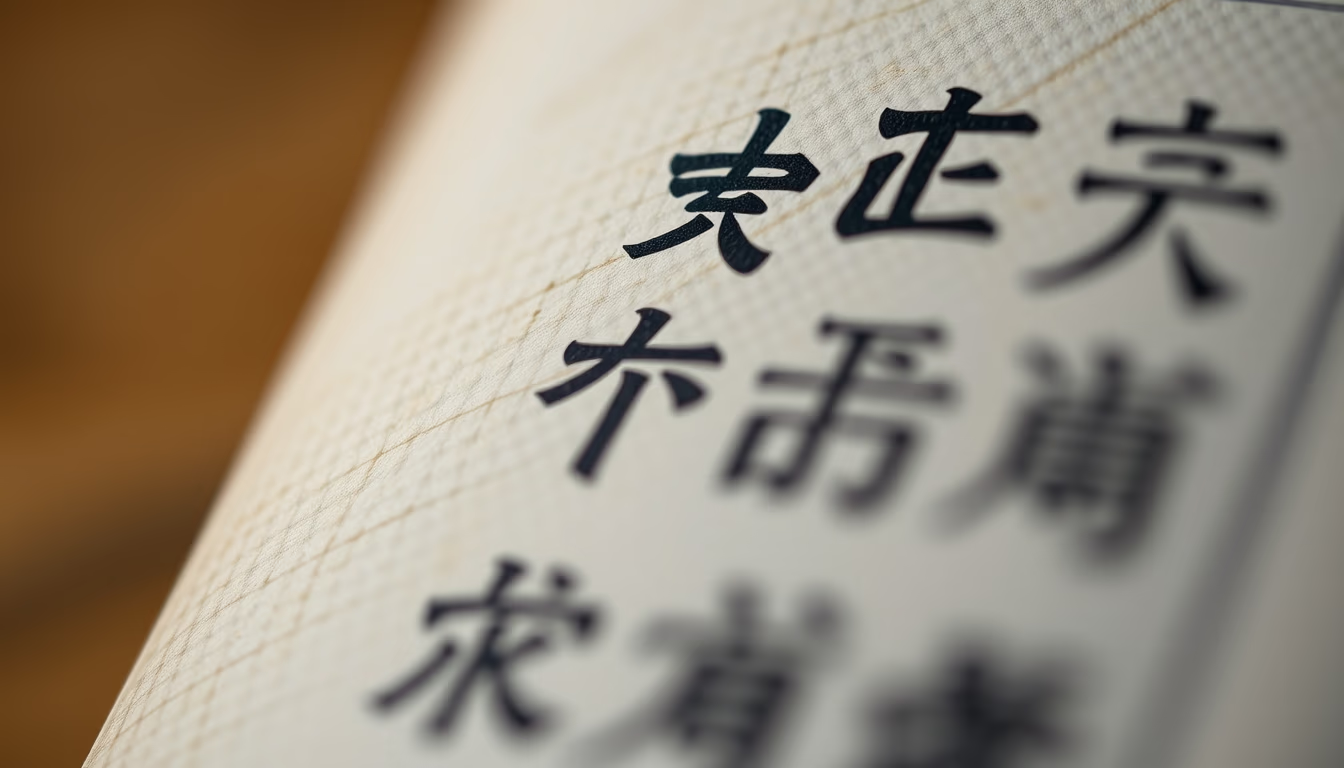
Hangul, the Korean alphabet created in the 15th century by King Sejong, is a scientific and elegant writing system, often seen in ancient calligraphy.
About this subject
Hangul is the native alphabet of Korea, developed in 1443 by King Sejong the Great and promulgated in 1446 in the document Hunminjeongeum (The Correct Sounds for the Instruction of the People). Unlike Chinese characters (hanja), which were used by the elite, Hangul was designed to be accessible to all Koreans, including women and lower classes, promoting mass literacy. Its structure is featural: consonants mimic the shape of the vocal organs producing them (tongue, lips, throat), while vowels represent the celestial, terrestrial, and human elements. This phonetic approach revolutionized writing in East Asia, contrasting with logographic systems like Chinese.
Ancient Hangul calligraphy, often found in manuscripts and engravings from the Joseon period, exhibits a fluid and balanced aesthetic. Styles such as 'panbonche' or 'gungsse' (court script) were used in official documents, while more cursive forms appeared in popular texts. A macro close-up of an ancient Hangul text reveals brushstroke details, variations in stroke thickness, and the harmony between the geometric shapes of letters. This calligraphic art was not only functional but also valued as artistic expression, comparable to Chinese and Japanese calligraphy.
Today, Hangul is celebrated for its efficiency and logic. Hangul Day (October 9 in South Korea, January 15 in North Korea) is a national holiday. Linguistic studies often highlight Hangul as one of the most rational writing systems in the world. Its influence extends beyond Korea: the script has been adopted by some minority languages in Indonesia and is studied globally as an example of typographic design. Hangul calligraphy, both classical and contemporary, continues to be practiced as a form of meditation and art.
Frequently Asked Questions
Why did King Sejong create Hangul?
King Sejong created Hangul to increase literacy among the Korean people, who at the time relied on complex Chinese characters inaccessible to most. He wanted a simple and scientific writing system that faithfully represented the Korean language.
What makes Hangul unique compared to other alphabets?
Hangul is a featural alphabet: consonants are designed to mimic the shape of the vocal organs, and vowels combine elements representing heaven, earth, and the human being. This scientific basis is rare in writing systems.
How does Hangul calligraphy differ from Chinese calligraphy?
While Chinese calligraphy uses logographic characters with thousands of symbols, Hangul calligraphy works with a limited alphabet of 24 letters (14 consonants and 10 vowels), organized into syllabic blocks. Both value the aesthetics of strokes, but Hangul is more modular and geometric.
Direct URL
https://pub-c7d6a6ea828543ac903a74a341ccb2e1.r2.dev/imagens/hangul-korean-ancient-macro-closeup-fresh4.avifHow to credit
Include a visible link back to UtilizAí. Copy one of the snippets below:
<a href="https://xn--utiliza-eza.com/en/midia/imagens/hangul-korean-ancient-macro-closeup-fresh4">Hangul korean ancient</a> by <a href="https://xn--utiliza-eza.com">UtilizAí</a>, licensed under <a href="https://creativecommons.org/licenses/by/4.0/">CC BY 4.0</a>.
[Hangul korean ancient](https://xn--utiliza-eza.com/en/midia/imagens/hangul-korean-ancient-macro-closeup-fresh4) by [UtilizAí](https://xn--utiliza-eza.com), CC BY 4.0
License: CC-BY-4.0