Hangul korean ancient
1344×768 · AVIF · CC BY 4.0

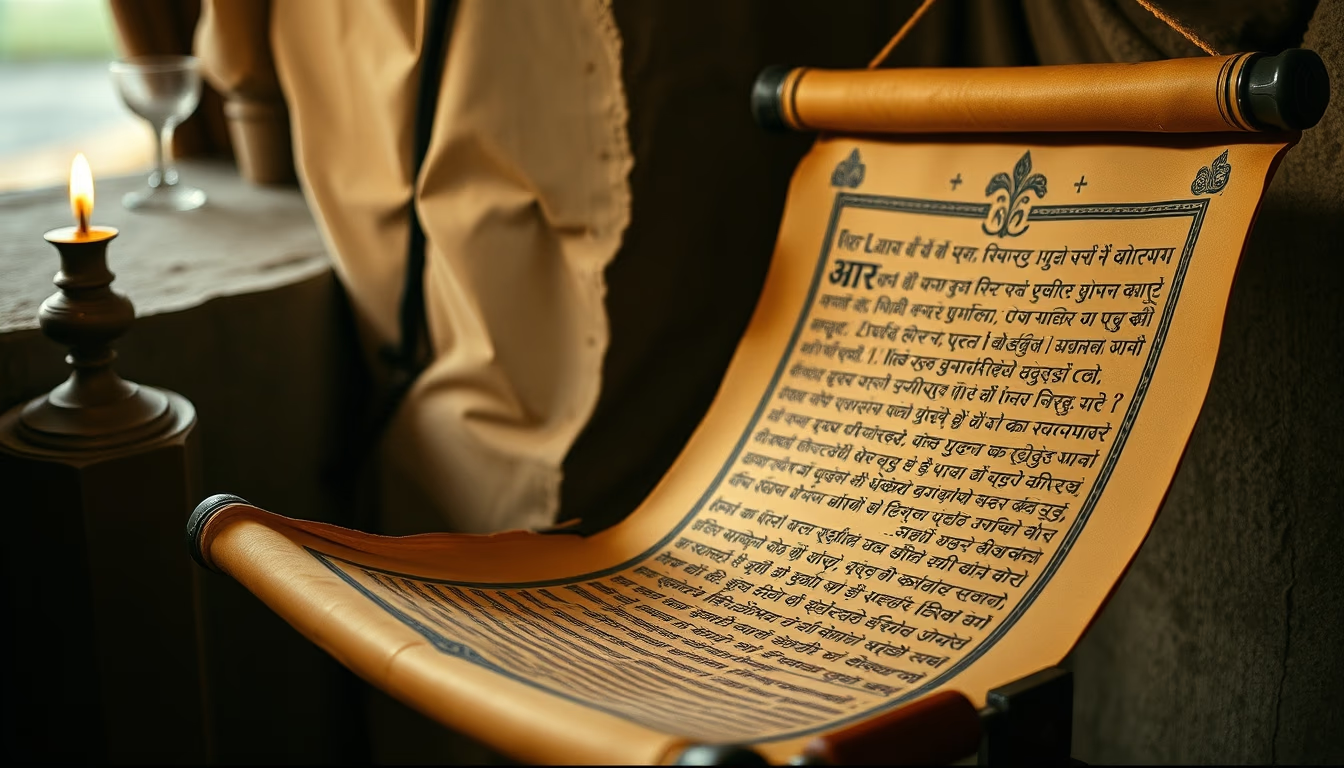
The Korean alphabet Hangul, created in the 15th century by King Sejong, is a phonetic and highly logical writing system, recognized for its ease of learning.
About this subject
Hangul is the native alphabet of Korea, both North and South, and is one of the most scientifically designed writing systems in the world. It was promulgated in 1446 by King Sejong the Great of the Joseon dynasty, aiming to increase literacy among common people who struggled with the complex Chinese characters (hanja) used previously. Unlike many logographic systems, Hangul is a phonetic alphabet where each letter represents a specific sound. The consonants are shaped according to the articulatory organs used to produce them, such as the tongue, palate, and lips. The vowels consist of three basic elements: a horizontal line representing the Earth, a dot representing Heaven, and a vertical line representing Man, reflecting Confucian philosophy and yin-yang principles.
Originally called Hunminjeongeum, meaning "the correct sounds for the instruction of the people," the alphabet had 28 letters, of which 24 remain in use today: 14 consonants and 10 vowels. Hangul is written in syllable blocks, where letters are grouped to form visual syllables, making it compact and efficient. In 1997, the Hunminjeongeum was inscribed on the UNESCO Memory of the World Register, recognizing its historical and cultural significance.
Today, Hangul is the official script of South Korea and North Korea, celebrated annually on Hangul Day (October 9 in South Korea and January 15 in North Korea). Its logical structure allows it to be learned in hours, and literacy rates in Korea exceed 97%. Despite the advent of digital technology, Hangul has adapted perfectly, with modern keyboards and fonts. It has also inspired writing systems for other languages, such as Cia-Cia, a language spoken in Indonesia.
Frequently Asked Questions
Why is Hangul considered one of the easiest alphabets to learn?
Hangul was scientifically designed based on phonetics and the anatomy of the vocal organs. Its logical structure allows a person to learn to read and write in just a few hours, contributing to high literacy rates in Korea.
What is the difference between Hangul and Hanja?
Hangul is the Korean phonetic alphabet, while Hanja are Chinese characters used in Korean writing. Hanja is mainly used in academic, historical, or for clarifying homophones, but modern Korean is written mostly in Hangul.
Is Hangul still used today and in which countries?
Yes, Hangul is the official writing system of South Korea and North Korea. It is also used by the Korean diaspora abroad and has been adopted by some minority languages, such as Cia-Cia in Indonesia.
Direct URL
https://pub-c7d6a6ea828543ac903a74a341ccb2e1.r2.dev/imagens/hangul-korean-ancient-lo-fi-disposable-camera-fresh13.avifHow to credit
Include a visible link back to UtilizAí. Copy one of the snippets below:
<a href="https://xn--utiliza-eza.com/en/midia/imagens/hangul-korean-ancient-lo-fi-disposable-camera-fresh13">Hangul korean ancient</a> by <a href="https://xn--utiliza-eza.com">UtilizAí</a>, licensed under <a href="https://creativecommons.org/licenses/by/4.0/">CC BY 4.0</a>.
[Hangul korean ancient](https://xn--utiliza-eza.com/en/midia/imagens/hangul-korean-ancient-lo-fi-disposable-camera-fresh13) by [UtilizAí](https://xn--utiliza-eza.com), CC BY 4.0
License: CC-BY-4.0