Hangul korean ancient
1344×768 · AVIF · CC BY 4.0
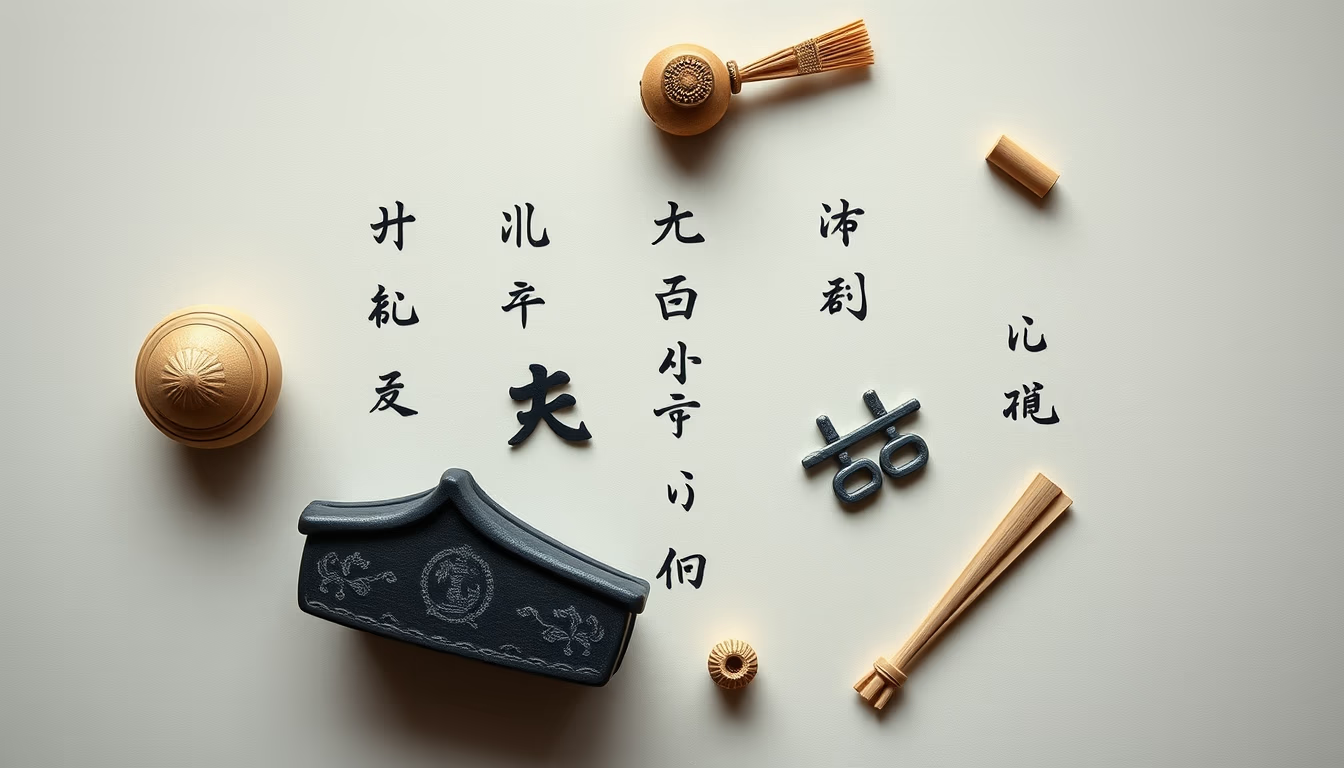
Hangul, the Korean alphabet, was created in the 15th century by King Sejong, combining phonetic and philosophical principles to promote literacy among the people.
About this subject
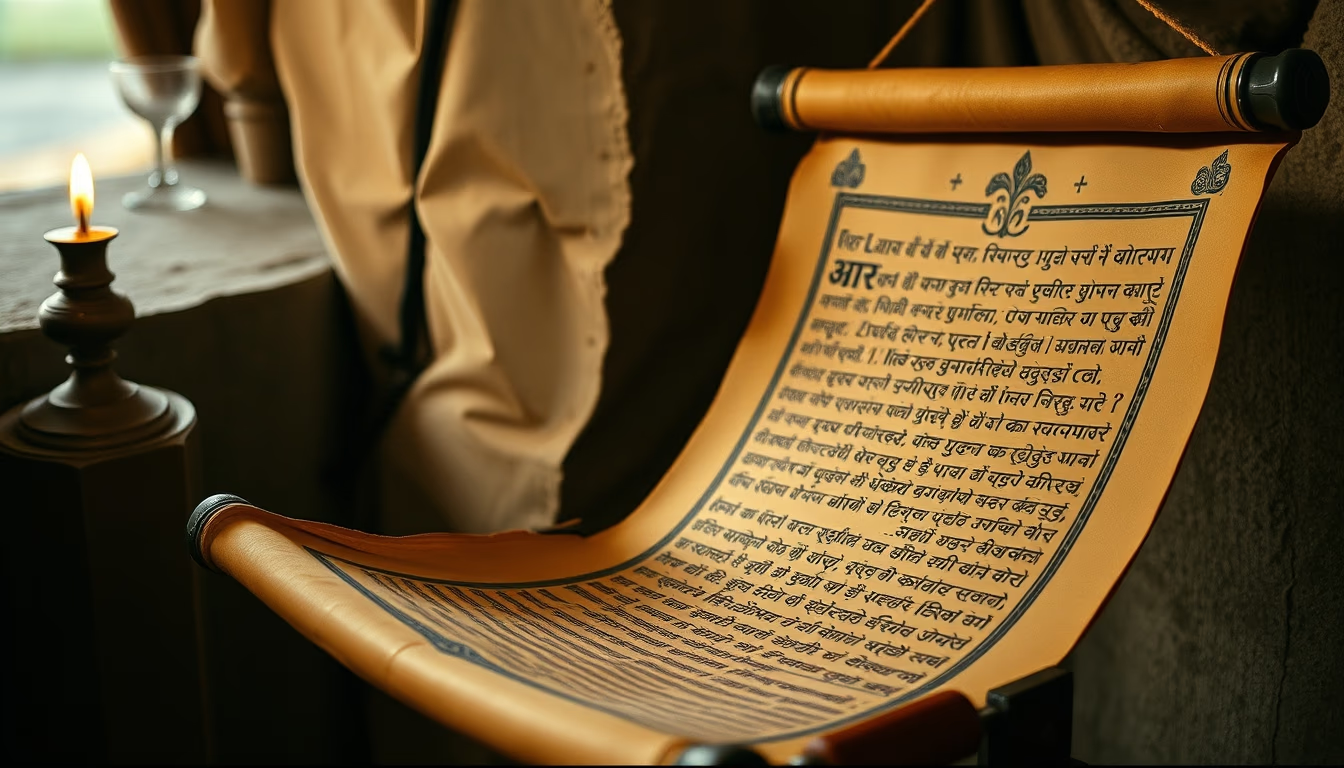
Hangul is the native writing system of Korea, developed under King Sejong the Great in 1443 and promulgated in 1446 through the document Hunminjeongeum. Unlike many alphabets that evolved from earlier scripts, Hangul was deliberately designed based on scientific principles. Its consonants mimic the shape of speech organs during articulation (tongue, lips, throat), while vowels are based on Confucian concepts of heaven, earth, and man. Initially called 'Eonmun' (vulgar script), it faced resistance from the elite who preferred Hanja (Chinese characters).
The creation of Hangul was a milestone in democratizing knowledge. Before it, only the learned yangban class could read and write using the complex Chinese system. Sejong, concerned with common people's communication, commissioned phonetic studies and developed 28 original letters (now 24). According to historical records, the alphabet was influenced by scripts such as Tibetan and 'Phags-pa, but uniquely adapted to Korean, enabling representation of all its sounds.
Culturally, Hangul is a symbol of national identity. In 1997, UNESCO included Hunminjeongeum in the Memory of the World Register, recognizing its historical value. Hangul Day (October 9) is a national holiday in South Korea, celebrating linguistic heritage. Today, the alphabet is used both in South and North Korea, with minor orthographic variations, and is studied worldwide for its rational design and efficiency.
Frequently Asked Questions
When was Hangul created?
Hangul was created in 1443 by King Sejong the Great and officially promulgated in 1446 through the document Hunminjeongeum.
Why did King Sejong create Hangul?
Sejong created Hangul so that common people, who lacked formal education in Chinese characters, could read and write, promoting communication and the spread of knowledge.
How many letters does Hangul have today?
Modern Hangul has 24 letters: 14 consonants and 10 vowels. Originally there were 28, but some fell out of use.
Direct URL
https://pub-c7d6a6ea828543ac903a74a341ccb2e1.r2.dev/imagens/hangul-korean-ancient-isometric-flat-lay-fresh16.avifHow to credit
Include a visible link back to UtilizAí. Copy one of the snippets below:
<a href="https://xn--utiliza-eza.com/en/midia/imagens/hangul-korean-ancient-isometric-flat-lay-fresh16">Hangul korean ancient</a> by <a href="https://xn--utiliza-eza.com">UtilizAí</a>, licensed under <a href="https://creativecommons.org/licenses/by/4.0/">CC BY 4.0</a>.
[Hangul korean ancient](https://xn--utiliza-eza.com/en/midia/imagens/hangul-korean-ancient-isometric-flat-lay-fresh16) by [UtilizAí](https://xn--utiliza-eza.com), CC BY 4.0
License: CC-BY-4.0