Hangul korean ancient
1344×768 · AVIF · CC BY 4.0
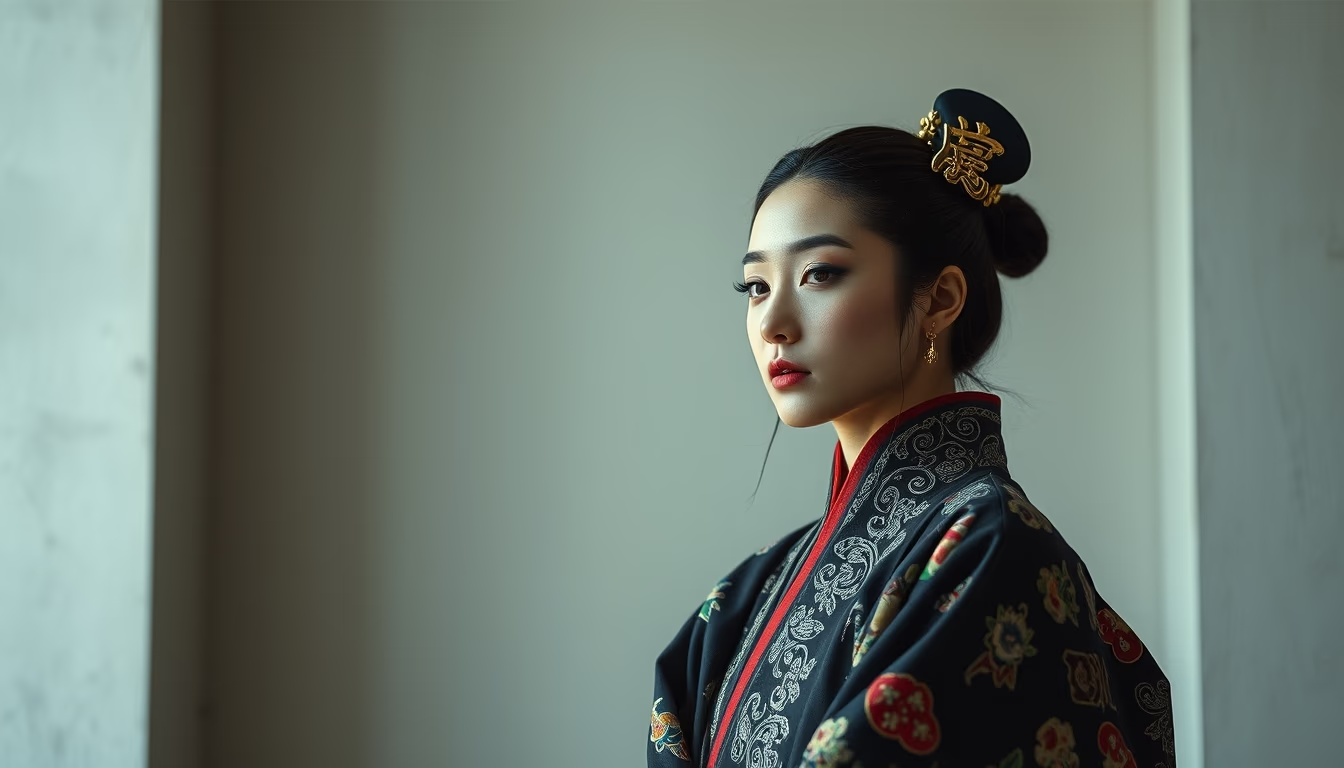
Hangul, the Korean alphabet created in the 15th century by King Sejong, is one of the most scientific and accessible writing systems in the world.
About this subject
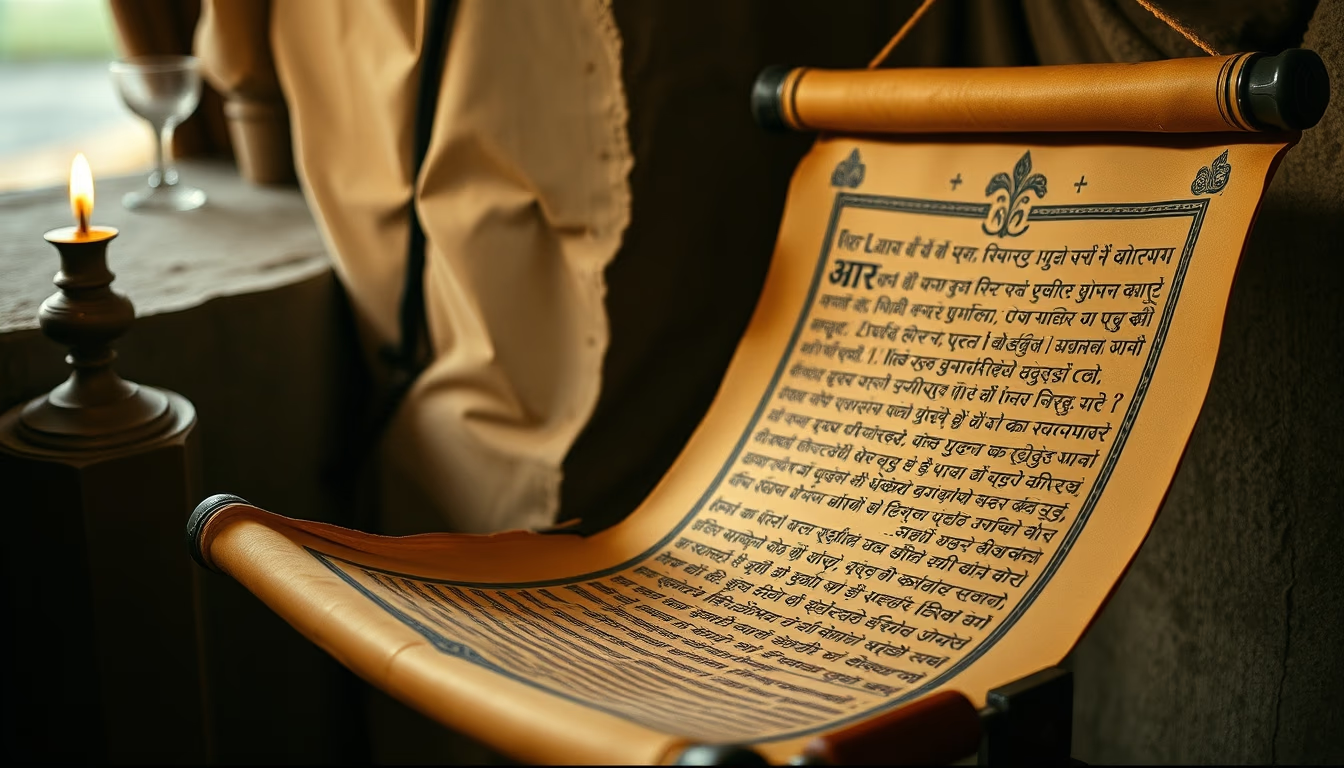
Hangul is the native alphabet of Korea, created in 1443 by King Sejong the Great of the Joseon dynasty. Unlike other alphabets that evolved over centuries, Hangul was deliberately designed by a team of scholars to increase literacy among the common people. The original alphabet, called Hunminjeongeum (The Correct Sounds for the Instruction of the People), consisted of 28 letters, of which 24 are used today. It is considered one of the most scientific writing systems because consonants mimic the shape of the tongue and mouth during pronunciation, while vowels are based on celestial, terrestrial, and human forms.
The creation of Hangul was revolutionary, as it allowed peasants, women, and ordinary people to read and write without mastering the complex Chinese characters (hanja) that were previously reserved for the elite. King Sejong stated his goal in the Hunminjeongeum: 'So that ignorant people may express their thoughts easily.' Despite resistance from the aristocracy, Hangul survived and thrived, becoming a source of national pride. Today, it is celebrated annually on Hangul Day (October 9) in South Korea.
Modern Hangul retains its syllabic block structure, where letters are grouped into clusters forming syllables. Each block contains an initial consonant, a vowel, and optionally a final consonant. This visual organization makes Hangul highly regular and easy to learn. Studies show that the average Korean can learn the alphabet in a few hours, and South Korea's literacy rate is near 100%. Hangul has also inspired other writing systems, such as the alphabet for the Cia-Cia language in Indonesia.
Beyond its linguistic importance, Hangul is a cultural and aesthetic symbol. Hangul calligraphy is a traditional art form that combines fluid strokes with the geometric structure of the letters. In contemporary contexts, Hangul appears in graphic design, fashion, and street art, representing Korean identity on the global stage. The image associated with this text, with a high-fashion editorial touch, reflects how ancient Hangul can be reinterpreted in a modern and stylish way.
Frequently Asked Questions
Who created Hangul and when?
Hangul was created by King Sejong the Great of the Joseon dynasty in 1443. It was officially promulgated in 1446 as Hunminjeongeum.
Is Hangul easy to learn?
Yes, Hangul is considered one of the easiest alphabets to learn. The logical structure of the letters allows a person to learn to read and write in a few hours.
Why was Hangul created?
King Sejong created Hangul so that all Koreans, including peasants and women, could read and write easily without relying on the complex Chinese characters that only the elite mastered.
Direct URL
https://pub-c7d6a6ea828543ac903a74a341ccb2e1.r2.dev/imagens/hangul-korean-ancient-high-fashion-editorial-fresh10.avifHow to credit
Include a visible link back to UtilizAí. Copy one of the snippets below:
<a href="https://xn--utiliza-eza.com/en/midia/imagens/hangul-korean-ancient-high-fashion-editorial-fresh10">Hangul korean ancient</a> by <a href="https://xn--utiliza-eza.com">UtilizAí</a>, licensed under <a href="https://creativecommons.org/licenses/by/4.0/">CC BY 4.0</a>.
[Hangul korean ancient](https://xn--utiliza-eza.com/en/midia/imagens/hangul-korean-ancient-high-fashion-editorial-fresh10) by [UtilizAí](https://xn--utiliza-eza.com), CC BY 4.0
License: CC-BY-4.0