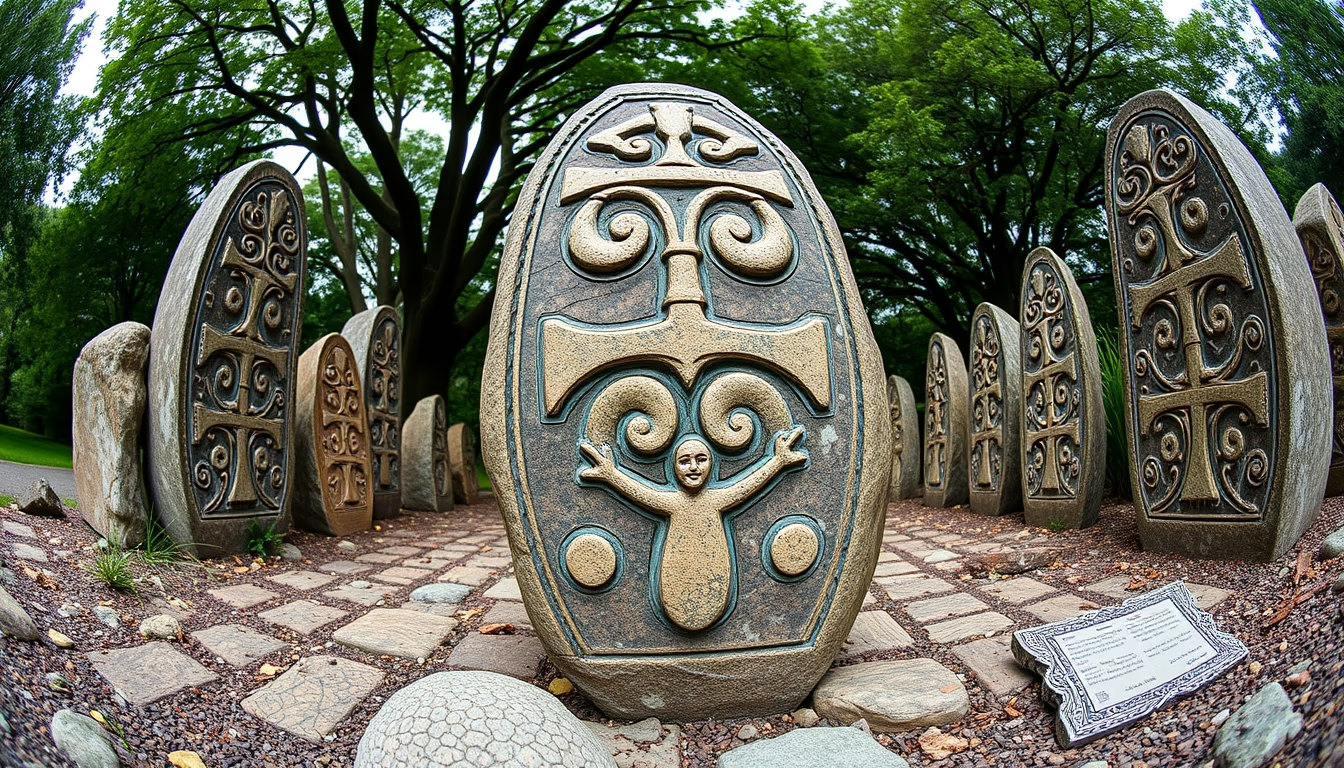
Hangul korean ancient
1344×768 · AVIF · CC BY 4.0
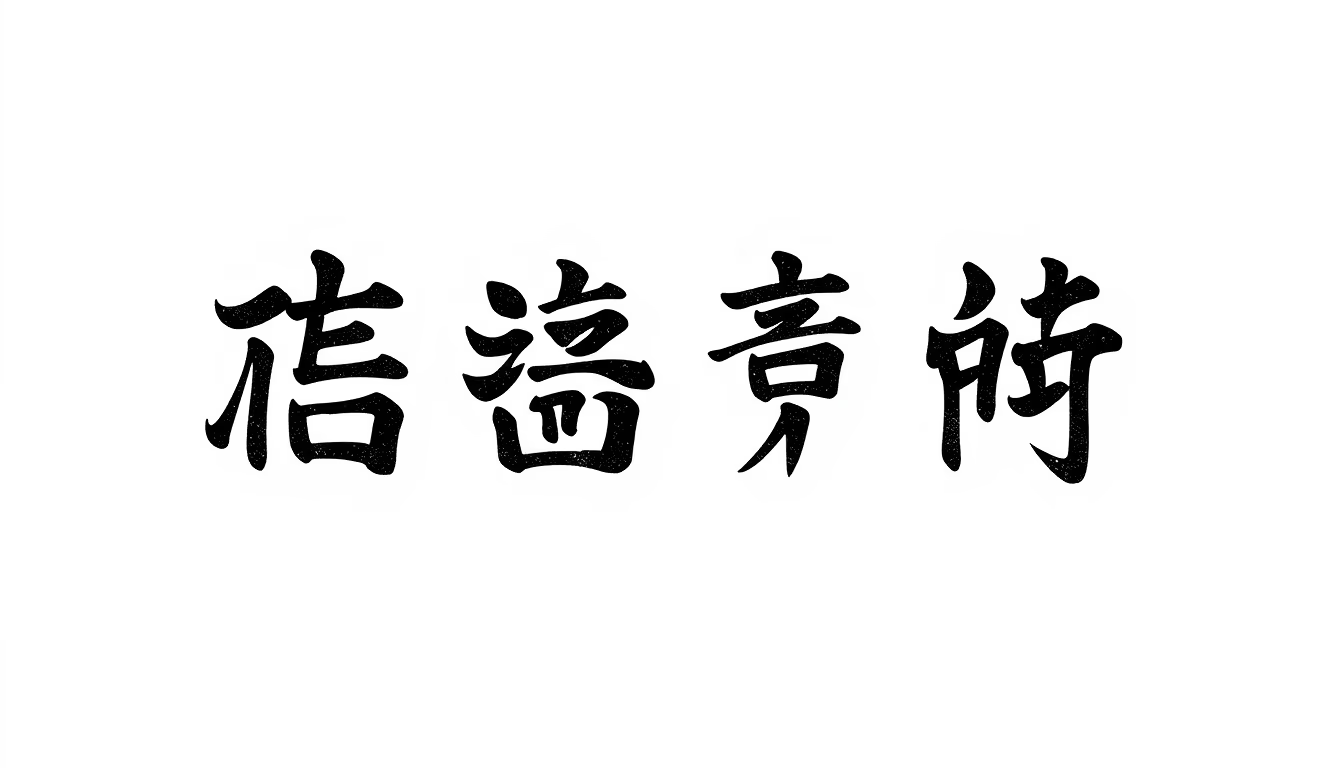
Hangul, the Korean alphabet created in the 15th century by King Sejong, is a scientifically designed writing system and a UNESCO World Heritage.
About this subject
Hangul is the native alphabet of Korea, officially promulgated in 1446 by King Sejong the Great of the Joseon dynasty. Unlike logographic systems such as Chinese characters, Hangul was designed to be easy to learn, aiming to increase literacy among the common people. Its original name, Hunminjeongeum, means "the correct sounds for instructing the people." The alphabet consists of 14 consonants and 10 vowels, grouped into syllabic blocks. Each letter was shaped to represent the articulatory organs when producing the sound; for example, the consonant 'ㄱ' mimics the tongue's shape for the /k/ sound.
The creation of Hangul was a milestone in Korean history as it broke away from the tradition of using Chinese characters (hanja), which were limited to the educated elite. King Sejong and his scholars developed the alphabet based on phonetic and philosophical principles, such as the harmony of yin and yang. In 1997, the Hunminjeongeum manuscripts were inscribed on the UNESCO Memory of the World Register, recognizing their documentary value. Today, Hangul is celebrated annually on Hangul Day (October 9) in South Korea, and it is also used in North Korea, where it is called Joseongeul.
The Korean writing system is often praised for its regularity and efficiency. Studies show that native speakers can learn it in a few hours, and its structure allows precise representation of sounds. Moreover, Hangul has influenced other writing systems, such as the Cree script used by Indigenous peoples in Canada. With the rise of Hallyu (the Korean Wave), Hangul has gained global visibility, studied by millions of foreigners and featured in books, films, and music.
Interestingly, despite its antiquity, Hangul is considered one of the most modern and logical alphabets. Its well-documented creation and scientific basis contrast with the organic evolution of many other scripts. The alphabet has also inspired typographic projects and linguistic studies, standing out as an example of successful social engineering.
Frequently Asked Questions
When was Hangul created?
Hangul was created in 1443 and officially promulgated in 1446 by King Sejong the Great of the Joseon dynasty.
Why was Hangul invented?
King Sejong invented Hangul so that common people could easily learn to read and write, as Chinese characters were complex and limited to the elite.
What makes Hangul unique?
Hangul is a scientifically designed phonetic alphabet, with letter shapes mimicking the articulation of speech sounds. It is considered one of the most logical and efficient writing systems in the world.
Direct URL
https://pub-c7d6a6ea828543ac903a74a341ccb2e1.r2.dev/imagens/hangul-korean-ancient-commercial-product-photography-fresh8.avifHow to credit
Include a visible link back to UtilizAí. Copy one of the snippets below:
<a href="https://xn--utiliza-eza.com/en/midia/imagens/hangul-korean-ancient-commercial-product-photography-fresh8">Hangul korean ancient</a> by <a href="https://xn--utiliza-eza.com">UtilizAí</a>, licensed under <a href="https://creativecommons.org/licenses/by/4.0/">CC BY 4.0</a>.
[Hangul korean ancient](https://xn--utiliza-eza.com/en/midia/imagens/hangul-korean-ancient-commercial-product-photography-fresh8) by [UtilizAí](https://xn--utiliza-eza.com), CC BY 4.0
License: CC-BY-4.0