Hangul korean ancient
1344×768 · AVIF · CC BY 4.0
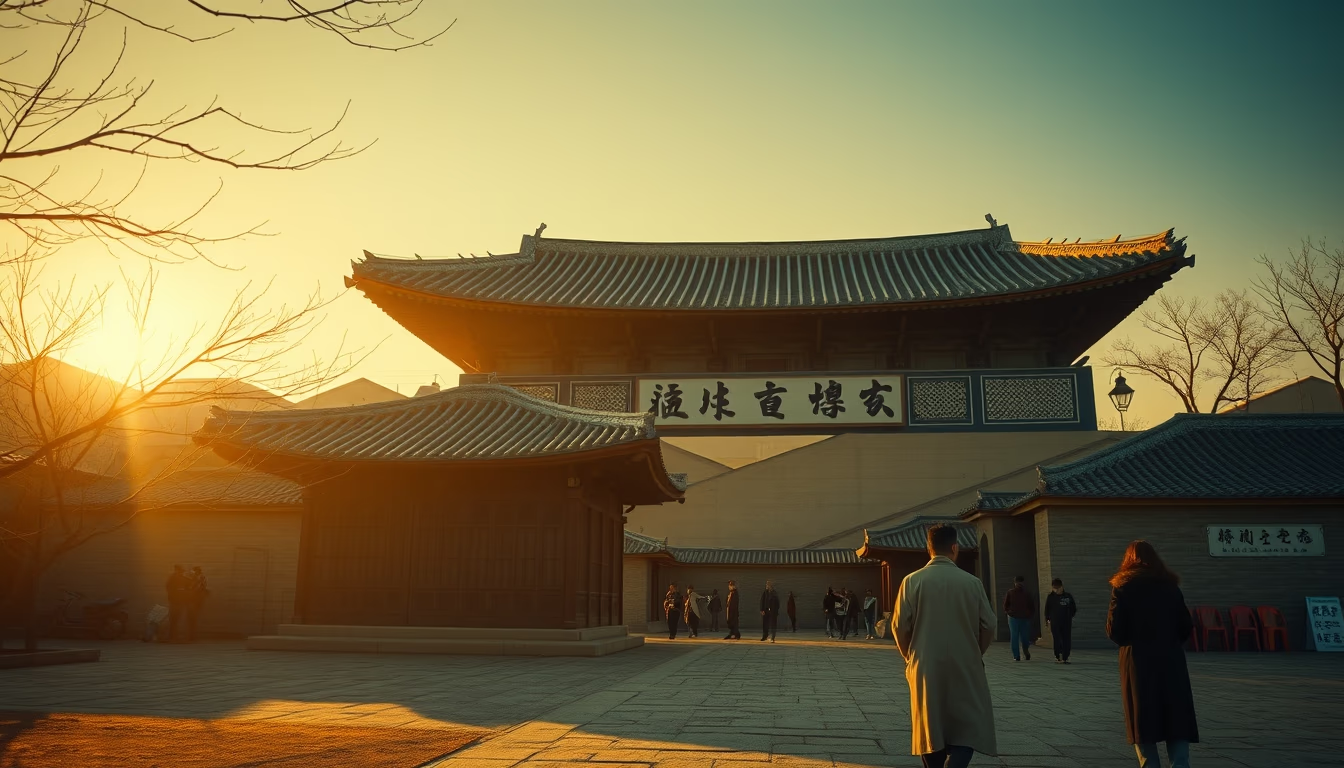
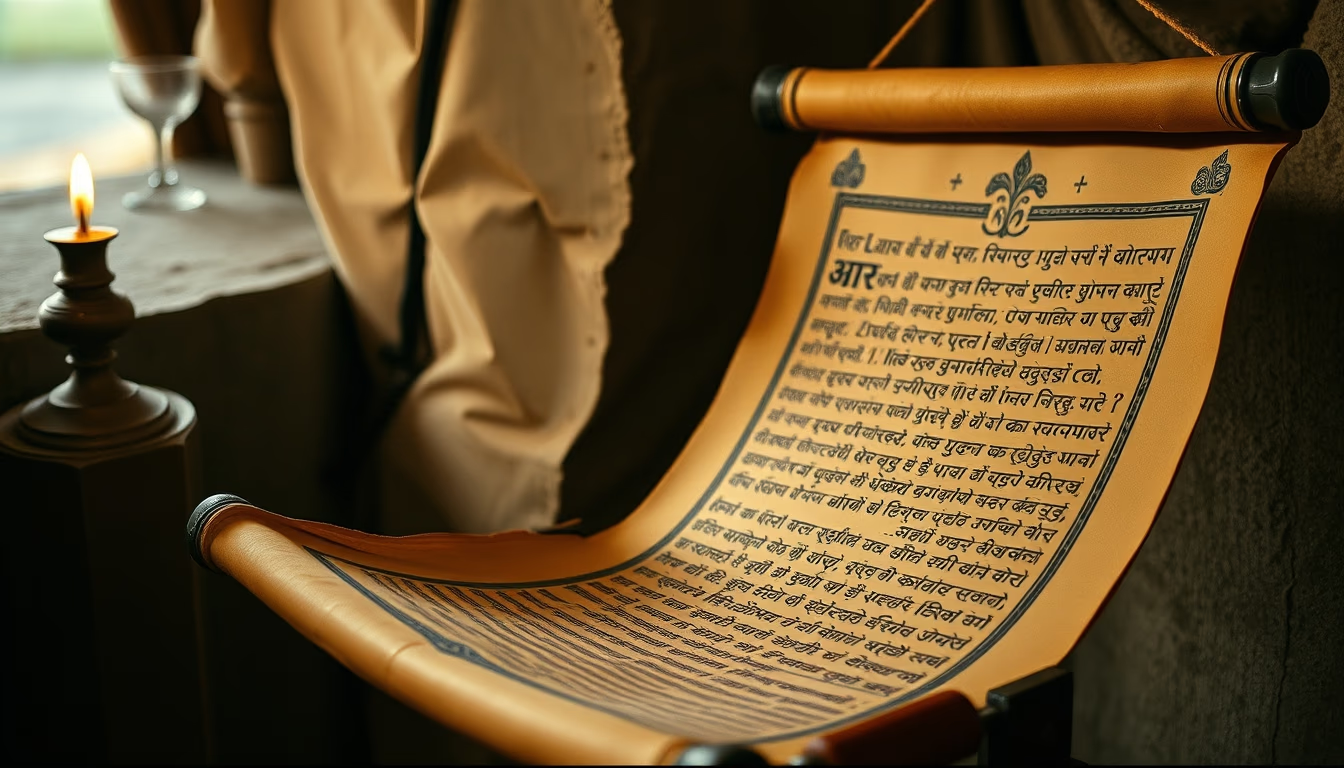
Hangul, the Korean alphabet created by King Sejong in the 15th century, is one of the most scientific and logical writing systems in the world.
About this subject
Hangul was promulgated in 1443 by King Sejong the Great of the Joseon Dynasty to increase literacy among the Korean people. Unlike complex Chinese characters, Hangul was designed to be easy to learn, with shapes mimicking the position of vocal organs when producing sounds. The original alphabet had 28 letters, now reduced to 24: 14 consonants and 10 vowels.
Consonants are inspired by mouth anatomy: for instance, 'ㄱ' (g/k) represents the tongue root blocking the throat, while 'ㄴ' (n) shows the tongue touching the palate. Vowels follow Confucian philosophical principles, combining heaven (dot), earth (horizontal line), and human (vertical line). This structure makes Hangul highly systematic.
In 1997, UNESCO established the King Sejong Literacy Prize, highlighting Hangul's role in promoting education. Hangul Day is celebrated in South Korea on October 9. Despite being suppressed during Japanese occupation (1910-1945), Hangul reemerged as a symbol of national identity and is now used by over 80 million people in both South and North Korea.
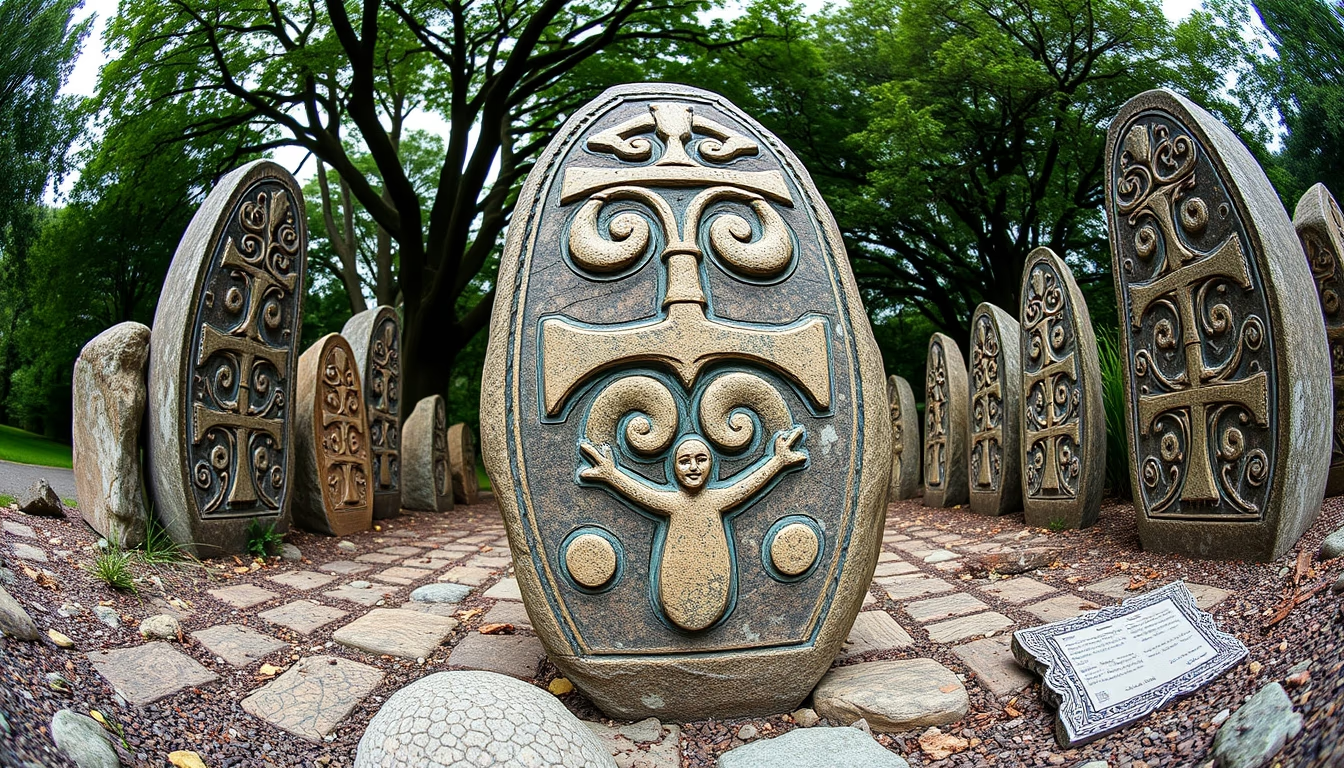
Hangul calligraphy, known as 'seoye', is an art form that expresses beauty and balance. Unlike Chinese calligraphy, it emphasizes harmony between geometric structure and fluid strokes. Contemporary artists explore Hangul in modern installations, blending tradition with innovation.
Frequently Asked Questions
Who created Hangul and why?
Hangul was created by King Sejong the Great in 1443 to increase literacy among common Koreans, as Chinese characters were difficult for most people to learn.
How many letters does modern Hangul have?
Modern Hangul has 24 letters: 14 consonants and 10 vowels, a reduction from the original 28 letters.
What makes Hangul a scientific writing system?
The consonant shapes are based on the articulatory organs (tongue, lips, throat), and vowels represent Confucian concepts of heaven, earth, and human, making it logical and easy to learn.
Direct URL
https://pub-c7d6a6ea828543ac903a74a341ccb2e1.r2.dev/imagens/hangul-korean-ancient-cinematic-wide-shot-fresh1.avifHow to credit
Include a visible link back to UtilizAí. Copy one of the snippets below:
<a href="https://xn--utiliza-eza.com/en/midia/imagens/hangul-korean-ancient-cinematic-wide-shot-fresh1">Hangul korean ancient</a> by <a href="https://xn--utiliza-eza.com">UtilizAí</a>, licensed under <a href="https://creativecommons.org/licenses/by/4.0/">CC BY 4.0</a>.
[Hangul korean ancient](https://xn--utiliza-eza.com/en/midia/imagens/hangul-korean-ancient-cinematic-wide-shot-fresh1) by [UtilizAí](https://xn--utiliza-eza.com), CC BY 4.0
License: CC-BY-4.0