Hangul korean ancient
1344×768 · AVIF · CC BY 4.0
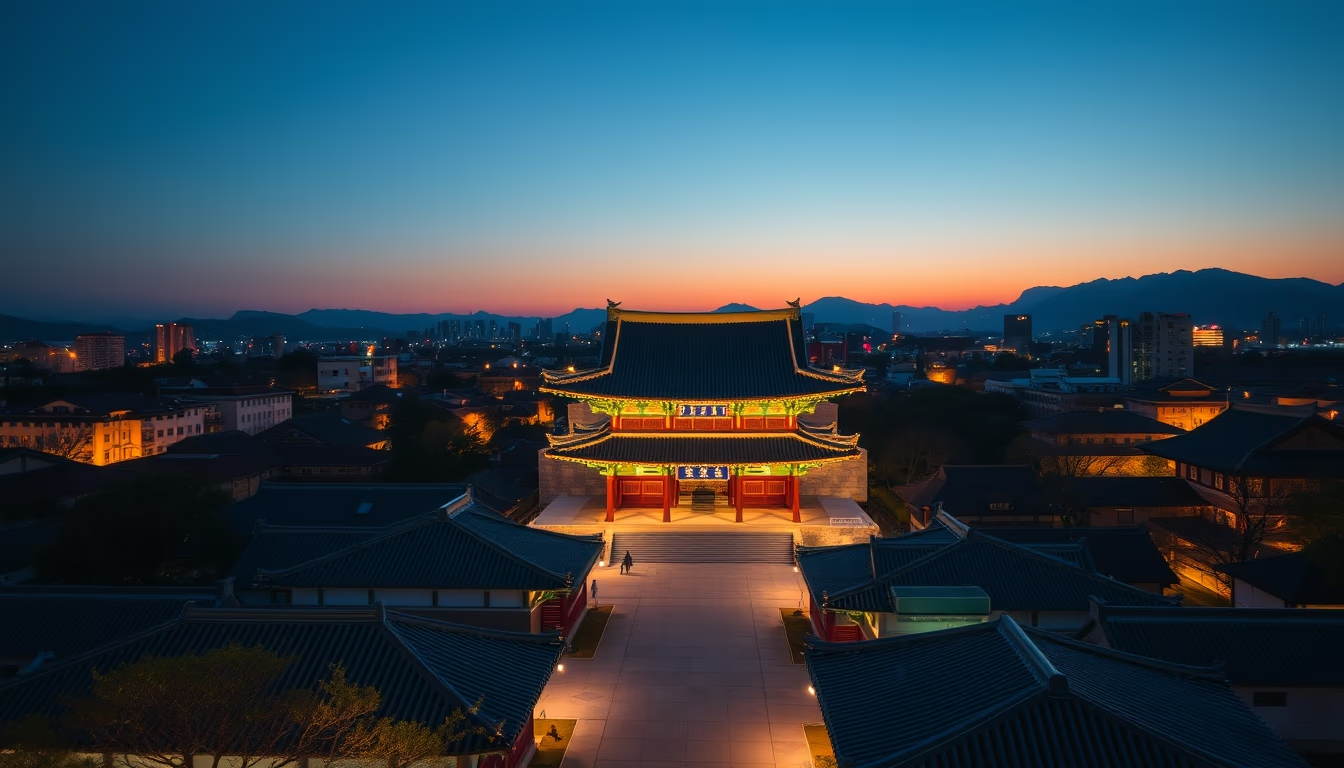
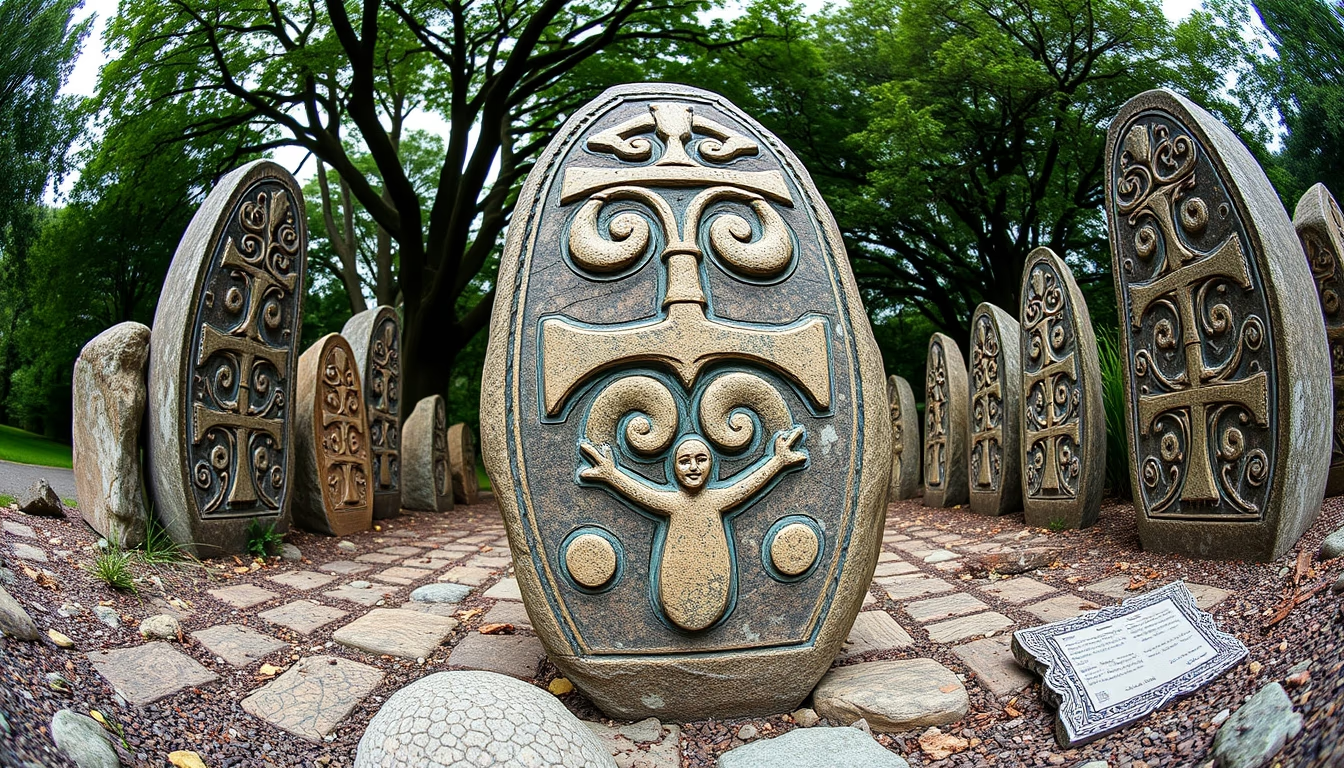
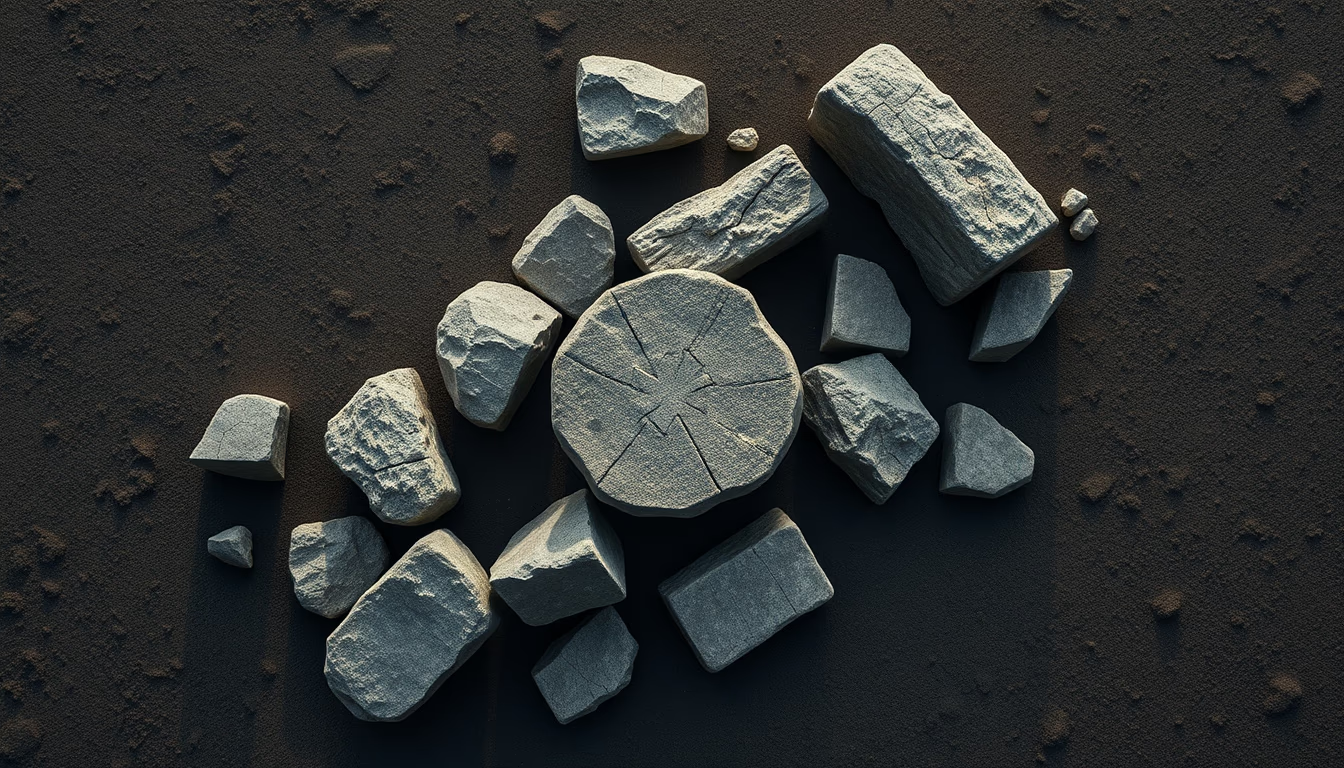
Hangul, the Korean alphabet created in the 15th century by King Sejong, is one of the most scientific and easy-to-learn writing systems in the world.
About this subject
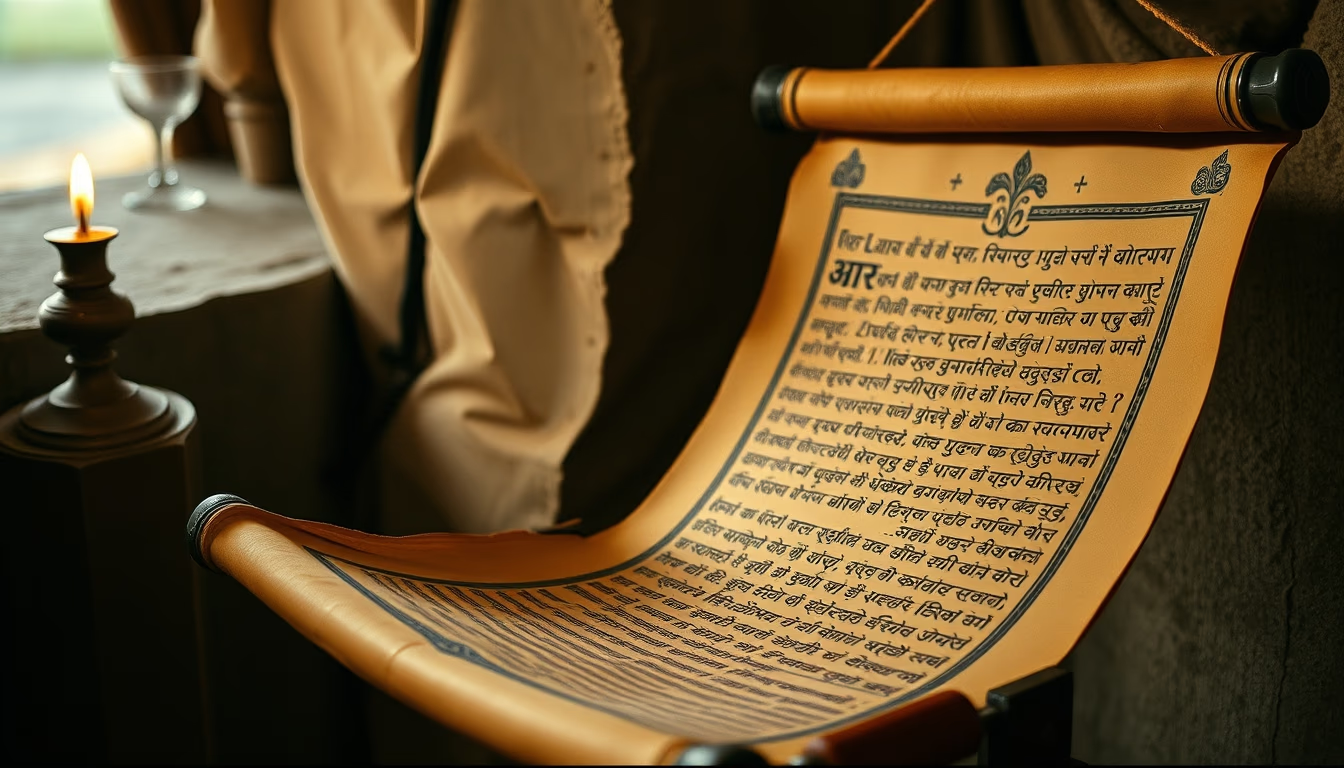
Hangul is the native alphabet of Korea, developed in 1443 by King Sejong the Great of the Joseon dynasty. Unlike other Asian writing systems based on Chinese characters, Hangul was designed to be simple and accessible to all social classes. Its creation was documented in the Hunminjeongeum, a manuscript explaining the logic behind the letters: vowels represent the celestial, terrestrial, and human elements, while consonants mimic the shape of the vocal organs when pronouncing them. Before Hangul, Koreans used hanja (Chinese characters), which limited literacy to the elite. After its introduction, Korea's literacy rate increased dramatically. Today, Hangul is celebrated annually on Hangul Day, October 9 in South Korea. The alphabet has 24 basic letters (14 consonants and 10 vowels) and 27 compound letters, combined into syllabic blocks. Linguistic studies highlight Hangul as an example of rational design, often praised for its efficiency. UNESCO created the King Sejong Literacy Prize in honor of this legacy. Hangul is also used officially in North Korea, with minor orthographic differences. In 1997, the Hunminjeongeum was inscribed on UNESCO's Memory of the World Register.
Frequently Asked Questions
Who created Hangul and why?
Hangul was created by King Sejong the Great of the Joseon dynasty in 1443 to make writing accessible to the common Korean people, who could not read complex Chinese characters.
How many letters are in the Hangul alphabet?
Basic Hangul has 24 letters: 14 consonants and 10 vowels. Including compound letters, there are 51 characters in total.
Is Hangul used only in South Korea?
No, Hangul is the official writing system in both South Korea and North Korea, with minor differences in spelling and the names of some letters.
Direct URL
https://pub-c7d6a6ea828543ac903a74a341ccb2e1.r2.dev/imagens/hangul-korean-ancient-aerial-drone-shot-fresh3.avifHow to credit
Include a visible link back to UtilizAí. Copy one of the snippets below:
<a href="https://xn--utiliza-eza.com/en/midia/imagens/hangul-korean-ancient-aerial-drone-shot-fresh3">Hangul korean ancient</a> by <a href="https://xn--utiliza-eza.com">UtilizAí</a>, licensed under <a href="https://creativecommons.org/licenses/by/4.0/">CC BY 4.0</a>.
[Hangul korean ancient](https://xn--utiliza-eza.com/en/midia/imagens/hangul-korean-ancient-aerial-drone-shot-fresh3) by [UtilizAí](https://xn--utiliza-eza.com), CC BY 4.0
License: CC-BY-4.0