Green wall building
1344×768 · AVIF · CC BY 4.0
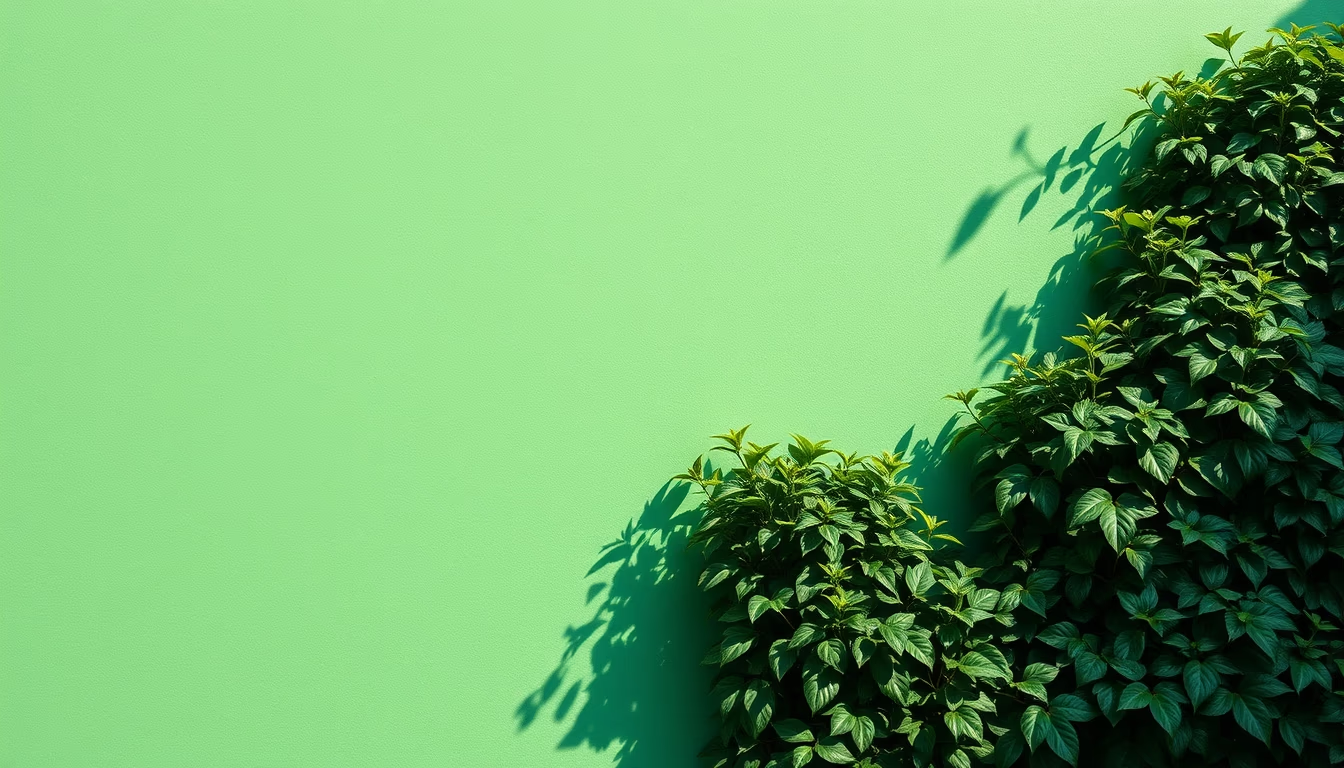
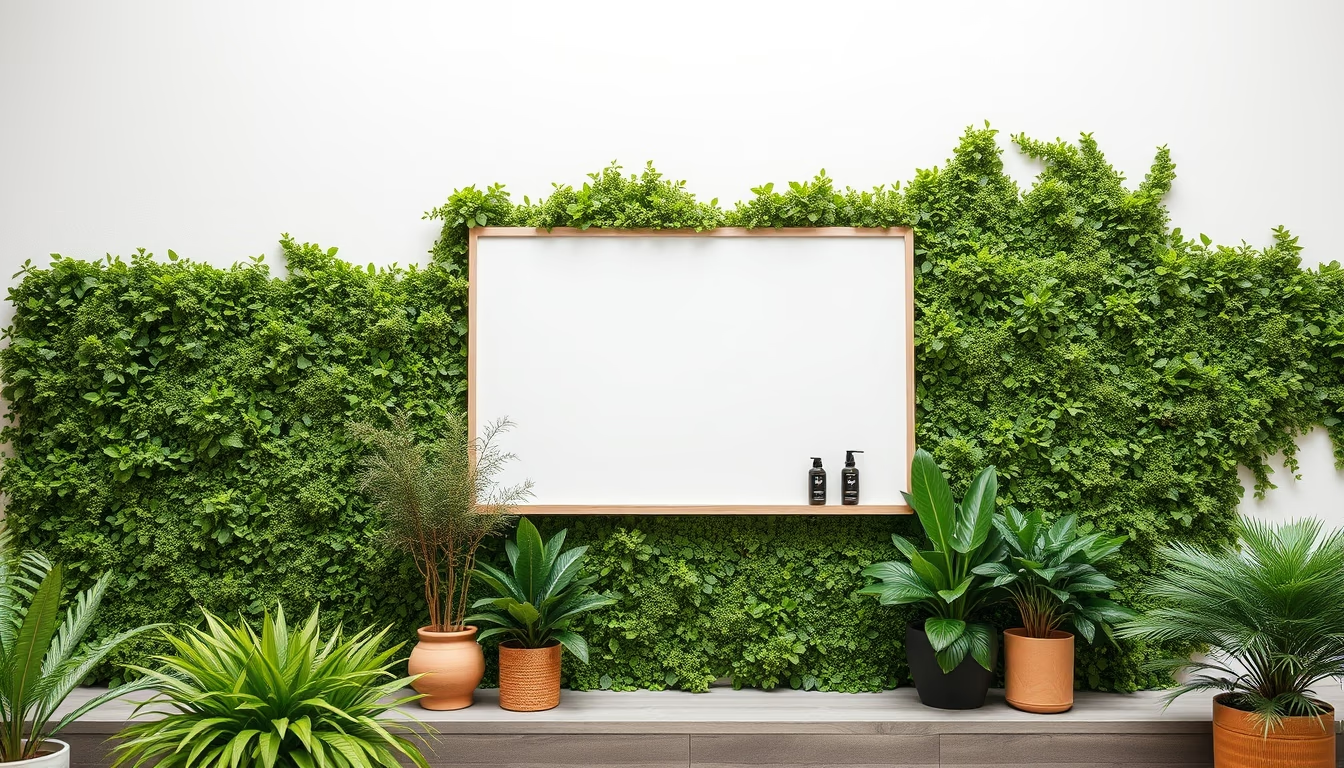
Green walls on urban buildings represent an innovative sustainability solution, improving air quality and thermal comfort in cities.
About this subject
Green walls, also known as vertical gardens, are structures covered with vegetation installed on building facades. This technique combines architecture and ecology to mitigate the impacts of urbanization. Plants are fixed in modular systems with substrate and automated irrigation, allowing the growth of species such as ferns, ivy, and bromeliads. In cities like São Paulo and Curitiba, green wall projects are already adopted in commercial and residential buildings, reducing indoor temperature by up to 5°C and filtering atmospheric pollutants.
Environmental benefits are extensive. Green walls absorb carbon dioxide and release oxygen, contributing to the reduction of the urban heat island effect. They act as thermal and acoustic insulators, decreasing energy consumption for air conditioning and protecting against external noise. Furthermore, they promote urban biodiversity by providing habitat for pollinating insects and birds. Studies from the University of São Paulo show that a 10 m² green wall can filter up to 200 grams of suspended particles per year.
Despite the advantages, implementation faces challenges such as high initial cost, constant maintenance, and the need for efficient irrigation systems. However, public and private initiatives have encouraged their adoption. In 2023, the city of Rio de Janeiro launched a tax incentive program for buildings with green facades. Global trends indicate that by 2026 green walls will become standard in smart city projects, integrating IoT sensors for monitoring humidity and plant health.
Frequently Asked Questions
What are the main benefits of a green wall?
Green walls improve air quality, reduce ambient temperature, act as acoustic insulation, increase urban biodiversity, and contribute to building energy efficiency.
How is maintenance of a vertical garden carried out?
Maintenance includes regular irrigation, pruning of plants, replenishment of nutrients in the substrate, and pest monitoring. Automated systems with moisture sensors facilitate this process.
What is the average cost to install a green wall in Brazil?
The cost varies depending on size and system complexity, but is estimated between R$ 500 and R$ 1,500 per square meter, including structure, substrate, plants, and irrigation.
Direct URL
https://pub-c7d6a6ea828543ac903a74a341ccb2e1.r2.dev/imagens/green-wall-building-magazine-editorial-p4.avifHow to credit
Include a visible link back to UtilizAí. Copy one of the snippets below:
<a href="https://xn--utiliza-eza.com/en/midia/imagens/green-wall-building-magazine-editorial-p4">Green wall building</a> by <a href="https://xn--utiliza-eza.com">UtilizAí</a>, licensed under <a href="https://creativecommons.org/licenses/by/4.0/">CC BY 4.0</a>.
[Green wall building](https://xn--utiliza-eza.com/en/midia/imagens/green-wall-building-magazine-editorial-p4) by [UtilizAí](https://xn--utiliza-eza.com), CC BY 4.0
License: CC-BY-4.0