Gondola venice canal
1344×768 · AVIF · CC BY 4.0
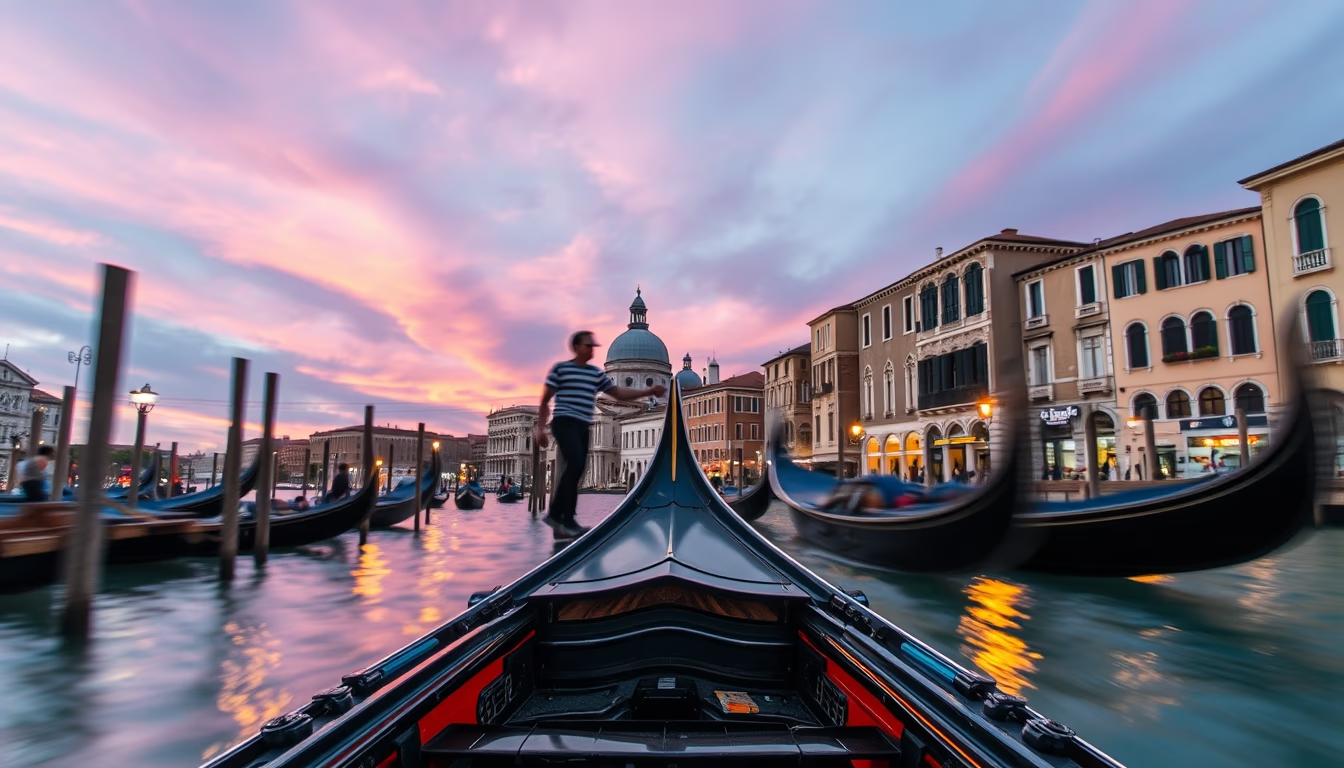
Gondolas are traditional Venetian boats, icons of tourism and the history of the city of canals.
About this subject
The gondola is a typical Venetian boat from Italy, known for its elongated and asymmetrical shape, designed to navigate the shallow and narrow canals of the city. Handcrafted using eight different types of wood, a gondola takes about two months to build and weighs approximately 400 kilograms. Every detail has practical and symbolic meaning: the iron prow (ferro da prôa) has six front teeth representing the six historic districts of Venice (sestieri) and one back tooth symbolizing the island of Giudecca. The black color has been standard since the 16th century, when a decree required all gondolas to be painted black to curb ostentation among the nobility.
Gondoliers, the professionals who steer gondolas with a single oar, undergo rigorous training and a practical exam to obtain a license. The profession is traditionally male, but since 2010 there have been female gondoliers. The rowing technique requires the gondolier to stand at the stern and use the oar as a lever, pushing water forward and backward to maneuver the boat. The skill is passed down through generations, and many gondoliers come from families that have worked the canals for decades.
Venice's canals form a vast network of waterways that replace ordinary streets. The city is built on 118 islands connected by over 400 bridges. Navigation is regulated by rules similar to road traffic, with speed limits and one-way sections. Traffic includes not only gondolas but also vaporettos (water buses), water taxis, and cargo boats. Constant maintenance is required, with dredging to prevent sediment buildup and ensure adequate depth. The gondola, with its shallow draft (about 30 centimeters), can navigate even in low water.
Gondola building is a rare art. Only a few dozen shipyards (squeri) in Venice still build these boats by hand. The cost of a new gondola can exceed 40,000 euros, reflecting the complexity of the work and quality of materials. Despite the decline in the number of gondolas in use (about 400 today, down from 10,000 in the 18th century), they remain an unmistakable symbol of Venice and a major tourist attraction.
Frequently Asked Questions
Why are gondolas black?
Since the 16th century, a Venetian law required all gondolas to be painted black to curb ostentation among noble families, who used to decorate their boats with extravagant colors and ornaments.
How much does a gondola cost?
A new handcrafted gondola costs between 30,000 and 50,000 euros, depending on the shipyard and materials. The high price reflects the manual labor, quality wood, and construction time of about two months.
How many gondolas are there in Venice?
Currently about 400 gondolas are in use on Venice's canals. In the 18th century, the number reached 10,000. The decline is due to the rise of other water transport and stricter regulations.
Direct URL
https://pub-c7d6a6ea828543ac903a74a341ccb2e1.r2.dev/imagens/gondola-venice-canal-long-exposure-p3.avifHow to credit
Include a visible link back to UtilizAí. Copy one of the snippets below:
<a href="https://xn--utiliza-eza.com/en/midia/imagens/gondola-venice-canal-long-exposure-p3">Gondola venice canal</a> by <a href="https://xn--utiliza-eza.com">UtilizAí</a>, licensed under <a href="https://creativecommons.org/licenses/by/4.0/">CC BY 4.0</a>.
[Gondola venice canal](https://xn--utiliza-eza.com/en/midia/imagens/gondola-venice-canal-long-exposure-p3) by [UtilizAí](https://xn--utiliza-eza.com), CC BY 4.0
License: CC-BY-4.0