Galleon spanish ancient
1344×768 · AVIF · CC BY 4.0
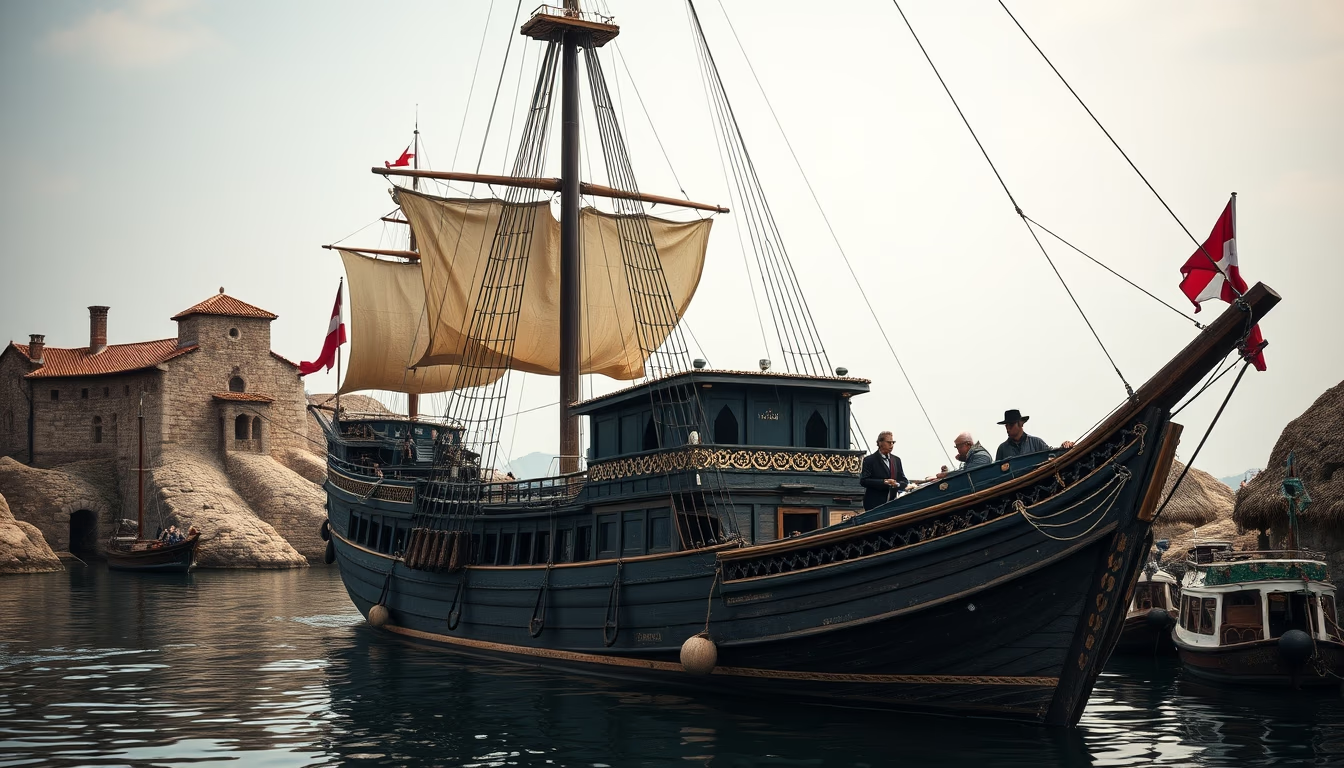
Spanish galleons were warships and merchant vessels that dominated the seas between the 16th and 18th centuries, carrying treasures from the Americas.
About this subject
Spanish galleons were among the most important vessels of the Age of Discovery, combining cargo capacity and firepower. Built mainly in shipyards in Havana, the Philippines, and Seville, these ships could reach up to 50 meters in length and carry between 500 and 2,000 tons. Their robust hull and square sails made them ideal for long transoceanic voyages.
The most famous route was the Manila Galleon, linking the Philippines to Acapulco in Mexico, transporting American silver and Asian spices. The Silver Fleet brought gold and silver from Peru and Mexico to Spain, stopping at ports such as Cartagena and Havana. It is estimated that about 1,200 galleons sank over the centuries, many due to hurricanes or pirate attacks.
The design of galleons evolved over time, with the famous "warship galleon" of the 17th century featuring high forecastles and aftercastles to mount cannons. These ships were fundamental to Spanish power but also known for exploitation of indigenous peoples and slavery. The wreck of the 1715 fleet in Florida is one of the most emblematic, with treasures still being recovered.
Culturally, galleons have inspired films, books, and even modern naval architecture. Many maritime museums, such as the Museo Naval in Madrid, have detailed models of these vessels. Today, replicas like the Galeón Andalucía travel the world to celebrate this historical heritage.
Frequently Asked Questions
How were Spanish galleons built?
Galleons were built in shipyards such as those in Havana, Seville, and Manila, using oak and pine wood. The process took months and required hundreds of craftsmen, with a design favoring stability and cargo capacity.
What was the route of the Manila Galleon?
The Manila Galleon route linked Manila (Philippines) to Acapulco (Mexico) annually, carrying American silver to Asia and spices, silk, and porcelain to the Americas. Each leg lasted about six months.
Why did so many galleons sink?
Shipwrecks were frequent due to hurricanes in the Caribbean, coral reefs, corsair attacks, and overloading. The 1715 fleet lost 11 ships to a hurricane off the Florida coast, and hundreds of other galleons lie on the ocean floor.
Direct URL
https://pub-c7d6a6ea828543ac903a74a341ccb2e1.r2.dev/imagens/galleon-spanish-ancient-documentary-photography-p9.avifHow to credit
Include a visible link back to UtilizAí. Copy one of the snippets below:
<a href="https://xn--utiliza-eza.com/en/midia/imagens/galleon-spanish-ancient-documentary-photography-p9">Galleon spanish ancient</a> by <a href="https://xn--utiliza-eza.com">UtilizAí</a>, licensed under <a href="https://creativecommons.org/licenses/by/4.0/">CC BY 4.0</a>.
[Galleon spanish ancient](https://xn--utiliza-eza.com/en/midia/imagens/galleon-spanish-ancient-documentary-photography-p9) by [UtilizAí](https://xn--utiliza-eza.com), CC BY 4.0
License: CC-BY-4.0