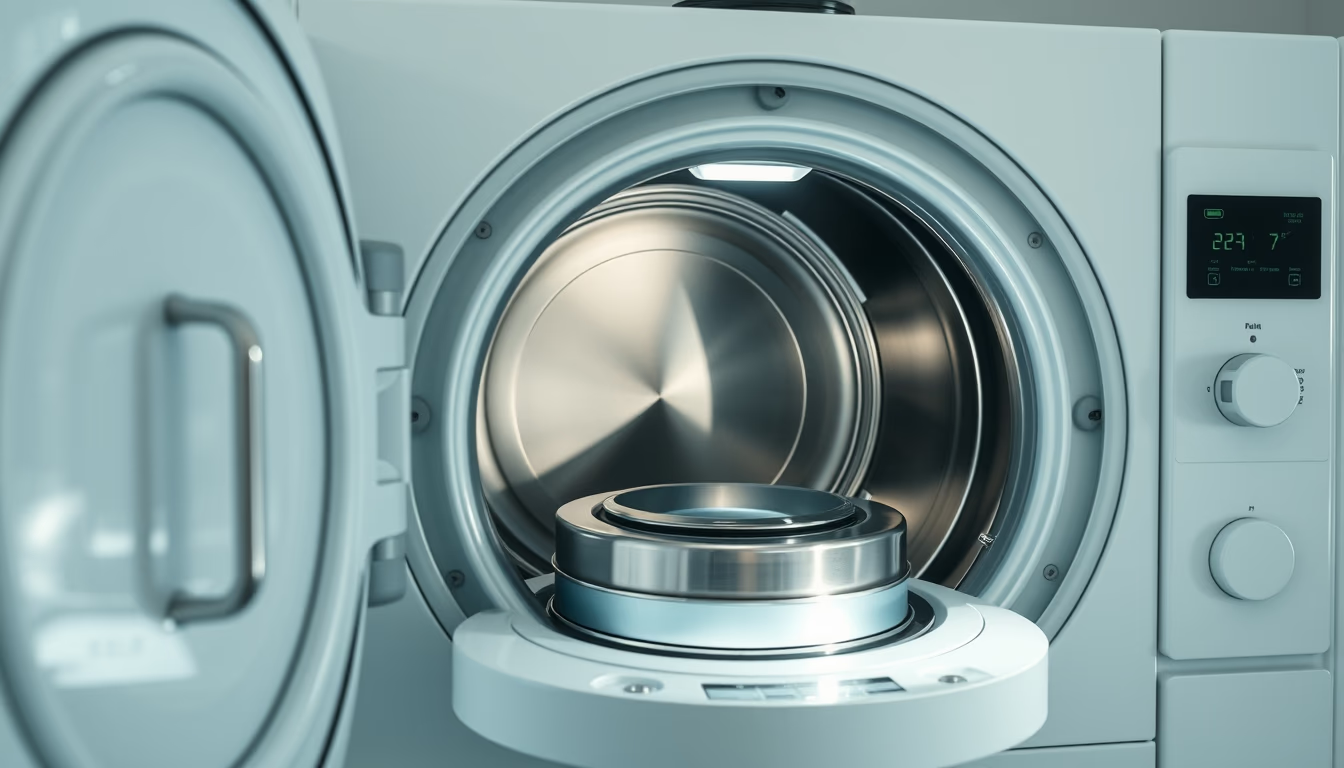
Fume hood chemistry
1344×768 · AVIF · CC BY 4.0

A fume hood is a critical safety device in chemistry labs, designed to remove toxic fumes and protect researchers during experiments.
About this subject
A fume hood, also known as a fume cupboard, is a local ventilation device that captures, contains, and removes chemical contaminants from the air, preventing inhalation of hazardous substances. It consists of a semi-enclosed enclosure, an exhaust system, and a movable glass sash. The hood operates by drawing air from the workstation into the exhaust duct, which either directs it outside the building or through activated carbon filters. The air flow creates a barrier that protects the user from toxic gases, solvent vapors, and particulates.
There are two main types: ducted fume hoods, which expel contaminated air outdoors after filtration, and ductless (recirculating) hoods, which filter and recirculate air using activated carbon or HEPA filters. Ducted models are preferred for routine use with volatile solvents and concentrated acids, while ductless ones suit less toxic substances or where duct installation is impractical. Standards such as ASHRAE 110 and NBR 14723 (Brazil) set performance requirements, including minimum face velocity (typically 0.4 to 0.7 m/s) and flow alarms.
The importance of fume hoods extends beyond personal protection: they confine flammable vapors to prevent violent reactions, minimize explosion risks in organic syntheses, and protect against biological or radioactive aerosols. Regular maintenance, checking airflow, replacing filters, testing alarms, is essential. Notably, modern intelligent hoods with flow sensors and automatic sash closure can reduce energy consumption by up to 50% compared to older models.
Frequently Asked Questions
How does a fume hood work?
It draws air from the work area into the hood, removing contaminants through an exhaust duct or filters, maintaining a constant airflow that protects the user.
What is the difference between ducted and ductless fume hoods?
Ducted hoods expel contaminated air outdoors; ductless hoods recirculate air after filtering with activated carbon or HEPA. The choice depends on toxicity and installation feasibility.
What safety precautions should be taken when using a fume hood?
Keep the sash lowered (minimum necessary), never block exhaust grilles, regularly check airflow, and always wear appropriate PPE even inside the hood.
Direct URL
https://pub-c7d6a6ea828543ac903a74a341ccb2e1.r2.dev/imagens/fume-hood-chemistry-documentary-nature-style-fresh1.avifHow to credit
Include a visible link back to UtilizAí. Copy one of the snippets below:
<a href="https://xn--utiliza-eza.com/en/midia/imagens/fume-hood-chemistry-documentary-nature-style-fresh1">Fume hood chemistry</a> by <a href="https://xn--utiliza-eza.com">UtilizAí</a>, licensed under <a href="https://creativecommons.org/licenses/by/4.0/">CC BY 4.0</a>.
[Fume hood chemistry](https://xn--utiliza-eza.com/en/midia/imagens/fume-hood-chemistry-documentary-nature-style-fresh1) by [UtilizAí](https://xn--utiliza-eza.com), CC BY 4.0
License: CC-BY-4.0