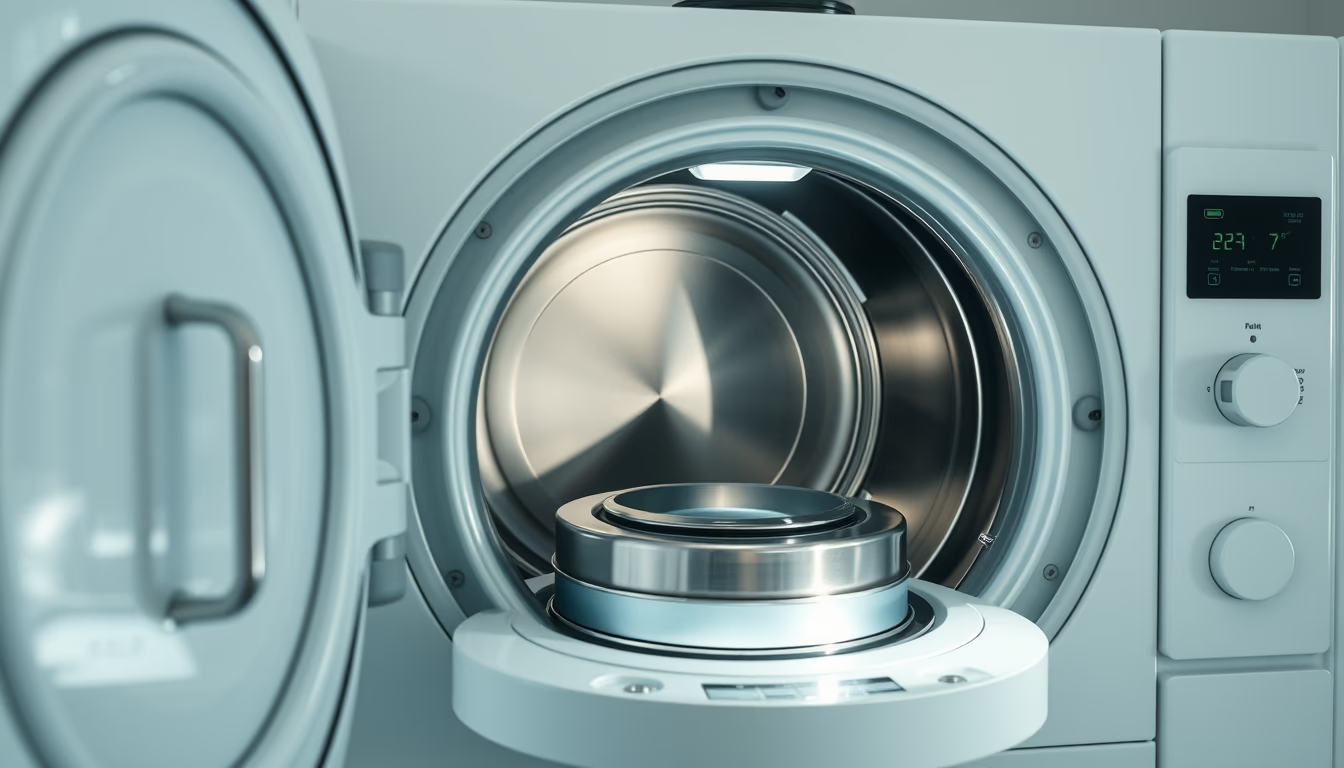
Fume hood chemistry
1344×768 · AVIF · CC BY 4.0

Chemical fume hood, essential safety equipment in chemistry laboratories, removes toxic fumes and protects researchers during experiments.
About this subject
A chemical fume hood, also known as a fume cupboard or fume closet, is a local ventilation device designed to limit exposure to hazardous substances. It consists of an enclosed cabinet with an adjustable front sash that can be raised or lowered. Air is drawn from the laboratory, passes through the opening over the work surface, and is exhausted outside the building via ducts and fans. This unidirectional airflow prevents contaminants from spreading into the lab.
Fume hoods are essential in chemical synthesis labs, toxicological analyses, and handling of volatile compounds. They protect users from inhaling solvents, acids, bases, and toxic gases. Some hoods incorporate activated carbon filters to capture organic vapors or HEPA filters for particulates. Performance standards such as ANSI/ASHRAE 110 and the European EN 14175 define test methods for containment effectiveness.
Regular maintenance is critical: face velocity should be checked periodically, typically between 0.4 and 0.8 m/s. Large objects or sudden movements near the opening can disrupt the airflow, reducing protection. Users should keep the sash as low as possible during work and never block internal exhaust grilles. The hood is not intended for permanent chemical storage, as it can accumulate fire or explosion hazards.
A notable fact: the most common type is the constant air volume (CAV) hood, but variable air volume (VAV) systems save energy by adjusting flow based on sash position. The green inner side panels are not merely aesthetic; they help spot spills and reduce eye strain during extended work sessions.
Frequently Asked Questions
How does a chemical fume hood work?
The hood works by drawing air from the laboratory through a front opening. The air passes over the work surface and is exhausted outside the building, creating an air barrier that prevents toxic vapors from escaping into the lab.
What is the difference between a fume hood and a laminar flow hood?
A fume hood protects the operator from hazardous chemicals, while a laminar flow hood (biological safety cabinet) protects the sample from contamination. The airflow in a fume hood is outward, whereas laminar flow can be vertical or horizontal, filtering air that reaches the sample.
Why is it important to use a fume hood?
Using a fume hood is essential to avoid inhaling toxic, irritating, or corrosive substances. Many organic solvents and acids release vapors that can cause serious health damage. The hood dramatically reduces exposure for the operator and others in the lab.
Direct URL
https://pub-c7d6a6ea828543ac903a74a341ccb2e1.r2.dev/imagens/fume-hood-chemistry-cinematic-wide-shot-fresh13.avifHow to credit
Include a visible link back to UtilizAí. Copy one of the snippets below:
<a href="https://xn--utiliza-eza.com/en/midia/imagens/fume-hood-chemistry-cinematic-wide-shot-fresh13">Fume hood chemistry</a> by <a href="https://xn--utiliza-eza.com">UtilizAí</a>, licensed under <a href="https://creativecommons.org/licenses/by/4.0/">CC BY 4.0</a>.
[Fume hood chemistry](https://xn--utiliza-eza.com/en/midia/imagens/fume-hood-chemistry-cinematic-wide-shot-fresh13) by [UtilizAí](https://xn--utiliza-eza.com), CC BY 4.0
License: CC-BY-4.0